Scientists Try to Crack Stonehenge's Prehistoric Puzzles
- SCIENCE
Learn about the ongoing efforts to understand who built Stonehenge and why
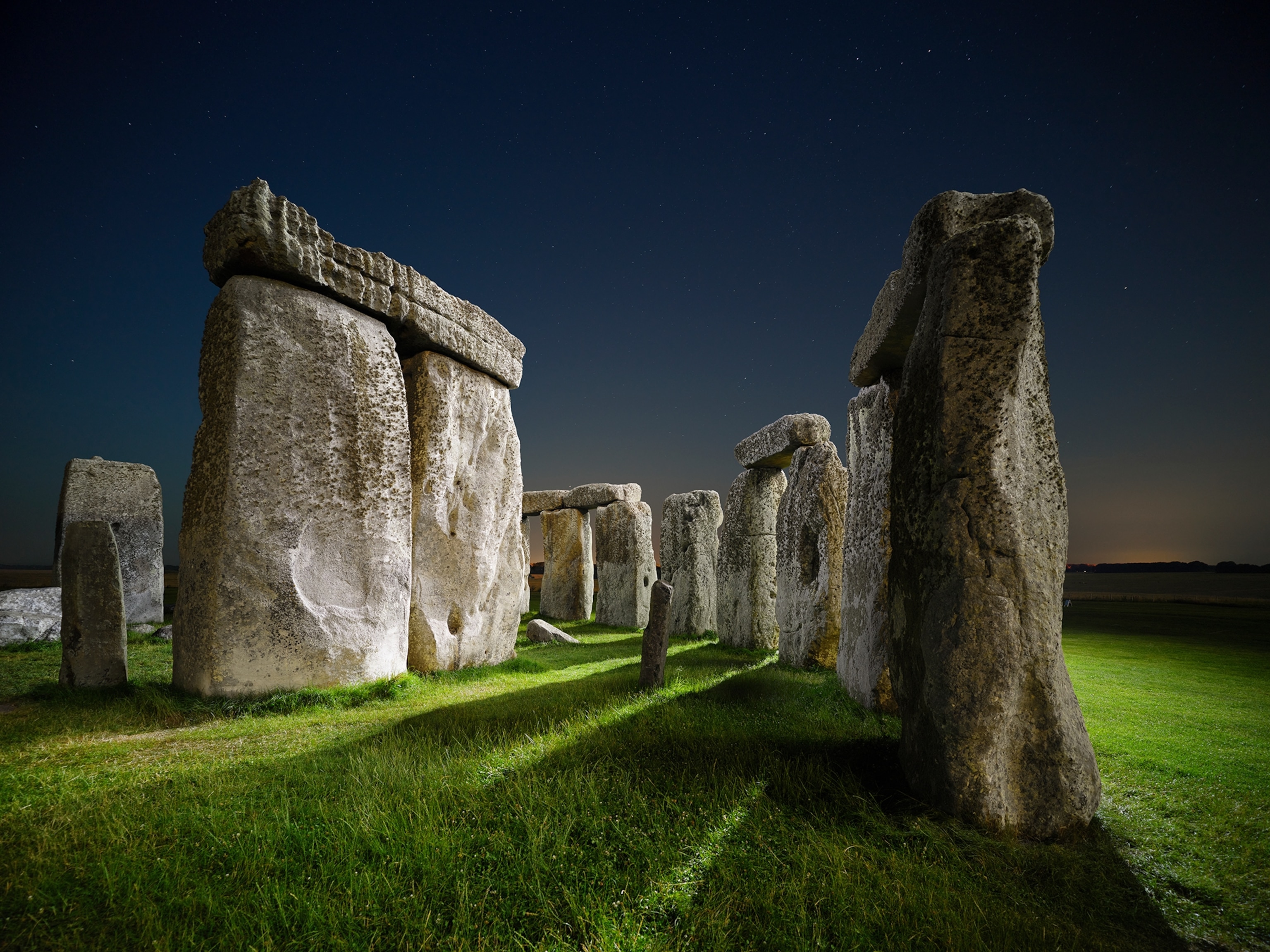
Stonehenge, located in southern England, ranks among the world’s most iconic archaeological sites and one of its greatest enigmas. The megalithic stone circle on Salisbury Plain inspires awe and fascination—but also intense debate some 4,600 years after it was built by ancient Britons who left no written record.
The monument’s mysterious past has spawned countless tales and theories. According to folklore, Stonehenge was created by Merlin, the wizard of Arthurian legend, who magically transported the massive stones from Ireland, where giants had assembled them.
Another legend says invading Danes put the stones up, and another theory says they were the ruins of a Roman temple. Modern-day interpretations are no less colorful. Some argue that Stonehenge is a spacecraft landing area for aliens, and even more say it’s a giant fertility symbol in the shape of female genitalia.
(Stonehenge was just one triumpth in a surprising prehistoric building boom)
How was Stonehenge built
Archaeological investigation of the site dates back to the 1660s, when it was first surveyed by antiquarian John Aubrey. He wrongly credited Stonehenge to the much later Celts, believing it to be a religious center presided over by Druid priests.
Centuries of fieldwork since show the neolithic monument, now a UNESCO World Heritage site, was more than a millennium in the making. It started out 5,000 years ago as a circular earthen bank and ditch, in a larger area of burial mounds.
(Stonehenge was part of a multi-monument complex. Here’s how it fit together)
A complicated pattern of wooden posts was replaced in about 2600 B.C. by 80 dolerite bluestones from Wales that were rearranged at least three times once the larger sarsen stones were added several hundred years later.
These huge sandstone blocks, each weighing around 25 tons, were transported some 19 miles (30 kilometers) to create a continuous outer circle and a heel stone just outside of it. However, chemical tests on the Altar Stone—the largest of the non-sarsen stones—trace it to Scotland, some 466 miles away.
Inside the circle, are five trilithons (pairs of standing stones with a lintel on top) forming a horseshoe. It’s been estimated that it took well over 20 million hours to construct Stonehenge.
(See how stones, strength, and smarts built Stonehenge)
Why was Stonehenge built?
Modern debate over the monument’s meaning has two main camps: those who see it as a holy site, and others who believe it represents a scientific observatory.
Both camps base their theories on the site’s celestial influence. They point to alignments to the sun and moon as evidence of rituals linked to the changing seasons and the summer and winter solstices.
(How the spirit of ancient Stonehenge was captured with a 21st-century drone)
Alternatively, alignments identified particularly with stars point to a megalithic calendar used for working out dates or to reflect or predict astronomical events such as solar eclipses.
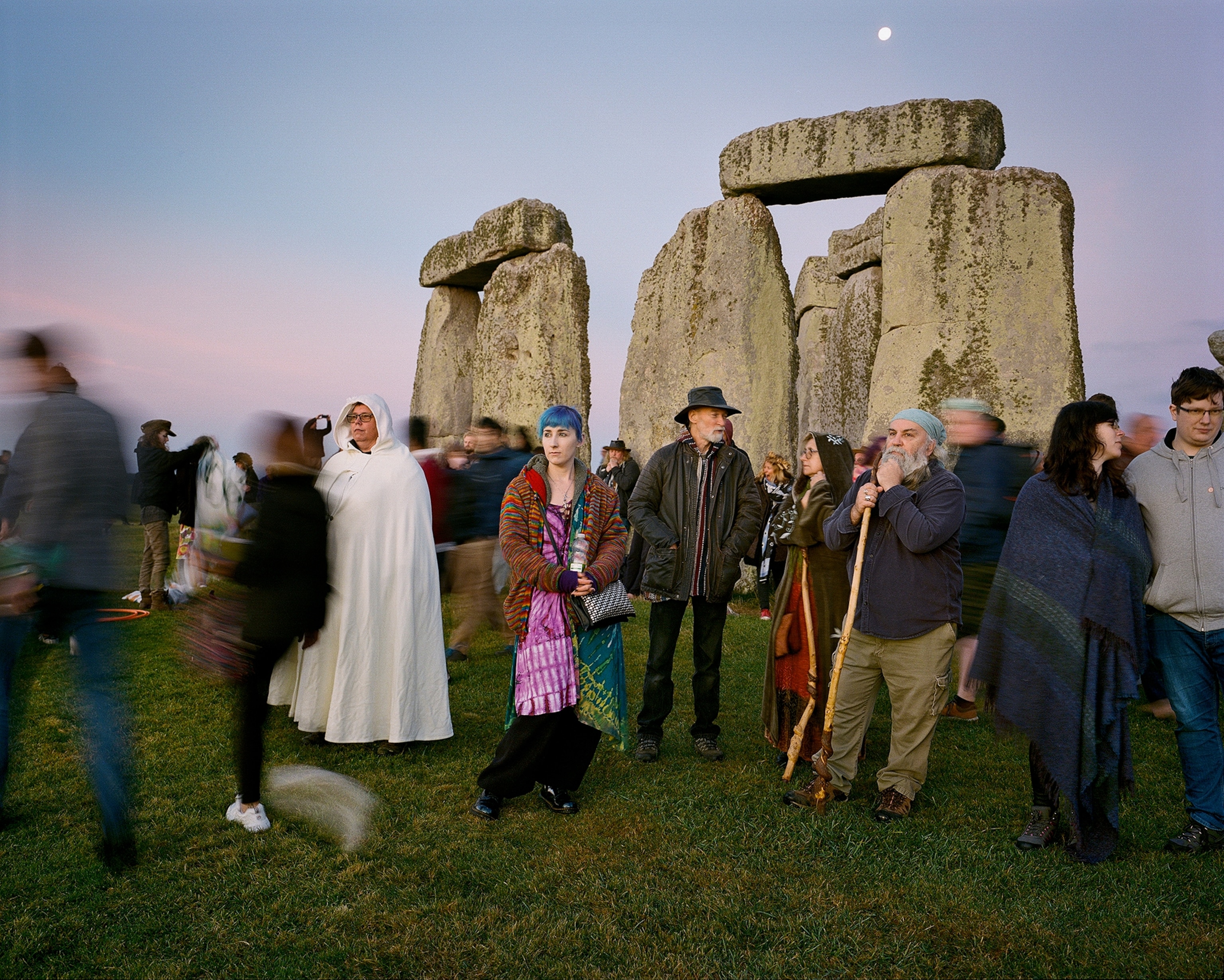
A radical theory asserts that Stonehenge served as a “prehistoric Lourdes” where people came to be healed. This idea revolves around the smaller bluestones, which, researchers argue, must have been credited with magical powers for them to have been floated, dragged, and hauled 145 miles from west Wales.
(From Stonehenge to Sedona, why are we drawn to mystical places?)
A team lead by Tim Darvill of Bournemouth University, U.K., announced in 2005 that it had located the quarry the bluestones came from, only for another study to suggest the stones had made the journey earlier, powered naturally by ice age glaciers.
Excavations at Stonehenge co-directed by Darvill in 2008 bolstered the hypothesis, also based on a number of Bronze Age skeletons unearthed in the area that show signs of bone deformities.
Competing to solve the enduring prehistoric puzzle is University College London’s Mike Parker Pearson, co-leader of the Stonehenge Riverside Project, which is partly funded by the National Geographic Society.
Discoveries by the project team supported Parker Pearson’s claim that Stonehenge was a center for ancestor worship linked by the River Avon and two ceremonial avenues to a matching wooden circle at nearby Durrington Walls.
(Were these ancient sites built by aliens? Here’s why some people think so.)
The two circles with their temporary and permanent structures represented, respectively, the domains of the living and the dead, according to Parker Pearson.
“Stonehenge isn’t a monument in isolation,” he says. “It is actually one of a pair—one in stone, one in timber. The theory is that Stonehenge is a kind of spirit home to the ancestors.”
Comments
Post a Comment