Why did Agatha Christie go missing? Here are 4 theories, from amnesia to publicity stunt
On December 3, 1926, the famous mystery writer disappeared into the night—and wouldn’t be seen again for 11 days. What really happened?

At 9:45 p.m. on Friday, December 3, 1926, up-and-coming mystery author Agatha Christie packed a small suitcase, her driver’s license, a photo of her young daughter, and a large amount of cash into her Morris Cowley car and set out into the cold night in Berkshire, England.
The next morning, her abandoned car, with packed suitcase and fur coat still inside, was found in a chalk pit with the headlights left on; the 36-year-old writer was nowhere to be found.
For 11 days, an increasingly frantic search snowballed into a global media circus with sensational daily front-page headlines and 15,000 volunteer citizen detectives scouring the English countryside.
(Murder or madness: What really killed Edgar Allan Poe?)
Theories ranged from suicide to murder to nervous breakdown to publicity hoax for the writer, who’d churned out six mystery novels in six years and enjoyed modest success but was not yet a household name.(“Mystery of woman novelist’s disappearance,” read one Daily Mail headline.)
Christie was finally found some 220 miles away at the Swan Hydropathic Hotel in Harrogate, Yorkshire, on December 15. Checked in under a pseudonym, she seemed to be suffering from amnesia, reading a newspaper in which her own disappearance was front-page news. When her husband arrived to pick her up, Christie recognized him as familiar but said she couldn’t place him. The two sat for an awkward dinner while reporters took notes for the next day’s front page.
“The Missing Novelist Mystery Solved,” read one headline. But they couldn’t be more wrong. A century later, the game’s still afoot for Christie biographers and real-life detectives still trying to solve a hundred-year-old mystery: Why did the world’s most famous author disappear for 11 days in 1926?
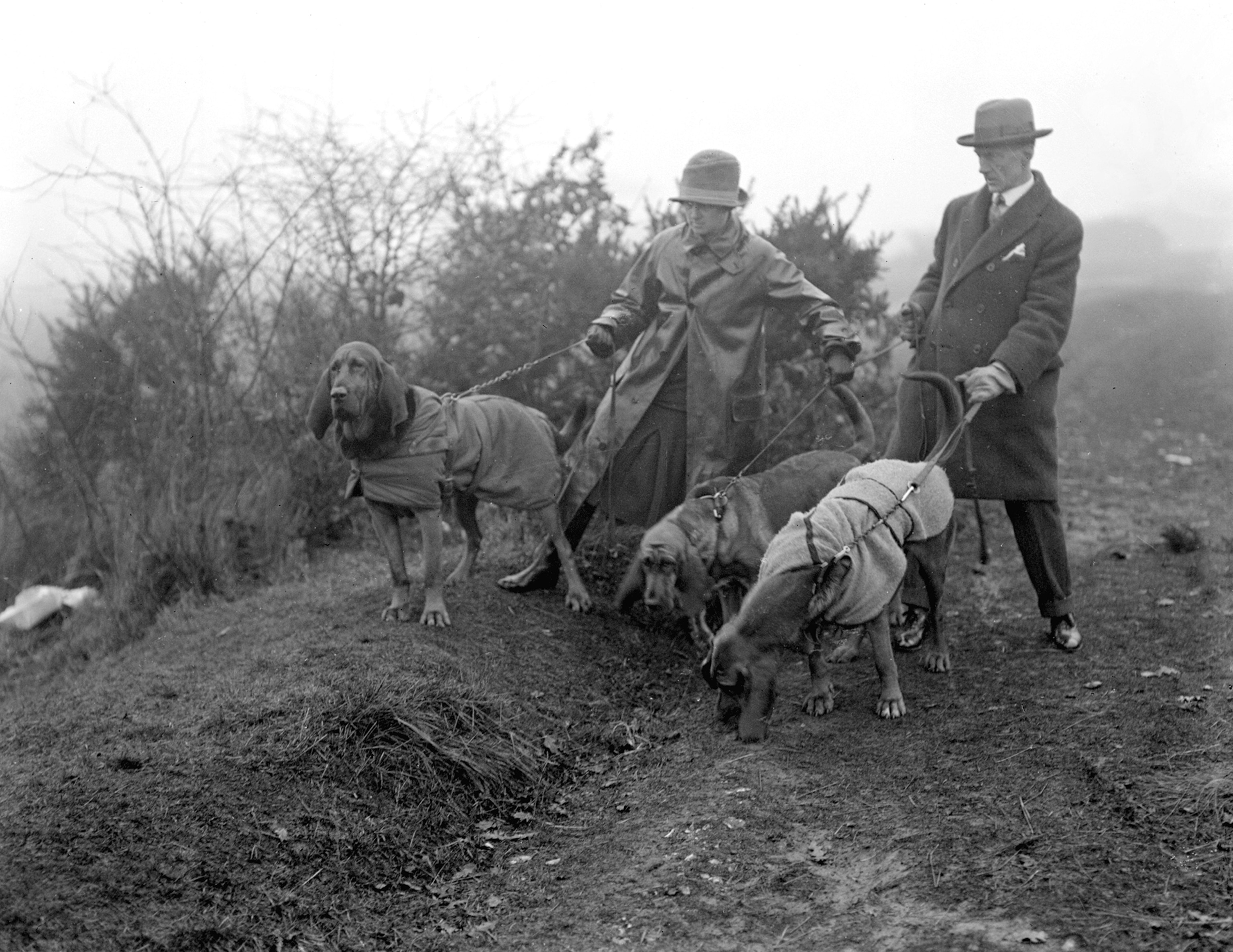
Theory 1: She was seeking revenge on her husband
A clever detective like her most famous creation Hercule Poirot would no doubt home in on the most likely suspect in a missing persons case: Christie’s husband, the dashing WWI flying officer Archibald Christie, to whom she’d been married for 12 years and had a seven-year-old daughter, Rosalind.
Was their marriage a happy one? Archie said so to investigators, who initially considered the husband a gentleman and war hero but grew increasingly suspicious. A pertinent clue: His wife had left a note, Archie told police, but he’d already read and destroyed it.
(6 destinations every Agatha Christie fan should visit.)
Archie had a corroborated alibi, however, having visited friends at a nearby cottage that weekend. He didn’t mention to investigators that the occasion was an engagement party celebrating his mistress and soon-to-be new wife, a much-younger family friend named Nancy Neele.
It turns out Agatha had known about her husband’s affair and the couple had quarreled about it earlier on the day of her disappearance. In her 1977 biography, Agatha quoted her husband: “I’ve fallen in love with [Nancy], and I’d like you to give me a divorce as soon as it can be arranged.” (Naturally, he said none of this to the police.)
Could the soon-to-be-ex Mrs. Christie, infuriated by her husband’s affair and humiliated by his “engagement” party, have concocted a plan to sabotage the festivities by framing him for murder? Many biographers over the years think so. Her perfectly timed disappearance required Archie’s immediate return, squashing the celebration while casting suspicion onto her husband, who was forced to publicly pretend the happy marriage Agatha wanted all along.
Theory 2: She attempted suicide—then tried to cover it up
The complicated scheme above, however, would require the writer’s mind to be sharp and sound, which it likely was not. 1926 had not been kind to Agatha Christie; her mother had died, her best friend Charlotte had gone away, and Archie, rather than help his wife mourn these losses, instead spent more time overseas.
“For the first time in my life I was really ill,” Christie wrote in her biography, citing tears, forgetfulness, and insomnia as “the beginning of a nervous breakdown.” The night of the disappearance, in a letter to Charlotte turned over to the police, Christie wrote of her need to “get away from here” because “it just isn’t fair.”
Christie’s otherwise revelatory biography entirely omits her strange disappearance, which she spoke about publicly only once to defend herself during her messy divorce. “I felt that I could go on no longer,” she said in a brief interview to The Daily Mail. “I left home that night in a state of high nervous strain with the intention of doing something desperate.”
Even if “something desperate” implied suicide, she maintained she absolutely didn’t attempt it—a crucial distinction, since suicide was both a crime and a sin that could lose the soon-to-be divorcée custody of her daughter. Instead, the author described a dramatic scene: “The car struck something with a jerk and pulled up suddenly. I was flung against the steering wheel, and my head hit something. Up to this moment I was Mrs. Christie.” After that moment? She claimed the blow gave her temporary amnesia.
(After her divorce, Agatha Christie fell in love amid the ruins of Mesopotamia.)
Having traveled to the very place Christie abandoned her car, biographer Laura Thompson is (mostly) convinced Agatha planned to commit suicide. “It’s a quite scary and haunting place, with water all around, out in the middle of nowhere,” says Thompson. (Agatha’s car, for the record, was damaged but drivable, with a full tank of gas.)
Theory 3: She really was suffering from a rare form of amnesia
If Mrs. Christie was gone in that moment that she was flung against the steering wheel, who then walked to the train station, bought a ticket to Harrogate and checked herself into the swanky Swan Hydropathic Hotel?

Technically, a mysterious traveler all the way from Cape Town, South Africa, called “Mrs. Teresa Neele.” Yes, Neele; of all the pseudonyms Christie could have chosen, she chose her husband’s mistress’s moniker and signed it in her own distinctive handwriting. Depending on how you look at it, the move is either a deliberate clue, a foolish error, or a nonsensical action that proves Christie’s official story: “confusion” and “loss of memory.”
In the aforementioned letter to Charlotte, Christie noted a worrying physical symptom that could point to a rare psychiatric phenomenon: “My head is bursting,” she wrote.
Severe headaches are experienced by some 85 percent of people with dissociative disorders, and within that umbrella, the little-understood “dissociative fugue” is one in which emotional trauma causes temporary amnesia. Sufferers often wander and travel, seeming normal to unsuspecting onlookers. In this case, and very contrary to the idea that Christie was despondent, “Mrs. Neele” spent her time away mingling with patrons, singing and dancing the Charleston, sleeping in, and enjoying breakfast in bed.
(How science solved the mystery of feet washing ashore in the Pacific Northwest.)
Even if seemingly having a grand ole time, Christie was nonetheless experiencing a “cataclysmic breakdown” caused by “acute mental distress,” says Thompson. But while some biographers have argued that this solves the mystery, Thompson says she doesn’t buy the amnesia story for a minute. “Absolutely not. I think that was something they came up with as a cover story.” If the author didn’t want to ever have to explain anything again, memory loss was a fool-proof excuse.
Theory 4: It was the biggest and best publicity stunt the world had ever seen
During the 11 days that Christie was missing, Archie sparked another theory in an interview to The Daily Mail. “My wife had discussed the possibility of disappearing at will … engineering a disappearance had been running through her mind, probably for the purpose of her work.”
At the time of her disappearance, Christie was a successful writer but not yet a literary sensation. She’d recently published her sixth novel, The Murder of Roger Ackroyd, which garnered attention for its (spoiler alert) shocking twist ending: the narrator himself is the murderer.
While no big deal in our modern era of Fight Club and Gone Girl, unreliable narrators were novel in 1926, and readers felt duped. Christie had, as biographer Lucy Worsley in Agatha Christie: A Very Elusive Women puts it, “a growing reputation for guile.”
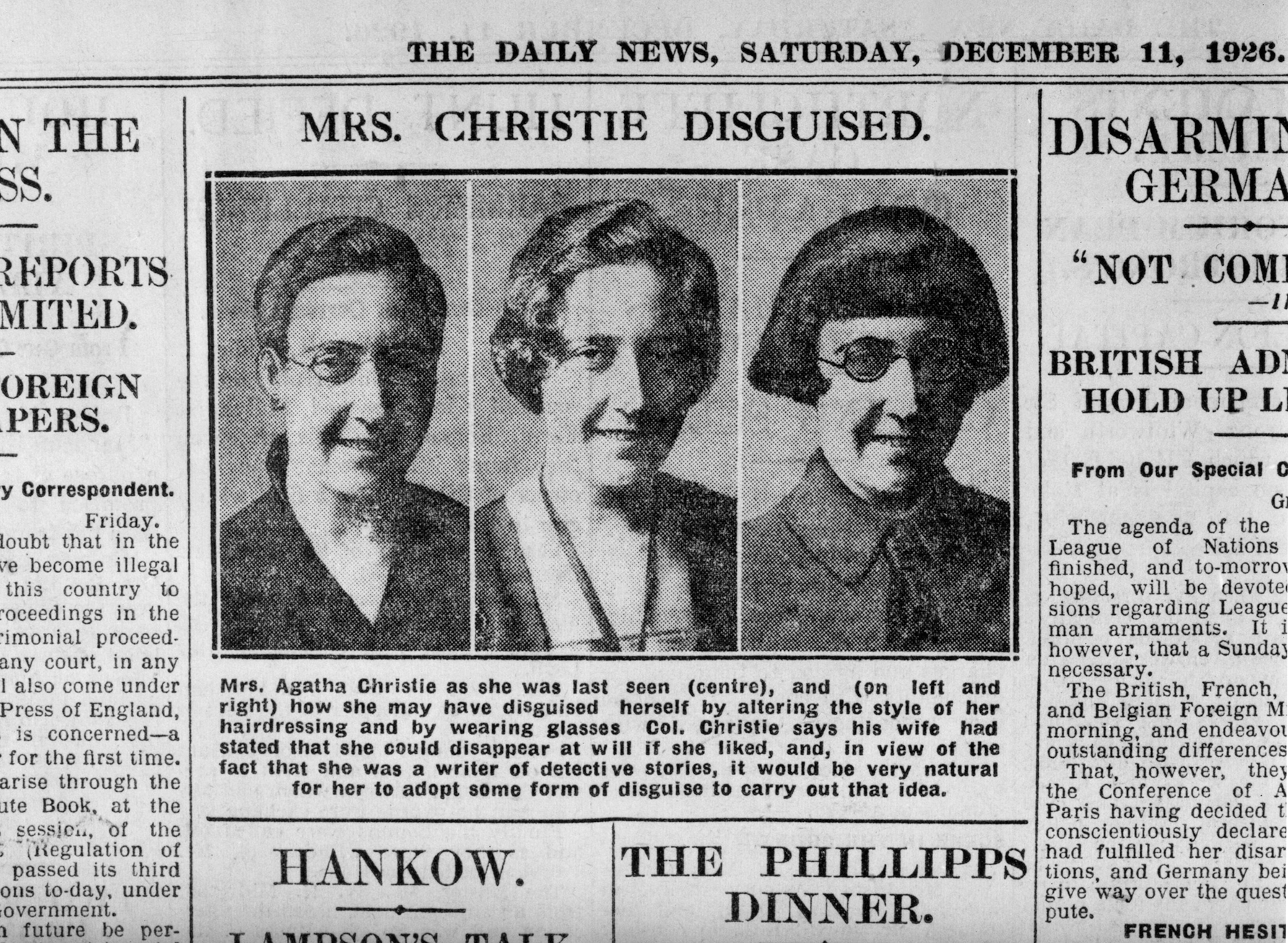
That the whole incident was a fame-making publicity stunt remains a popular take to this day, and if true, it also worked spectacularly: Newspapers featured her serialized novels next to the news of her disappearance, and book sales immediately doubled. Her days of humble residuals from small presses were done, and Christie signed an exorbitant six-book contract in 1930.
Planned or not, the disappearance made Christie an early example of what Worsley calls “author-as-celebrity”—which wasn’t necessarily a good thing. Christie was made rich and famous, but the third bestselling author on the planet—outsold only by Shakespeare and the Bible—lived with the bleak fact that her fabulous career existed largely because of her worst humiliation. “It was accidental, was deeply unpleasant, but it would become a central plank of her massive success,” writes Worsley.
Unlike every other mystery Agatha Christie gave the world, this one doesn’t end with Hercule Poirot definitively deducing what happened, how, and why. No wonder Christie sleuths are still scouring history for clues: Despite all the complicated characters, plot twists, secret motives, and red herrings, Christie deliberately left her greatest mystery story—her own—forever unsolved.
Comments
Post a Comment