In a first, scientists extract ancient human DNA from cave walls
- HISTORY & CULTURE
An international team of cave explorers has shown that cave walls and the prehistoric rock art that adorns them can preserve human DNA for thousands of years.
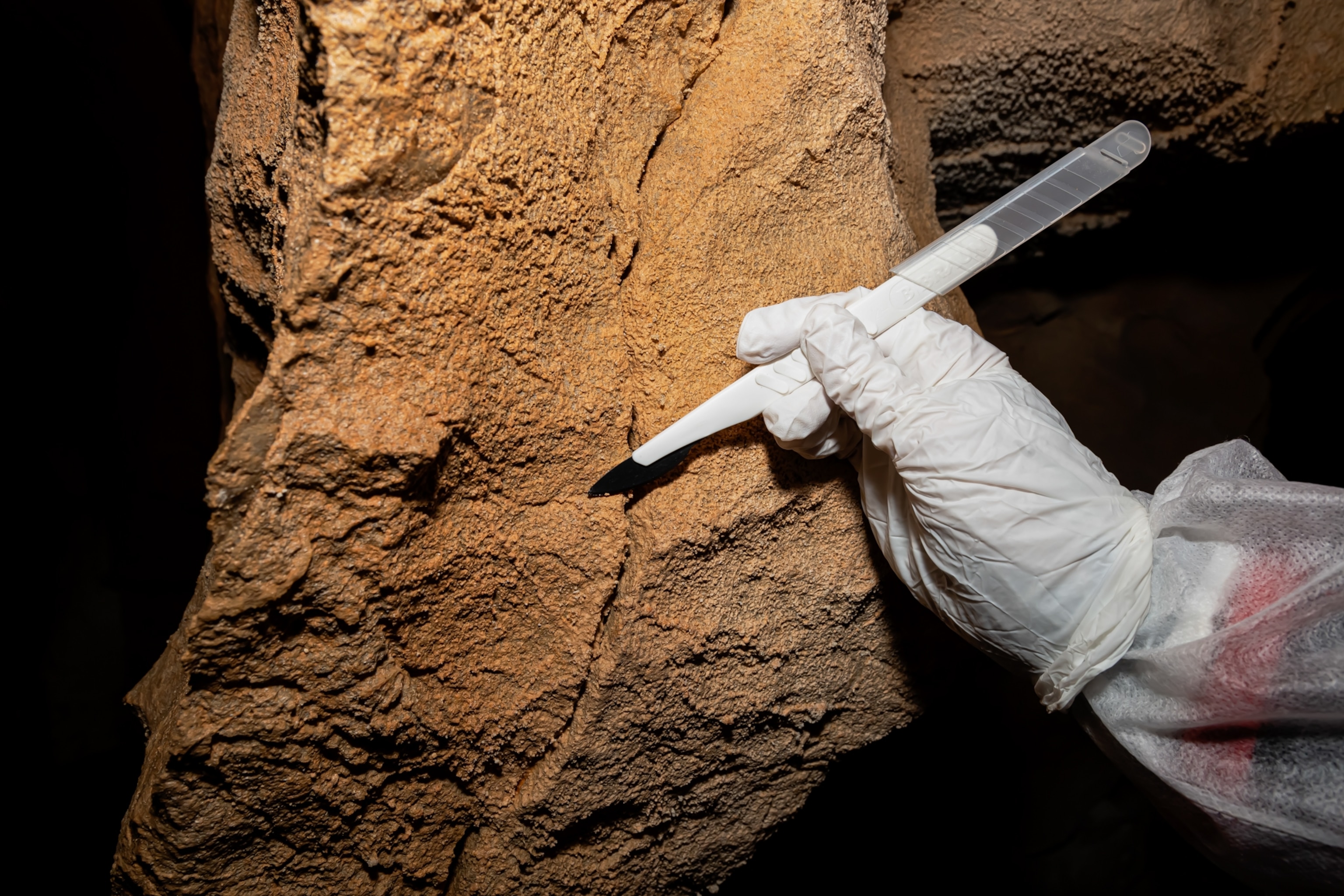
Paleogeneticists have, for the first time, extracted ancient human DNA from cave walls, including from a crusty red dot painted thousands of years ago.
For decades, efforts to decipher genetic clues from ancient humans and their relatives have relied on sequencing material from bones and dirt found in caverns where these ancient species left behind art or artifacts. The findings, which were published June 23 in the journal Nature Communications, are a proof of concept showing that cave walls themselves can indeed preserve ancient human DNA for thousands of years.
But the study authors caution that this discovery does not mean they have identified the artist behind the rock art. Rather, it shows they have found ancient human DNA belonging to a person who may have come in contact with the cave wall—potentially the artist, or an assistant, or an admirer who simply touched it hundreds or even thousands of years later.
(Solving one of humanity’s oldest ‘missing person’ cases)
“It is now possible for researchers to recover DNA from somebody who leaned on a wall 20,000, 30,000, or 40,000 years ago—isn't that crazy?!” says National Geographic Explorer Genevieve von Petzinger, a rock art specialist with the FIRST-ART Team, the international group behind the discovery. “You're hanging out in a cave, and 40,000 years later, a bunch of humans get to meet you, which is like the coolest thing ever.”
Cave exploring
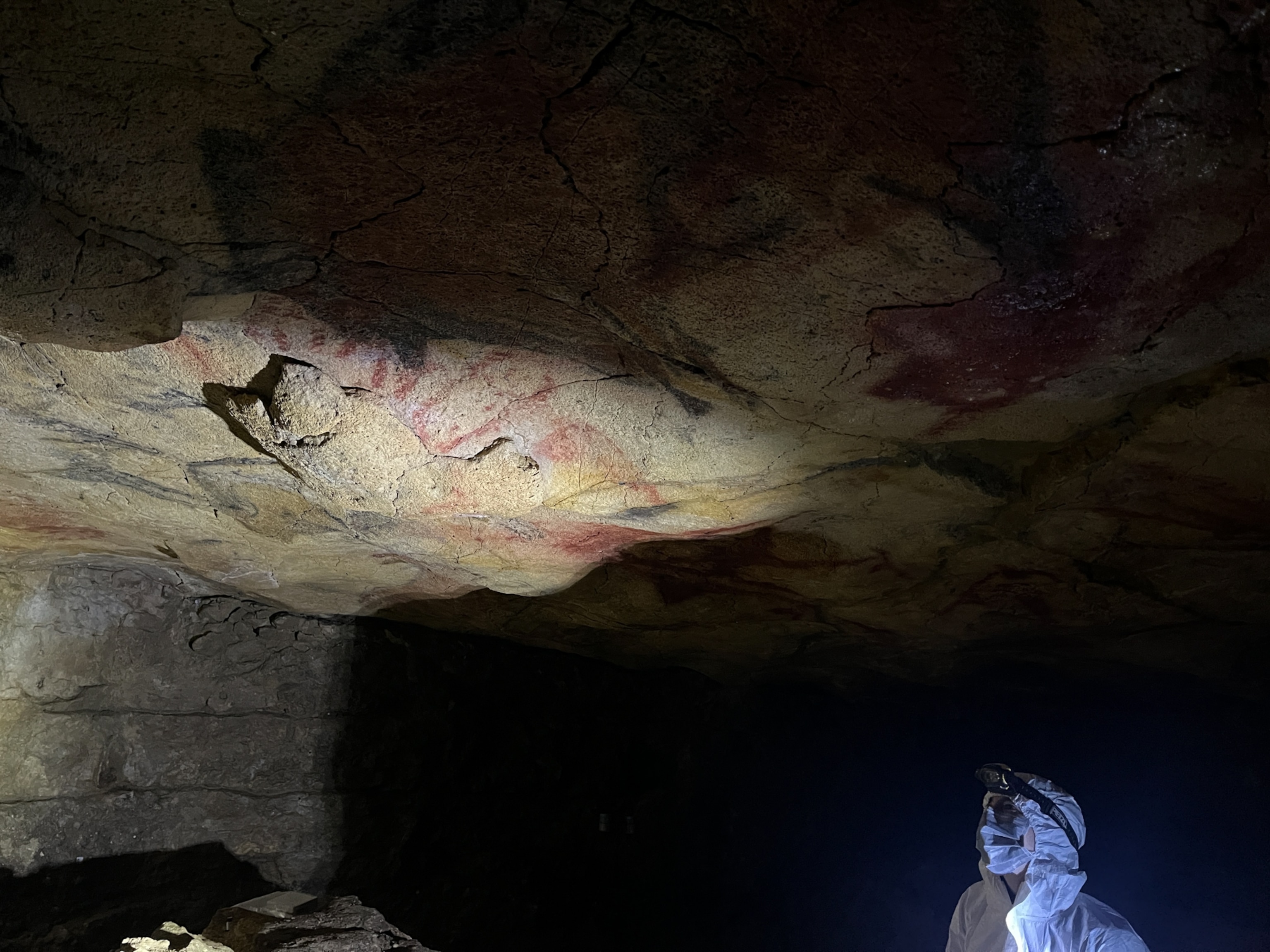
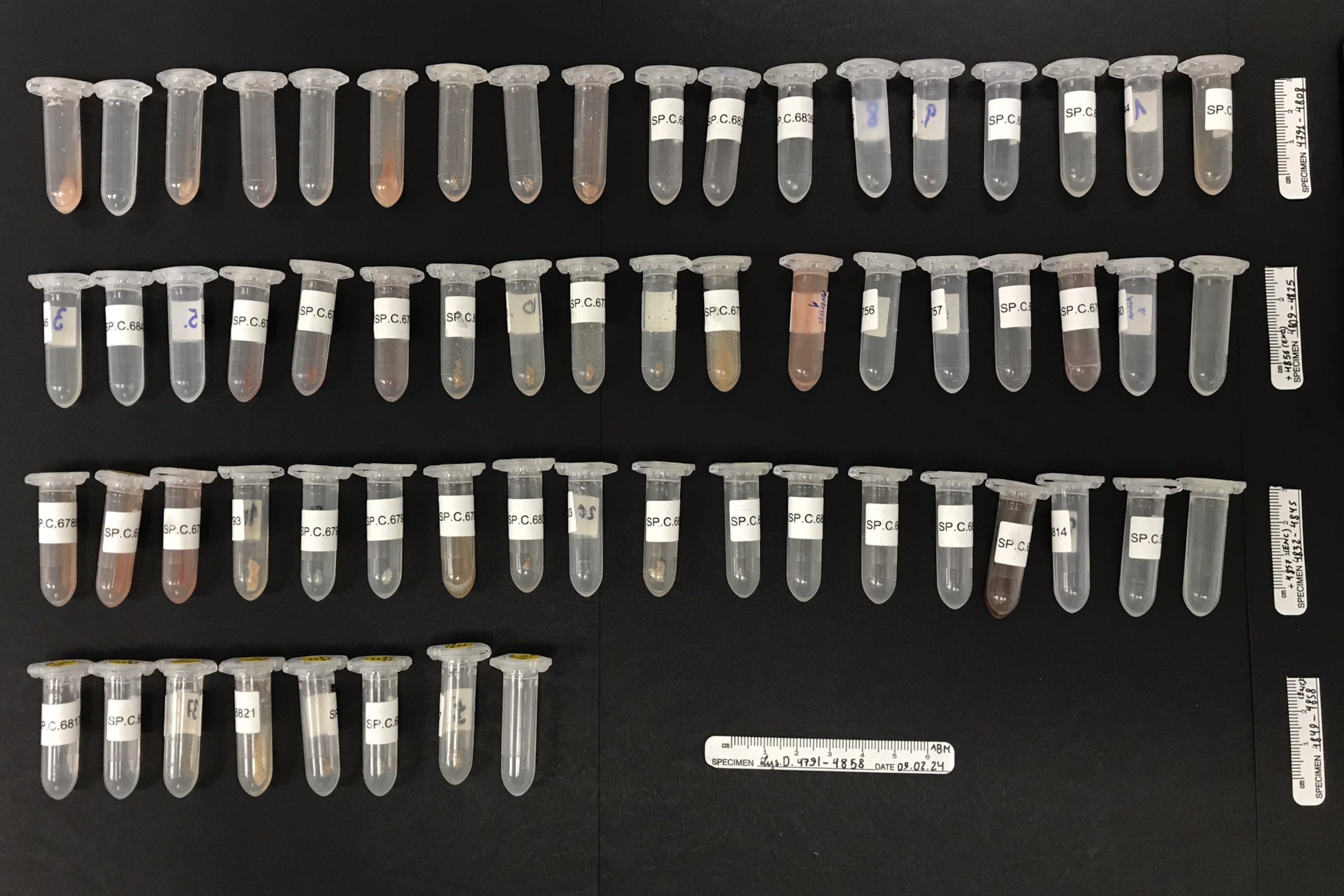
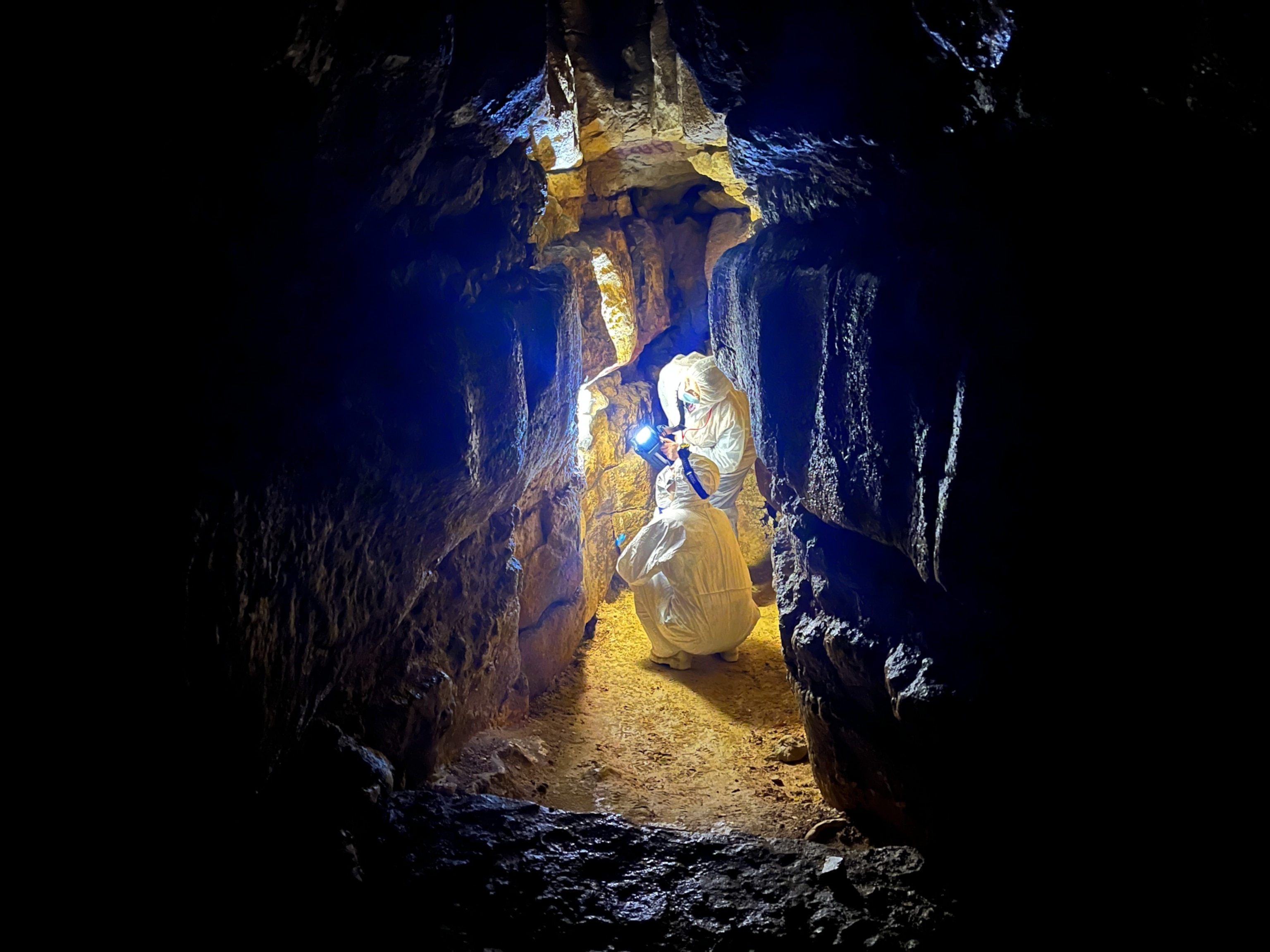
To collect samples for the project, Alba Bossoms Mesa, a doctoral researcher at the Max Planck Institute for Evolutionary Anthropology in Germany and lead author of the paper, and other members of the FIRST-ART team ventured into 11 caves in Spain and Portugal. They took 54 samples from 24 different rock art panels, including hand stencils, simple lines and dots, as well as from pigment that fell off the iconic red bison imagery found on the ceilings of Altamira Cave in Spain. They also sampled adjacent parts of the cave walls that were clear of pigment. They scraped or cut most samples directly from the wall using sterile disposable scalpels, and to prevent contamination, they wore two layers of gloves and face masks.
Of the 24 rock art panels, they found that only one pigmented sample contained ancient human DNA. That sample came from an unassuming red dot found in Escoural Cave in Portugal known as “Panel 11.” The sample was covered in calcite, a carbonate mineral that naturally forms in caves and drips down their walls, locking in rock art like a mosquito in amber and protecting it from contamination.
From that sample of red pigment and calcite, they found ancient human DNA belonging to a Homo sapiens who lived at least 4,000 to 5,000 years ago, though likely much older, potentially during the Upper Paleolithic period (between 12,000 and 50,000 years ago). They were unable to determine the sex of the individual. The sample also showed no signs of animal DNA, indicating that the genetic remains were from direct contact with a person. It’s unclear whether the DNA came from the pigment itself or the layer of calcite in the sample.
From the blank cave walls, the team found two unpigmented samples with ancient human DNA, one from a male and one from a female, also likely from the same time period. The female sample (though not the male) did show signs of animal DNA, suggesting it may have been indirectly transferred to the wall, for example, by dirt on the ground being rubbed onto it.
(The world’s oldest rock art discovered in Indonesia.)
Because the DNA from cave art had eluded scientists in the past, Bossoms Mesa worried it might be a fluke as she and her colleagues double-checked the results.
“I was very skeptical. I thought, ‘This is too good to be true,’” says Bossoms Mesa. “There was always this waiting for the other shoe to drop, for something to go wrong. But no, it didn't. It's kind of amazing, I couldn’t believe it.”
How exactly the DNA got into the red pigment and calcite mix remains unknown. “That's part of the charm,” she says. Her team considered all the possibilities—saliva, sweat, other bodily fluids—but couldn’t pinpoint the source. The provenance can only be solved with future analyses. But successfully extracting ancient DNA is a big step alone.
“For many years, researchers have been trying to achieve this goal, and until now it had remained beyond our reach,” says Hipólito Collado Giraldo, an archaeologist and rock art specialist with the Extremadura Government in Spain who helps lead the FIRST-ART Team. “In many respects, we believe this research marks the beginning of a new era in the study of rock art and prehistoric human behavior.”
New era of rock art research
In addition to the detection in Portugal, the researchers also found ancient human DNA in two additional samples from unpigmented walls in Covarón Cave in Spain, bringing the total to five of 54 samples yielding ancient human DNA. Both also contained traces of animal DNA. One sample from this cave was at least 1,000 years old, and the other was at least 2,000 years old, according to the researchers. The Covarón samples also yielded enough genetic material to determine that the people who left them behind were female Homo sapiens likely belonging to a genetic group of Western hunter-gatherers thought to have lived between 5,200 and 16,700 years ago.
“Simply identifying the biological sex opens a new path for the study of cave art,” says National Geographic Explorer Pere Gelabert, a paleogeneticist at the University of Vienna in Austria who was not affiliated with the study. “Although it is still speculative whether this DNA comes directly from the artists, this validation opens the door to such analyses in the future.”
Collado Giraldo wonders what other information scientists might glean from DNA adorning other cave walls. He hopes it can eventually provide insight into the prehistoric people who occupied these caves and made the artwork, particularly in places where it is hotly debated whether they were Homo sapiens or Neanderthals.
Others take a cautiously optimistic view of the find.
“This pioneering study expands the boundaries of palaeogenetics by proving that ancient human DNA can persist on cave walls for thousands of years,” says Enrico Cappellini, a paleogeneticist at the University of Copenhagen in Denmark. “However, we must remain cautious, as authentic ancient human DNA was successfully recovered from only a few of the many rock art paintings sampled across the sites."
Cappellini also notes that several samples yielded mixtures of human and animal DNA, indicating that natural processes such as sediment contamination or water movement can easily muddy the data.
Another drawback is that the collection process is still destructive and requires great care, notes Gelabert. That’s something the researchers are keeping in mind as they attempt to improve their odds of success.
In the meantime, the team is trying to identify the best caves for sampling. Von Petzinger recently ventured into several caves in southern Spain to try to extract ancient human DNA from rock art using these techniques.
“Now that we know it's possible to actually get DNA from straight off a wall or from paint pigment contexts,” says von Petzinger, “we don't just need more samples; we also need to teach more people how to do this.”
Nicholas St. Fleur is a digital science editor at National Geographic based in Washington D.C. He covers archaeology, paleontology, and ancient human origins.The nonprofit National Geographic Society, committed to illuminating and protecting the wonder of our world, funded Explorer Genevieve von Petzinger's work. Learn more about the Society’s support of Explorers.
Comments
Post a Comment