The ancient Maya may have had sophisticated dentists
- HISTORY & CULTURE
The Maya adorned their teeth with jade and other gems. New evidence suggests it wasn’t just for show.
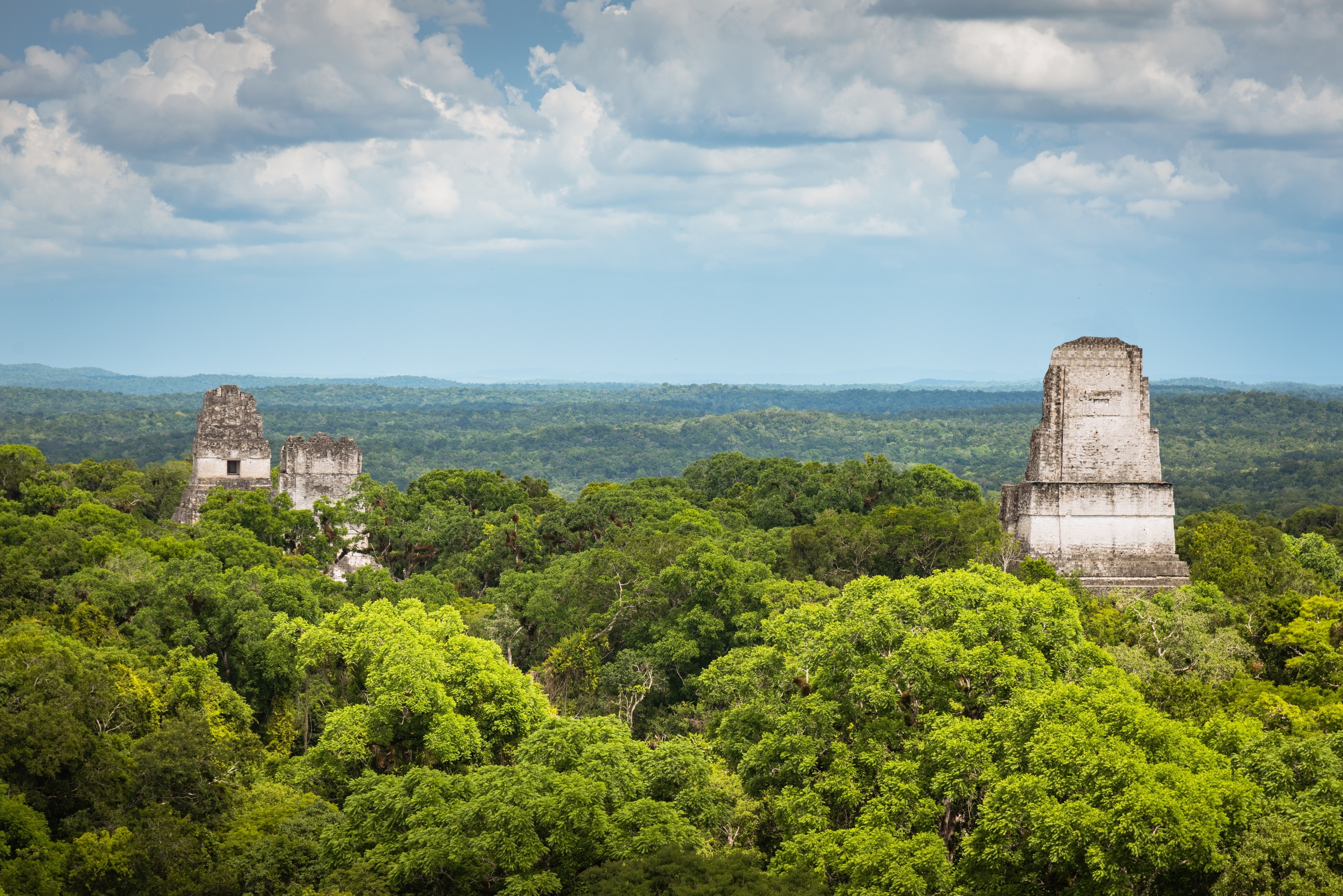
Centuries before the advent of novocaine electric drills and x-rays, the ancient Maya may have been closing tooth cavities with jade inlays.
Teeth decorated with jade, “fool’s gold,” and other materials have turned up at Maya archaeological sites for decades. The Maya carved small holes in teeth and sealed the stones in place, and that the decorations served some sort of aesthetic purpose. A new analysis of a molar with a jade inlay reveals some of the strongest evidence yet the Maya didn’t just fix their teeth with ornamented “grills” for fashion or ritual—they may have also done it to relieve aches or pains.
“It’s so perfect—the cavity,” says Elma Vega-Lizama, a dental anthropologist at the Autonomous University of the Yucatan in Mexico and a co-author of the new study. “It’s really a good procedure—well done, clean.” This precise placement is part of the team’s argument, published in the Journal of Archaeological Science: Reports, that the Maya were defter at dentistry than previously suspected.
(What a jade mask tells us about this ancient Maya king)
Were jade teeth just for show?
The tooth comes from one of the largest collections of Maya teeth in the world at the Popul Vuh Museum at the Francisco Marroquín University in Guatemala City. The molar was given as a gift to the study’s first author, Estuardo Mata-Castillo, a dentist at the Francisco Marroquín University in Guatemala. Prior to that, its origins are unclear. The authors believe it came from somewhere near Guatemala City—likely the ruins of Kaminaljuyu, a Maya city inhabited from about 1500 B.C. to 900 A.D., that lies mostly underneath the modern-day metropolis.
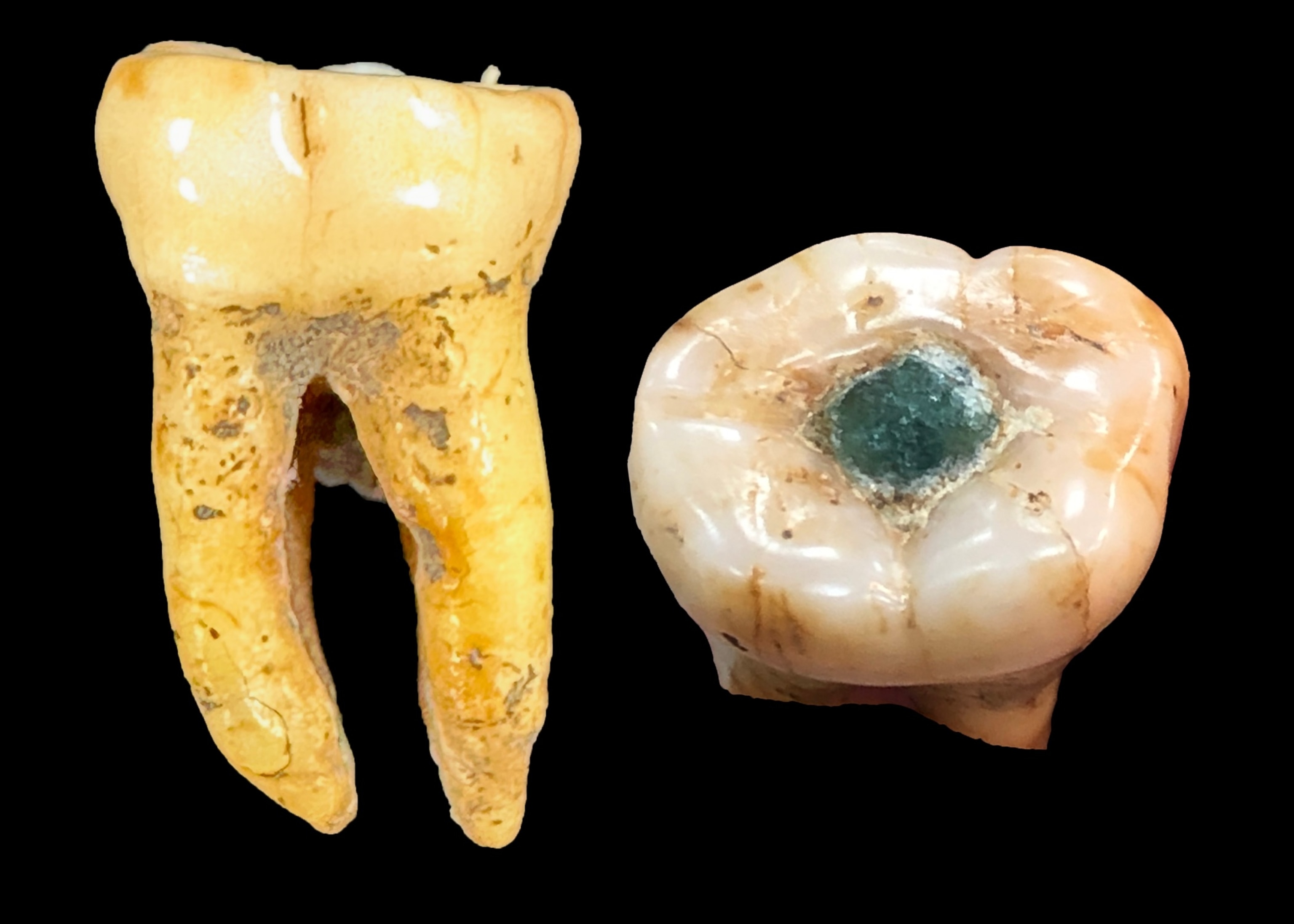
Acquiring a sample from the tooth for molecular testing would have damaged it, but the authors believe it dates to the Classic period, from A.D. 250 to 900 when Kaminaljuyu was at the peak of its regional power.
(Here’s why the idea that the ancient Maya “collapsed” is wrong.)
Most teeth that contain these decorations come from this “golden age.” In all cases, it’s difficult to say why the Maya modified their teeth. But the fact that most inlays appear in the more visible front teeth has led many researchers to link the alterations to ritual, fashion, or perhaps even a mixture of both.
Status could have also played a role. Researchers have found inlays in Classic-era Maya teeth from the rich and poor, but they are certainly more common in higher status individuals, notes Marco Ramírez-Salomón, an orthodontist at the Autonomous University of the Yucatan and author on the paper. Some high-status people had as many as eight inlays in their mouth of various shapes and colors. “They are more opulent,” he says.
Clues in the glue
Most inlays are made of jade, but some are made of the mineral pyrite commonly called “fool’s gold.” Other teeth lack stones and are instead just filled with a black cement normally used to hold the stones in place. The cement ingredients have suggested something beyond aesthetics and opulence might be at play in Maya dental practices. In a previous analysis, Ramírez-Salomón, Vega-Lizama and their colleagues found traces of phosphates, calcium, vegetable oils from flowers and such, and sometimes bitumen in these sealants.
Some of these sealants are better than those used in modern dental fillings, Ramírez-Salomón says. He points to the fact that modern fillings sometimes fall out within the lifetimes of people who have cavities, while these inlays have stood the test of time, lasting centuries or even more than a millennium after the individual died.
The sealants also likely carried anti-septic properties, Ramírez-Salomón says. The team has found less evidence of secondary cavity damage around these inlays, and less evidence of cavities in general, in the teeth of people with inlays compared to the teeth of Classic Maya without inlays.
(This may be the earliest evidence of Neanderthal “dentists.”)
Why modify a tooth you can’t see?
All of the gem-encrusted Maya teeth uncovered so far are front teeth. But this new inlay is unique in that it is the only modified molar yet known by researchers, says Ramírez-Salomón.
The location of the back tooth gives more weight to the case that it wasn’t purely for fashion or status, especially due to its lack of visibility, says Roger Forshaw, a researcher who studies ancient Egyptian dentistry at the University of Manchester in the United Kingdom who was not involved in this recent paper. “Nevertheless, the absence of visibility does not necessarily exclude symbolic or ritual significance,” he says. “Objects that are not readily visible to others may still carry personal, social, or religious meaning for the individual concerned.”
Forshaw says the theory that the molar inlay was for health or pain relief is “plausible” but not a demonstrated fact. The unusual specimen “raises the possibility that some Maya dental interventions may have extended beyond the decorative modifications for which they are best known,” he says.
Maya dental precision
The ancient expert who placed the jade in the molar did it while the patient was alive, Vega-Lizama says. Using 3D tomography imaging, the research team peeked inside the tooth, and the inlay showed signs of calcifying after placement. “The authors make a persuasive case that the inlay was inserted during life, based on the evidence of pulp calcification,” says Forshaw.
Due to the development of the tooth, Vega-Lizama and her colleagues suspect that the individual was likely a late teenager and lived for five to 10 years after the procedure.
Further analysis using an electron microscope revealed the degree of precision that the Maya dentist used. The molar has rounded marks demonstrating the use of some kind of rudimentary drill. Ramírez-Salomón still isn’t sure how the Maya did these operations—archaeologists have never found such a tool in digs, though given how fine it would have been, this isn’t really a surprise.
The exactness of many inlays also suggests a jeweler’s intricate level of skill. “Some of these inlays are so precise that when you put it in a tooth, you can hear a click when you put it inside,” he says.
At the end of the day, this tooth was one-of-a-kind and of uncertain providence, as both the authors of the study and Forshaw point out. “As such, it raises interesting questions but does not by itself justify broad conclusions about Maya dental practice,” Forshaw says.
But it nonetheless introduces the possibility that the ancient Maya had someone to turn to keep the Tooth Fairy at bay a little longer.
Comments
Post a Comment