The mummy, the Iliad, and a mysterious death ritual
Archaeologists in Egypt unearthed a sealed packet of the epic poem resting atop a Roman-era mummy, suggesting they may have been used as a magical ward for the afterlife.
In 1798, Baron Vivant Denon, an artist accompanying Napoleon Bonaparte on his military expedition through Egypt, sketched a large sand-blown column amid remnants of an ancient city.
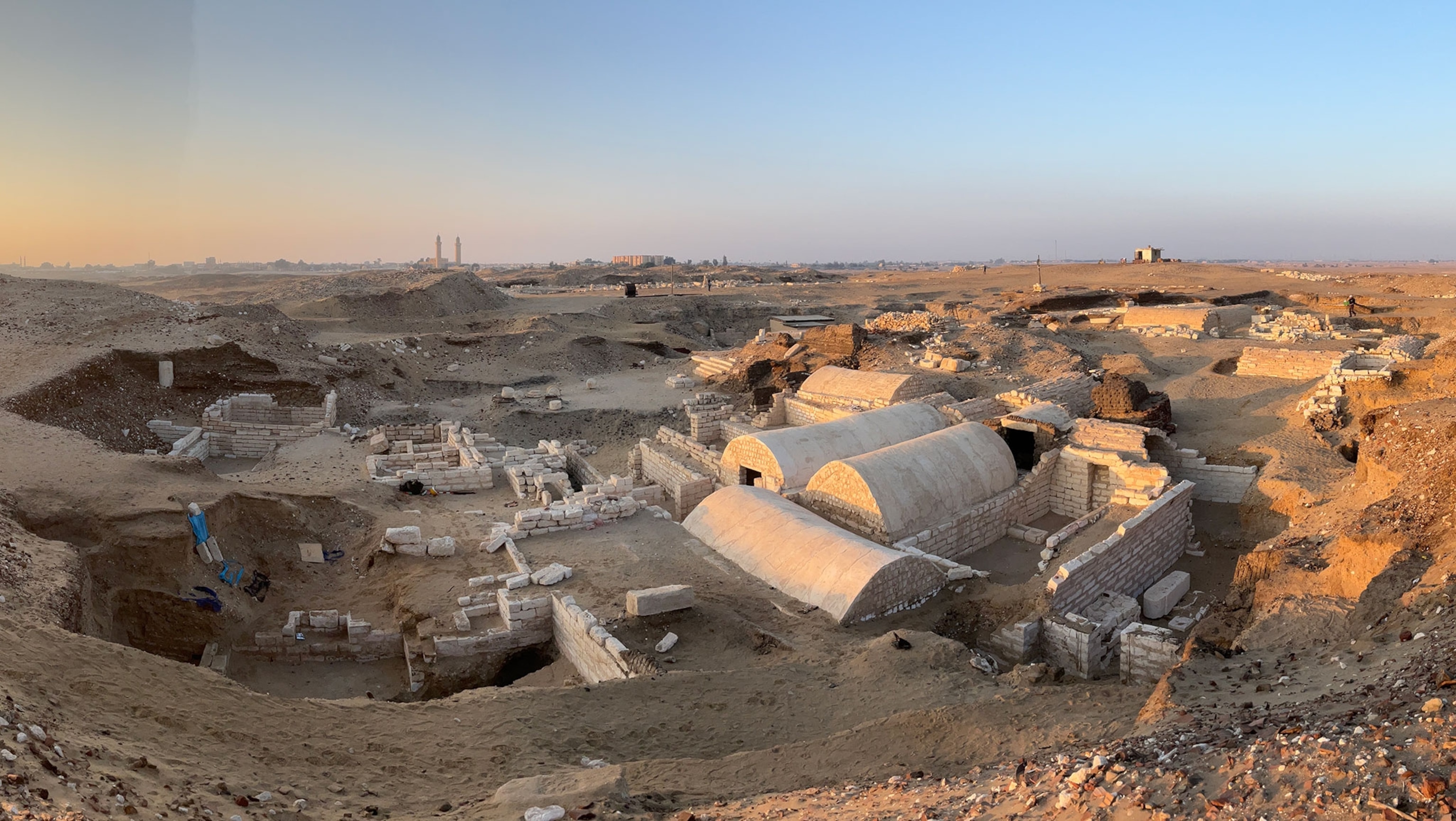
With his drawing, he had inadvertently documented the first modern evidence of Oxyrhynchus, an important ancient Egyptian port. Later excavations would unearth tombs, mummies, curious golden tongues, and the largest cache of papyri ever discovered. But last month, the Egyptian Ministry of Tourism and Antiquity announced that researchers at Oxyrhynchus uncovered something else: a sealed packet of papyri placed atop a mummy containing fragments of Homer’s Iliad.
“This is undoubtedly a very intriguing discovery,” says Serena Perrone, a philologist (someone who studies language in oral and written forms) at the University of Genoa, who was not involved in the research. She says the finding “opens up the possibility of a new context for the use of Homeric poetry in Greco-Roman Egypt.”
The discovery was made late last year by a Spanish research team while excavating an area called the High Necropolis. There, they uncovered 20 packets of carefully sealed papyrus placed atop their solemn mummy owners. Preliminary dating suggests the packets and the deceased date to around the first or second century A.D., well after Rome conquered Egypt in 30 B.C.
“They were found in Roman-period mummies at Oxyrhynchus, placed over the body and sealed,” says Ignasi Adiego, a philologist at the University of Barcelona who was part of the research team, known as the Oxyrhynchus Archaeological Mission. They were closed with clay embalmers’ seals, he says, many of which were emblazoned with hieroglyphics.
“Seals were typically reserved for documents—such as contracts, wills, and letters—as a safeguard against manipulations,” Perrone adds. “I am unaware of any literary papyri bearing seals.”
Homer’s Iliad was not a novelty to the city of Oxyrhynchus or its inhabitants. Over 800 fragments of the text have been discovered there over the past two centuries. But the discovery of Iliad fragments within a strange, sealed packet, as part of the mummification process, is new.
"It raises many questions,” says Perrone.
Papyri aplenty at Oxyrhynchus
Oxyrhynchus, named after a divinely celebrated Nile elephant fish, lies about 118 miles south of Cairo, in the modern city of El-Bahnasa. Hieroglyphic evidence suggests the city has an extensive history stretching back to Nubian rule in Egypt between 747 and 656 B.C. and possibly much earlier. It burgeoned with Greek settlers once Alexander the Great conquered Egypt in 332 B.C. and quickly became a major city. The site connected the Mediterranean to oases in the west, serving as an instrumental pit stop for traders and travelers.
Excavations at Oxyrhynchus have revealed reams of papyri, a paper-like material made from the swamp-dwelling papyrus plant (Cyperus papyrus). The material has been found in rubbish piles, tombs, and even stuffed within mummies as garbage-like filler as part of the embalming process.
(They mummified a modern human with ancient tools. It got messy.)
“Thousands upon thousands of papyri and book fragments” have been unearthed across the city, says Perrone.
Papyri at Oxyrhynchus were used for a litany of purposes, including cementing contracts, collecting taxes, and recording books of ancient comedies, tragedies, and philosophical treatises. When texts fell into disuse or were damaged, they were often recycled and repurposed—often as a papier-mache-like covering for mummies called cartonnage.
“The dismantling of cartonnage has yielded fragments from works of literature that were otherwise largely lost,” says Perrone. These works include ancient Greek comedies by the Athenian playwright Menander (342 – 290 B.C.) and Homeric poems like the Iliad and the Odyssey, she says. “Oxyrhynchus is an exceptional site for the sheer quantity of papyri it has yielded.”
The sealed Iliad
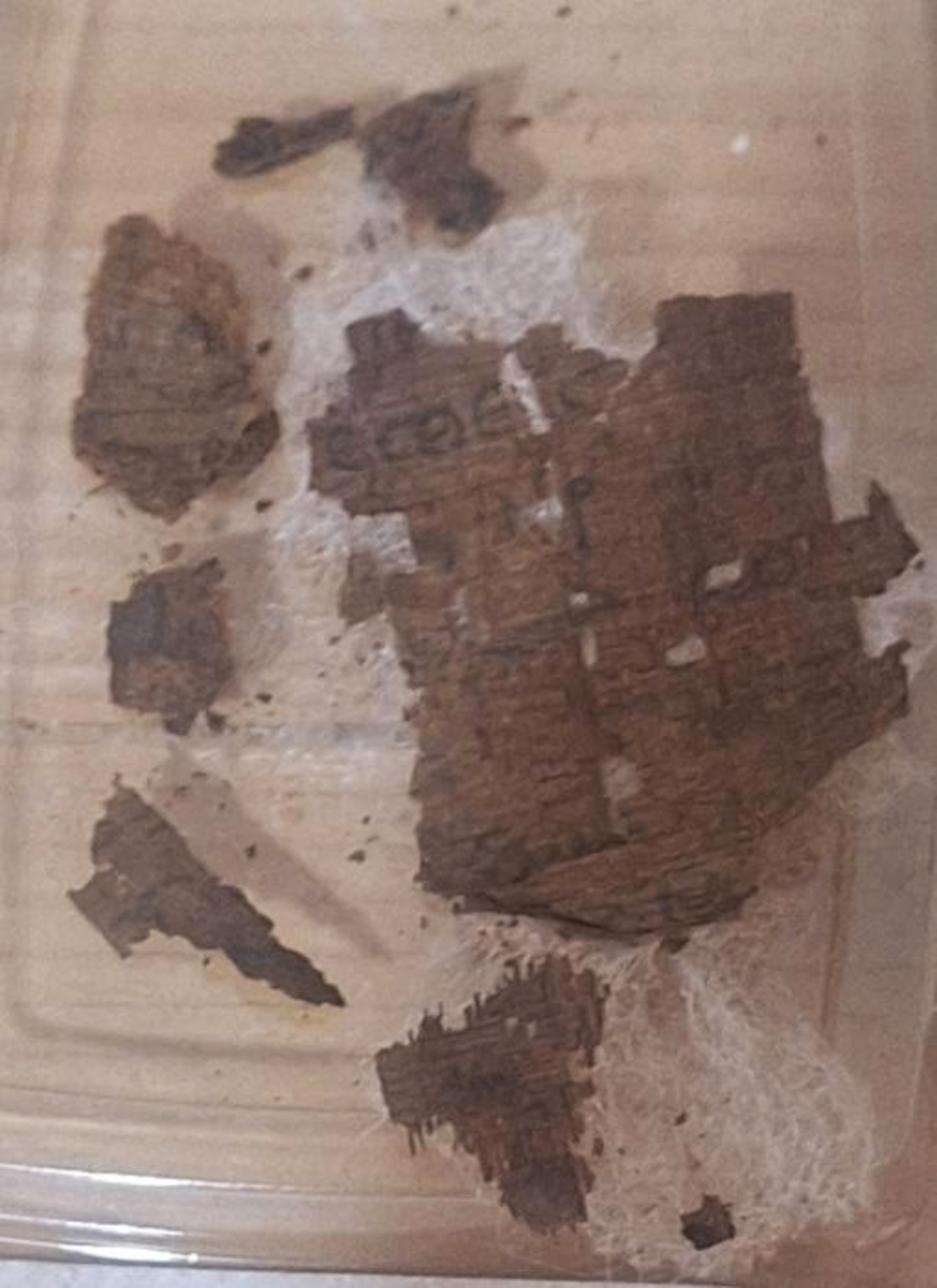
By carefully opening a few of the sealed packets and scrutinizing their contents, Adiego and the other researchers identified several pieces of papyrus inscribed with ancient Greek lettering.
“The material consists of fragments, some of them extremely small,” he says. “The text is highly incomplete and only parts of words could be identified.”
To verify the text, Adiego consulted a corpus of historical data. He and his colleagues soon found that across the packets, most of the writing consisted of typical funerary or magical writings, but one packet contained verses from Homer’s Iliad.
“I was able to establish that the text undoubtedly belonged to Homer’s Iliad,” Adiego says, and that “all the usable fragments could be located within a very specific section.”
Adiego pinned the text to a passage called the “Catalogue of Ships,” which lists various elements of the naval forces and their prominent commanders primed to invade the Near Eastern city of Troy. “To modern readers this may seem rather repetitive, as it consists largely of names, but for ancient Greek audiences it was a highly valued part of epic poetry,” he says. “It connected the Greek world to a shared mythical origin and a common identity.”
(Tour the mighty palaces of the heroes of the Iliad)
While Adiego and his colleagues are still trying to understand the discovery, they suspect the packaged papyrus represents a newly documented kind of “protective ritual practice” that offered something to the dead.
Initially, Perrone thought the Iliad papyrus might simply have been junk used to stuff the mummy. But “if the papyrus was folded, sealed, and placed on top of the mummy—rather than inside it—alongside a series of other sealed papyri, things change significantly!” she says. “This is certainly not a case of scrap papyrus used as filler.”
She agrees that ritualistic use is one possible interpretation.
“Several literary sources mention incantations utilizing Homeric verses for protective or healing purposes,” she says. But in those instances, the texts cited specific lines, not “extensive passages” like an excerpt from the Catalogue of Ships as found atop the Oxyrhynchus mummy.
“The Homeric poems—and the Iliad even more than the Odyssey—were the foundational texts of Greek culture: used from the earliest stages of literacy, and read and studied pervasively,” says Perrone. “It seems Oxyrhynchus has something more to say about the ancient Greek literary heritage.
Comments
Post a Comment