
The story of how the first American went to space
A
s NASA fought to catch up to the Soviet Union in the space race, they selected a Navy veteran as the first astronaut. But what happened once Alan Shepard stepped into the space capsule?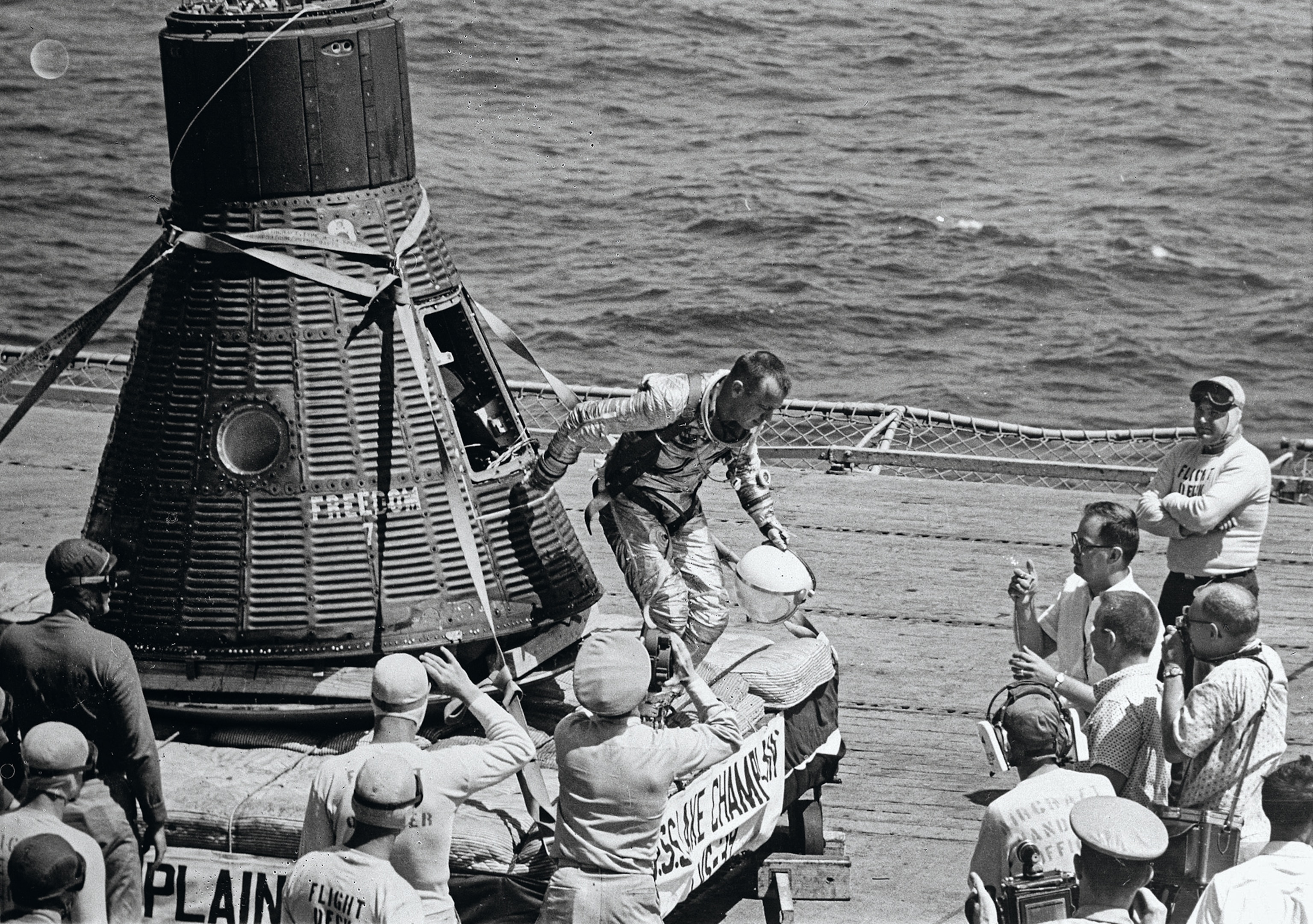
Alan Shepard emerges from the Freedom 7 space capsule after it was lifted out of the Atlantic Ocean and placed aboard the U.S.S. Lake Champlain aircraft carrier.GETTY IMAGESByPatricia DanielsPublished May 4, 2026
Jerrie Cobb and the Mercury 13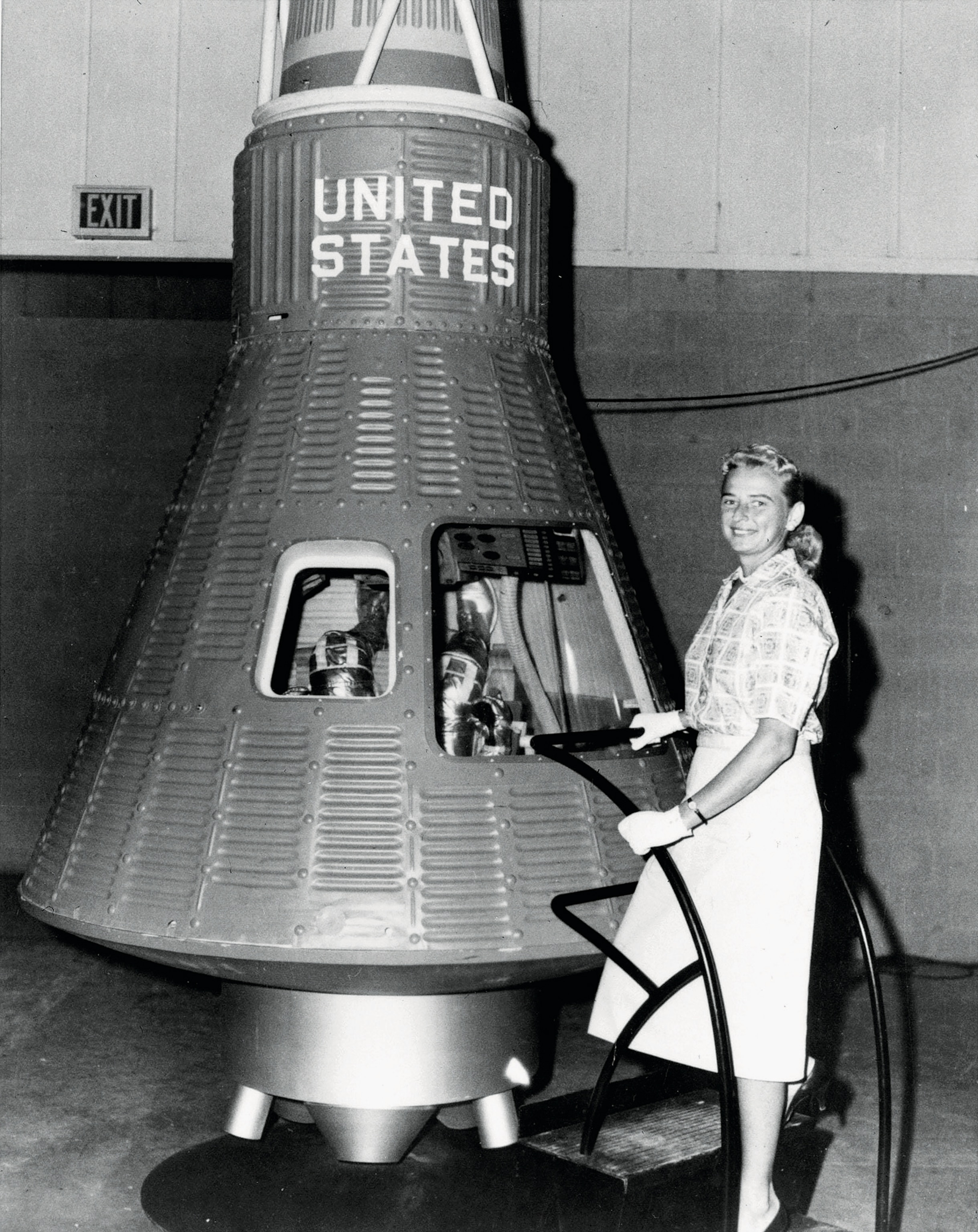 Pilot Jerrie Cobb, the first woman to go through astronaut screening in the U.S., poses with the Freedom 7 Mercury capsule.ALAMY/CORDON PRESSThe Mercury 13 were a group of female aviators who underwent the same rigorous screening tests as the Mercury 7 male astronauts. Also called the First Lady Astronaut Trainees (FLATs), they included Jerrie Cobb, a young pilot with three world aviation records. The doctor responsible for devising NASA’s training noticed Cobb’s abilities and extended astronaut evaluations to women, believing they may offer physiological and psychological advantages over men. But the effort, never officially sanctioned by NASA, lost its private funding, and the agency insisted on jet experience as a prerequisite for astronaut training. (Women were barred from flying jets.) Cobb outperformed many of her male counterparts, but she never reached her goal of becoming the nation’s first female astronaut. NASA would not admit women until 1978, and Sally Ride became the first American woman in space, in 1983, 20 years after Valentina Tereshkova’s pioneering flight for the Soviet Union.
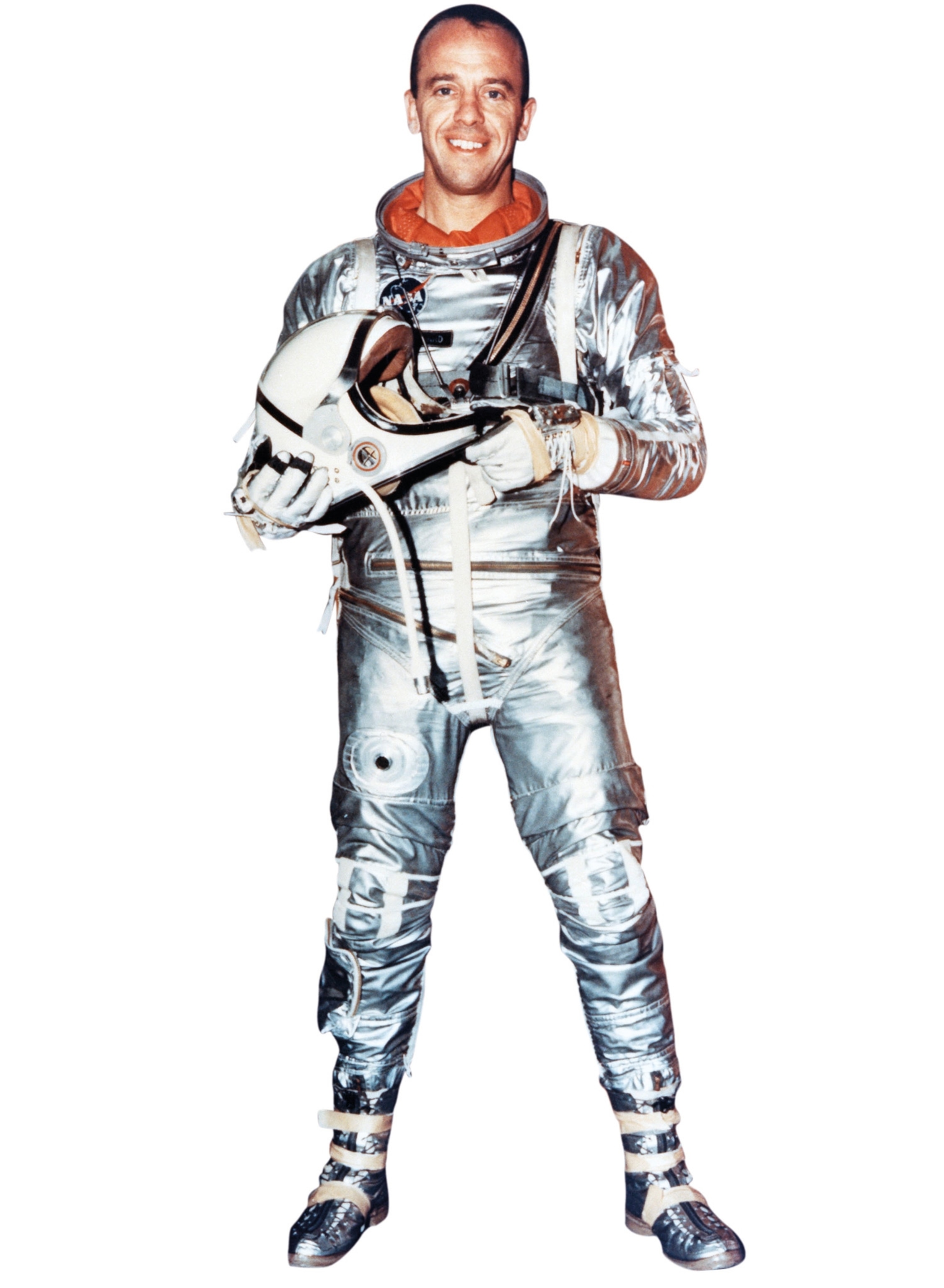 Moments prior to his launch, the astronaut poses for a photo in his Mercury pressure suit.GRANGER/ALBUM
When a Redstone rocket lifted the spacecraft Freedom 7 into the sky on May 5, 1961, there was more resting on pilot Alan Shepard’s shoulders than just 6 g’s of acceleration. The outcome of his mission could decide the future of the American space program. The United States and its rival, the Soviet Union, were in a race to conquer outer space and the U.S. was losing. In 1957, the U.S.S.R. had shocked the world by launching the satellite Sputnik 1 into orbit. From that moment, the U.S. was scrambling to catch up. The next year, President Dwight D. Eisenhower and his administration created the National Aeronautics and Space Administration (NASA), which in turn launched Project Mercury, with the goal of sending an American into space by 1960. The seven test pilots picked to train for the mission became known as the Mercury 7; among them were John Glenn and Alan Shepard, who became friends and rivals as they competed for the first assignment. However, they were both denied the coveted title of first man in space. On April 12, 1961, Soviet cosmonaut Yuri Gagarin blasted off in Vostok 1, orbited the Earth, and landed safely.
(What it really took to become an astronaut during the Space Race)
Gagarin’s triumph propelled the space race into overdrive. On May 2, NASA announced its inaugural astronaut: the lanky, 37-year-old Navy veteran, Shepard. After weather delays, on May 5 Shepard donned his pressure suit and squeezed himself into the tiny Mercury capsule, a craft that could fit easily into a modern garage. But as it turned out, NASA hadn’t foreseen everything. Lying on his back, strapped into his seat and facing an array of switches and dials, Shepard realized that his bladder was full. He was told he couldn’t get out of the capsule. So, as Shepard recalled later, he had no choice but to pee into his long cotton underwear and focus on the next steps.
At 9:34 a.m., the rocket ignited and Freedom 7 lifted into the air. As some 45 million people watched the event on television, the capsule detached from its booster and soared to 116 miles above the planet. In his brief time aloft, Shepard became weightless, practiced controlling the spacecraft manually, and photographed the Atlantic Ocean before splashdown.
(What will future astronauts eat in space?)
Shepard’s suborbital flight took only 15 minutes and 22 seconds, but the die was cast. On May 25, President Kennedy announced a major expansion of the U.S. space program. “I believe that this nation should commit itself to achieving the goal, before this decade is out, of landing a man on the moon and returning him safely to the Earth,” he said. Just over eight years later, Apollo 11 touched down on the lunar surface.
