Was Molly Pitcher a real person?
- HISTORY & CULTURE
There's a hidden history of the forgotten women who inspired the legend.
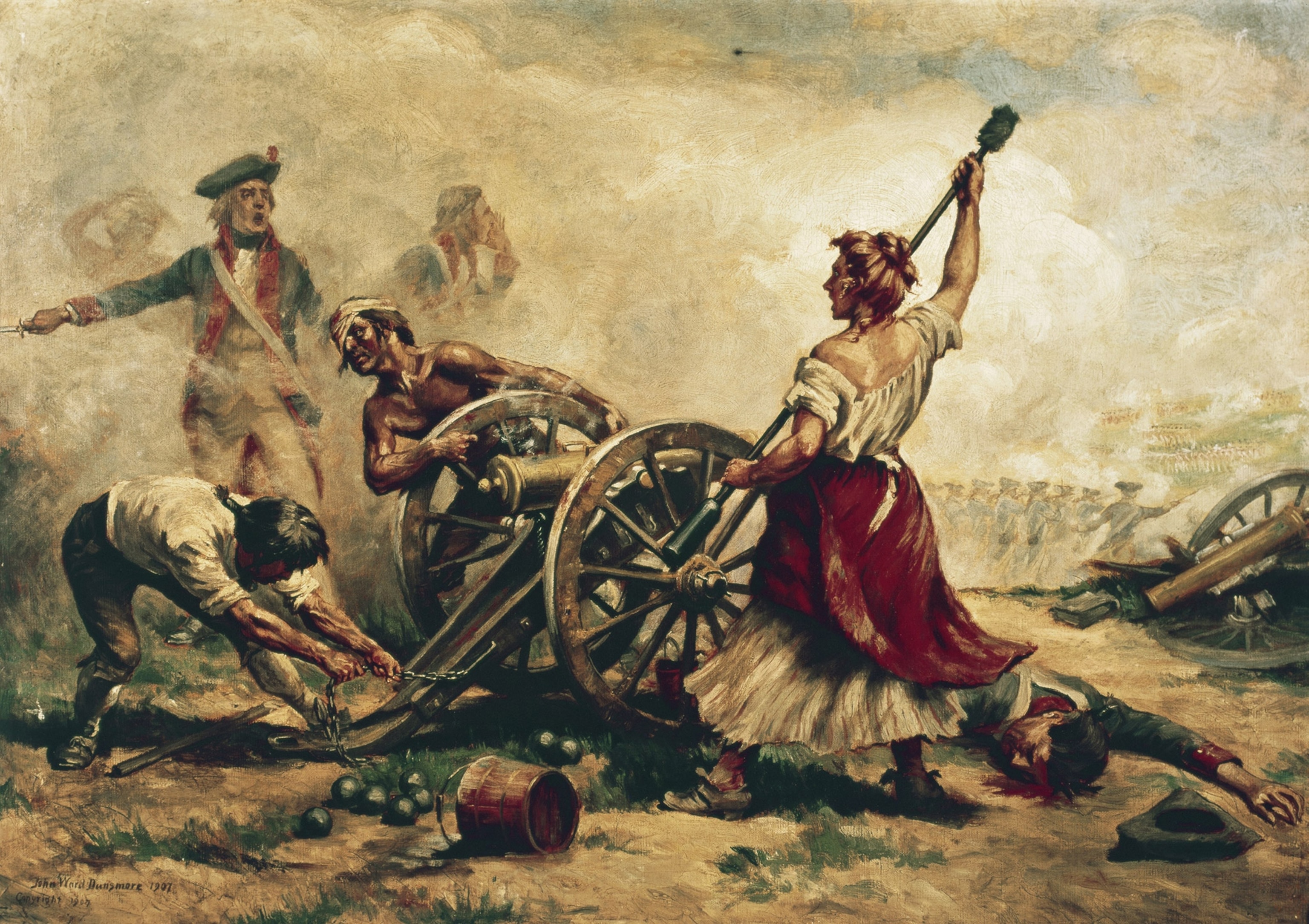
During the darkest days of the American Revolution, women followed their husbands into war, aiding American troops with much-needed water and medical care—and bravely fighting alongside male soldiers during key battles. In American folklore, a woman nicknamed “Molly Pitcher,” typified the grit and courage of these women who selflessly provided comfort to soldiers on the battlefield.
Historians now believe “Molly Pitcher” is a historical myth, a composite folk figure who embodied the wartime experiences of multiple real-life women. Female volunteers played an important role on Revolutionary War battlefields, even though they were barred from formal military service and largely unrecognized for their efforts.
Here’s what to know about the legend of Molly Pitcher—and the real-life women she represents.
The origins of “Molly Pitcher”
Historians largely agree there was no single woman named Molly Pitcher, and no known contemporaneous account of a woman active in Revolutionary War battles cites that name. But as historian Emily Lewis Butterfield notes, anecdotes began circulating about such a figure during the 1830s as Americans told and retold stories about the nation’s founding.
(He was the last king of America. Here’s how he lost the colonies.)
The stories that emerged about Molly took two main forms. In one, battlefield soldiers called “Molly! Pitcher!” as they asked for water to slake their thirst and help swab down their artillery. (Molly was a common nickname for the even more common name Mary.) In another, a woman named Mary showed bravery in battle—often the 1778 Battle of Monmouth.
Since the Molly Pitcher name only emerged in accounts of the war long after its end and does not appear in any known battlefield documentation from the war itself, historians can’t pinpoint a single incident or person who may have inspired the legend. But though it is unclear whether the Molly Pitcher legend was based on a specific woman or a battle cry, what is almost certain is that Molly Pitcher stories were inspired by real-life incidents involving women who followed their male family members onto Revolutionary War battlefields. Now known as “camp followers,” these women were essential to the success of the war.
Camp followers cared for men of all social ranks, acting as laundresses, cooks, water bearers, seamstresses, nurses, and critical supply links. They were so omnipresent that they were often paid by regimental leaders and disciplined for bad behavior in camp. In her book Belonging to the Army: Camp Followers and Community during the American Revolution, historian Holly A. Mayer estimates that there were between 3,500 and 7,000 such camp followers during the American Revolution—about one for every 30 or 35 soldiers. Though sometimes accused of loose morals or prostitution and rarely compensated for their service, camp followers nonetheless played an important role in the Revolution.
(Take our crash course and test your knowledge of the American Revolution)
The figure of Molly Pitcher became common as Americans told, retold, and embellished battlefield stories in the wake of the Revolution, and Butterfield found the first known recorded Molly Pitcher stories in newspapers and encyclopedias dating from the 1830s. In one widely circulated example from 1830, a woman known as “Captain Molly” makes a dramatic speech about avenging her husband’s death before taking his place at the cannon. After the battle, she is thanked by George Washington himself.
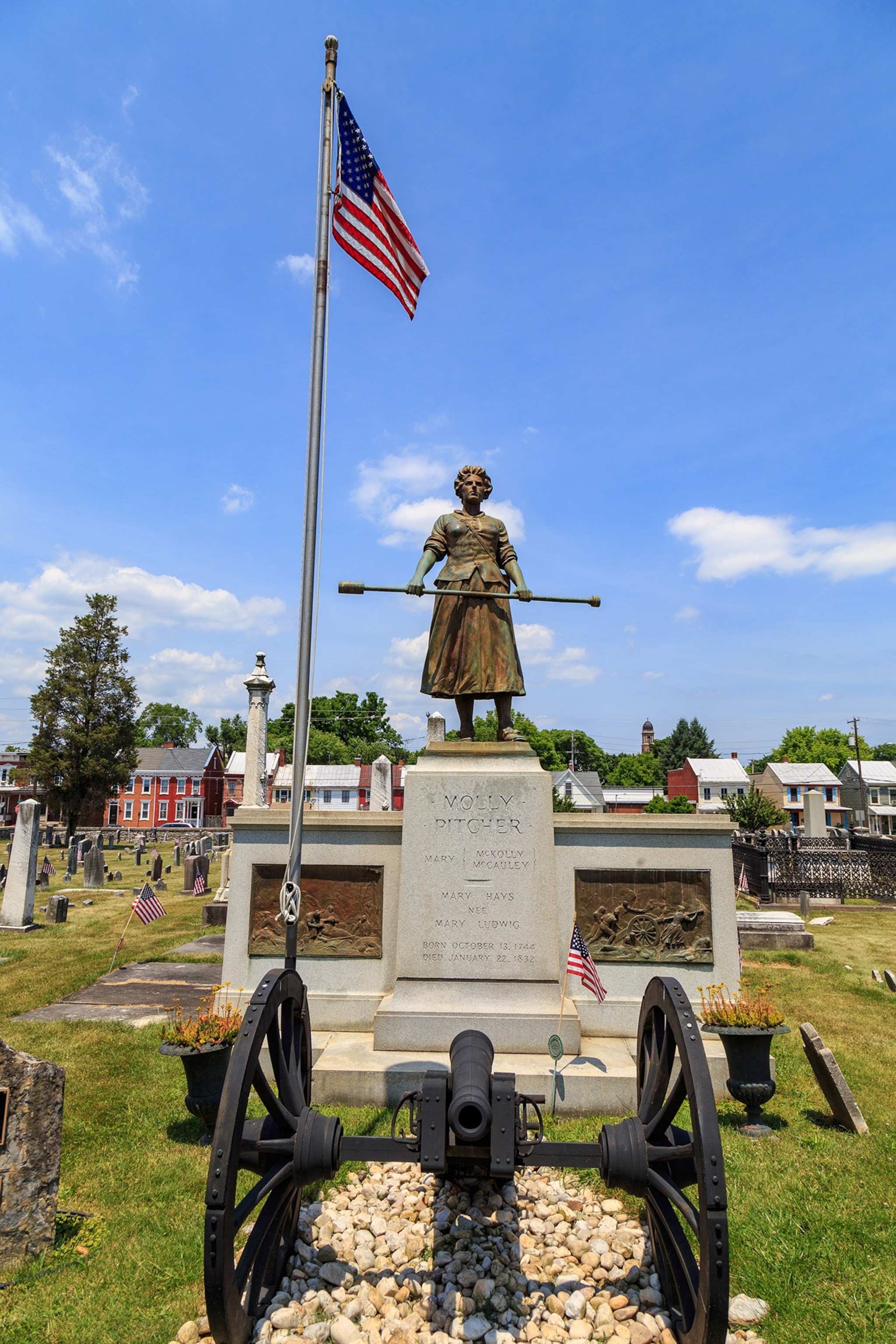
Though early versions of the tale emphasized “Molly”’s nerve and her more masculine exploits during battle, Butterfield notes that later versions focused on her patriotism and loyalty to her husband, reinforcing social expectations about acceptable femininity.
Though the specific inspiration for the Molly Pitcher figure may be contested, the tall tale points to a historical reality: the presence and participation of women on every battlefield of the Revolutionary War. Though women were barred from military service, they simply showed up alongside their husbands, brothers, and fathers. These camp followers became common subjects of battlefield lore, many of which could have inspired at least part of the Molly Pitcher legend.
One of them, Mary Ludwig Hays, is the figure most commonly identified with the Molly Pitcher tale. The daughter of German-born immigrants, she married barber John Hays in 1769. When the Revolutionary War began, John joined a Pennsylvania artillery regiment—and his wife followed him throughout multiple battles.
At the Battle of Monmouth on June 28, 1778, the Continental Army faced the British amid sweltering summer conditions. One participant, private Joseph Plumb Martin, recalled in a later memoir that he watched a woman assisting her husband at his gun throughout the battle.
(The grandest, wildest, strangest things that make up America)
“While in the act of reaching [for] a cartridge and having one of her feet as far before the other as she could step, a cannon shot from the enemy passed directly between her legs without doing any other damage than carrying away all the lower part of her petticoat,” Martin wrote. “Looking at it with apparent unconcern, she observed it was lucky it did not pass a little higher, for in that case it might have carried away something else, and continued her occupation.”
Though Martin did not identify the nonchalant gunner by name, modern historians think Hays, whose husband served in the same regiment, may be the unnamed woman whose petticoat was shot off. Intriguingly, Hays—by then widowed and remarried—was eventually awarded an annual pension for her wartime service by Pennsylvania lawmakers. At some point in the mid-19th century, Hays’ name began appearing in stories of the legendary Molly Pitcher.
Other real-life “Mollies” applied for pensions for their wartime service and may have helped their fallen husbands during battle. Another example is Margaret Corbin, a camp follower who helped defend Fort Washington from Hessian troops early in the Revolutionary War. Corbin had accompanied her husband—Virginia farmer John Corbin—to battle, and reportedly took his place at his cannon when he was injured during the Battle of Fort Washington. Despite sustaining multiple life-threatening injuries herself, she remained on the battlefield until her unit surrendered to the British. Released by her British captors soon after the battle, her story soon reached government officials, who arranged for a pension equivalent to half of a male soldier’s monthly pay.
Massachusetts’ Deborah Sampson was also nicknamed “Molly” by her fellow soldiers for her feminine appearance. Sampson defied the Continental Army’s gender line by posing as a man and enlisting in the war while wearing men’s clothing. She was ultimately discharged from the Continental Army after sustaining wounds in multiple battles. After the war, Sampson toured the new country giving lectures about her wartime experiences. But her service was only honored after her death, when her husband Benjamin Gannet petitioned Congress for a spouse’s pension.
Forgotten stories, real heroes
Why has one fictitious woman come to stand in for so many real-life heroines? Historian Stephanie Hall offers one possible explanation: Camp followers defied gender norms, leaving hearth and home to accompany men into the grime and misery of war. Once the war ended, women’s often gender-bending wartime exploits were downplayed, a pattern that occurred after other American conflicts such as the Civil War and both World Wars.
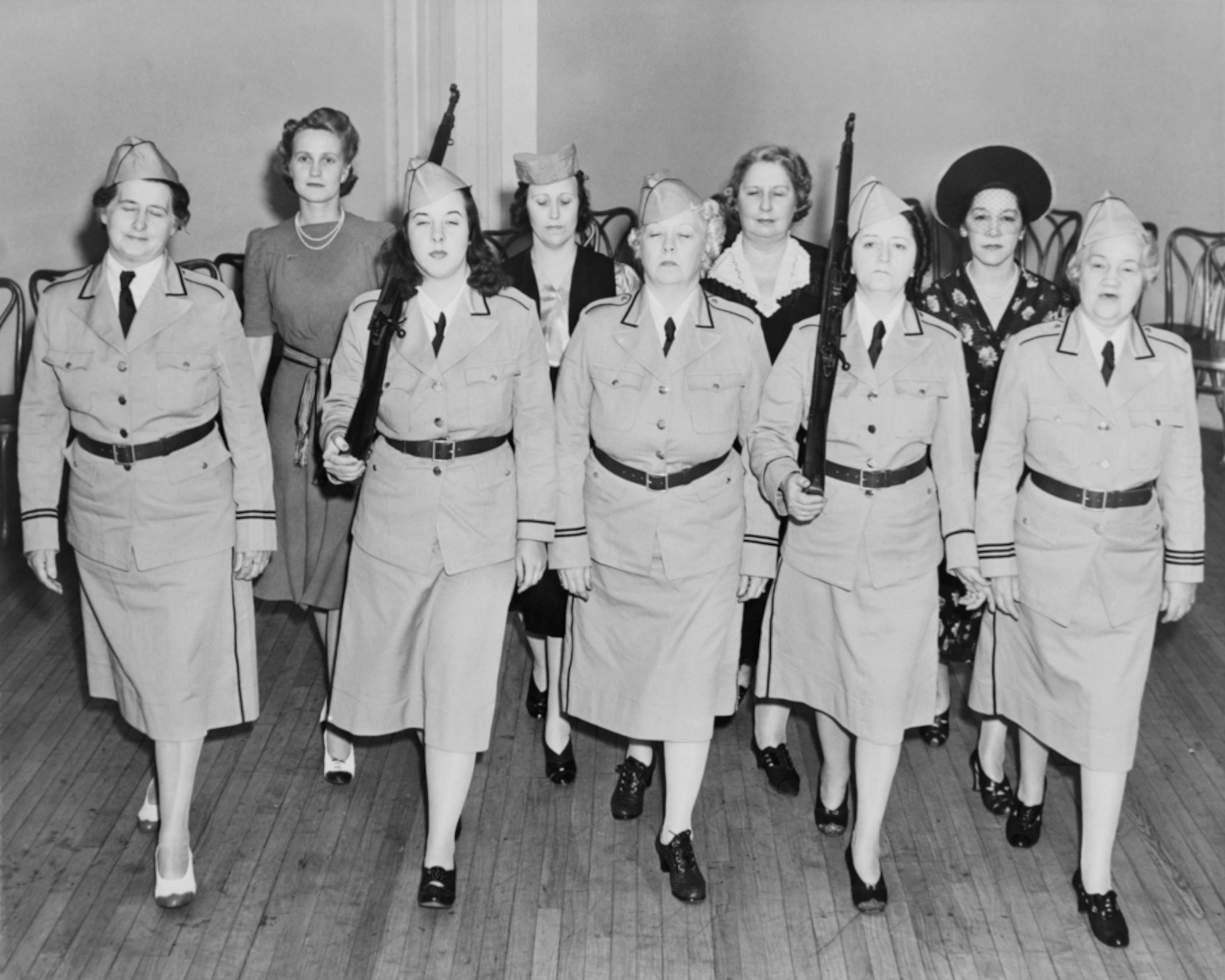
As Revolutionary War legends took root in the years after the war, Hall writes, many women who served in the war were overlooked or remained silent about their own service.
(The story behind the Great Compromise)
To Butterfield, Molly Pitcher is a “comforting example of dramatic, but quickly contained, female patriotism”—a patriotism that drove women to abandon their traditional sphere to assist in birthing a new nation.
Perhaps the most convincing evidence of a real-life Molly Pitcher is the existence of the legend itself. Though still undersung, the brave women of the American Revolution persist in the stories they inspired—even if the specifics of their service are lost to time.
Comments
Post a Comment