Who was Mary Magdalene, one of the Bible’s most misunderstood women?
- HISTORY & CULTURE
She was there when Jesus was crucified, yet no one knows much about her. That might be why scholars just can’t quit chasing down the truth about Mary Magdalene.
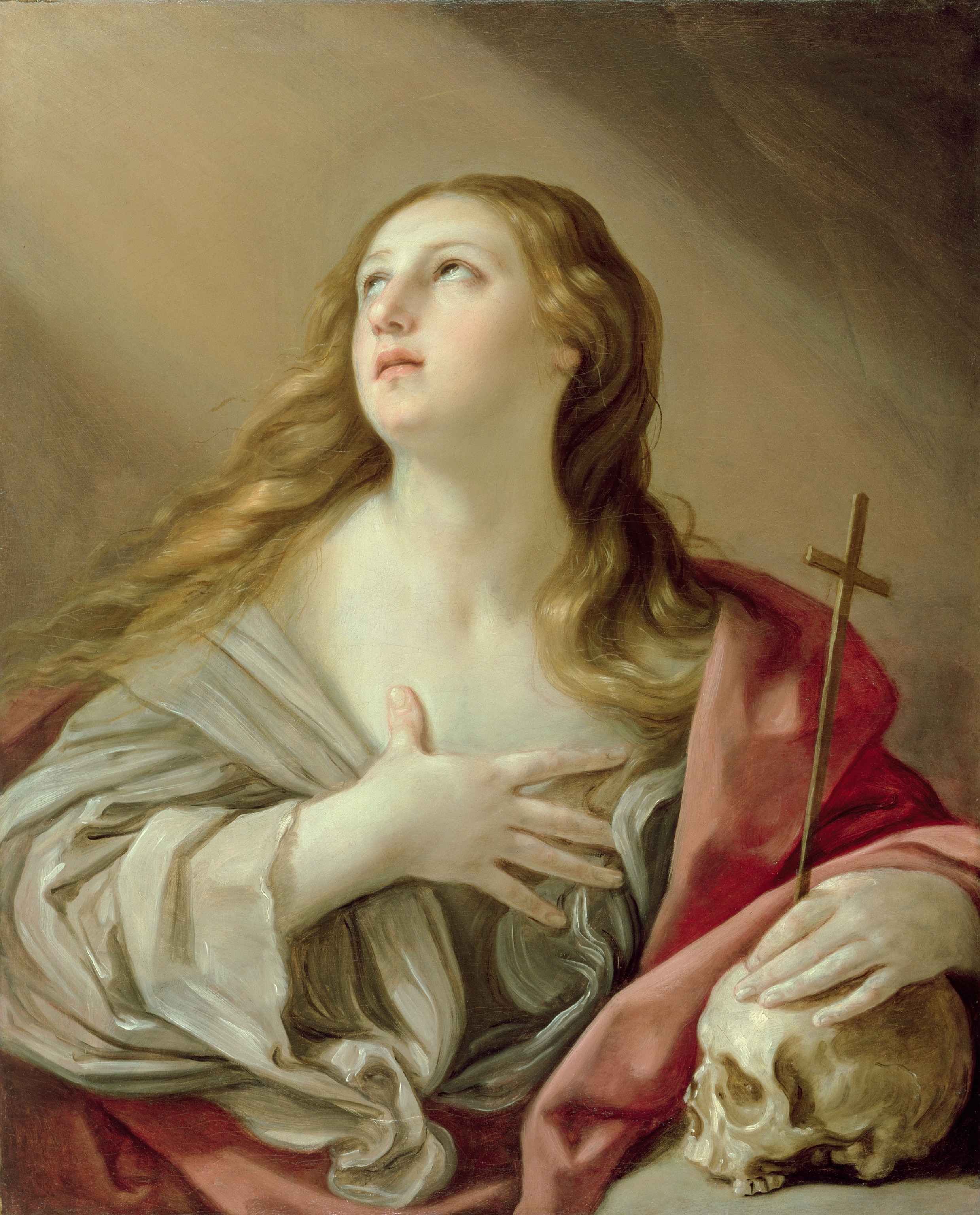
Mary Magdalene is one of the most recognized figures in the Bible. She has been called a woman possessed by demons, a sex worker, and the wife of Jesus.
Her story has been written and rewritten countless times in the 2,000 years since she was a follower of Jesus of Nazareth, yet so much about Mary Magdalene remains shrouded in mystery. She is sometimes confused with Mary of Bethany, another biblical figure, and thought to have written a Gospel. There are questions about her real name, when and where she was born, and how Mary Magdalene died.
What is true about her—and what archaeological evidence do scholars have about her life and world?
The story of Mary Magdalene
Textual evidence about Mary Magdalene largely comes from the canonical Gospels credited to Matthew, Mark, Luke, and John. They identify her as part of Jesus’ circle and the person who discovers his empty tomb. She is also the woman who anoints his body on Easter morning.
Yet they do not always agree on particulars about her life. Luke, for example, alleges demons possessed her, while others claim she witnessed Jesus’ crucifixion.
Additionally, non-canonical Gospels—early Christian writings that are not part of the New Testament—provide different accounts of Mary’s relationship with Jesus, including hints of a strong bond.
Some of these texts make the point that “male disciples are dismissive of her because she is a woman,” says James R. Strange, Charles Jackson Granade and Elizabeth Donald Granade professor in New Testament at Samford University in Alabama.
(These 12 men shaped Christianity—but did they really exist?)
What other information can scholars glean from these texts? Elizabeth Schrader Polczer, assistant professor of New Testament at Villanova University, observes that, “Mary Magdalene is never named in relation to a man, as many other women were. This suggests that Mary was an independent woman.”

This lack of certainty in biblical texts about Mary Magdalene’s life has fueled myths, misconceptions, and speculation. Chief among them: she was a sex worker. This myth dates to 591, when Pope Gregory I mistakenly conflated Mary with a figure the Gospel of Luke identified as a “sinner.” There’s no evidence that’s true—but the notion has been hard to shake.
(Mary Magdalene probably wasn’t a prostitute. Was she actually rich?)
Digging into where Mary Magdalene was born
However, scholars do not only rely on textual evidence to examine the past. Archaeology has yielded significant discoveries of the world described in the Bible, even as it comes with challenges.
According to Strange, “Archaeological evidence for the existence of an ancient figure has to be an inscription, say, in the mosaic floor of a synagogue or on a sarcophagus. As you can imagine, we usually find names of the wealthy or powerful or both inscribed on ancient objects.”
(This ancient mosaic offers extraordinary insight into the past)
Has there been such a discovery for Mary Magdalene?
The logical starting point for an exploration of Mary’s world would be to excavate the place she was from.
Traditionally, many have assumed the name “Magdalene” signified where Mary was born: Magdala. As a result, she is often referred to as “Mary of Magdala.” Where exactly was Magdala? Early theologians didn’t know for sure..
It may have been near the Sea of Galilee. Archaeologist Marcela Zapata-Meza, director of the Magdala Archaeological Project from 2010 to 2024, points out that “there are stories of pilgrims who claim to have been in the house of Mary Magdalene on the shores of the Sea of Galilee,” the region where Jesus was active.
By the sixth century, early Christians began referring to a specific site as “Magdala,” at the ruins of an ancient city situated on the western side of the Sea of Galilee.
However, Schrader Polczer, along with historian Joan E. Taylor, a professor of Christian Origins and Second Temple Judaism at King’s College in London, has argued there is no evidence this site was Mary’s home.
“During the first century, this location was known as [its Greek name] ‘Tarichaea,’” Schrader Polczer says. “It was not known as Magdala during Jesus’ lifetime.”
She adds, “It’s a misconception to reference her as ‘Mary of Magdala,’ because no gospel author ever refers to Mary Magdalene in this way. Rather, the gospel authors consistently call her ‘Mary the Magdalene’ or ‘the Magdalene Mary.’ ‘Magdalene’ could also indicate an honorific title (‘Mary the Tower-ess’) rather than her hometown.”
Archaeological evidence could theoretically put to rest these questions. Excavations in Magdala do reveal useful insight into Mary’s world. In 2009, researchers uncovered an ancient synagogue there, along with a carved stone depicting a menorah, illustrating how first-century residents of Magdala may have practiced religion.
They’ve also found the presence of stepped water installations in public and private spaces, which may have been used for ritual purification in the Jewish community, and would have certainly been a luxury. “All of these facilities receive groundwater and that makes them the purest in all of Israel,” Zapata-Meza says.
But “there is no archaeological evidence about Mary Magdalene,” says Zapata-Meza. While other researchers have claimed to have traced Mary’s remains to France or to a first-century tomb in Jerusalem, these claims have little credibility in the academic community.
(Here‘s why Noah’s Ark will never be found)
Filling in the gaps of Mary Magdalene’s life
Scholars nonetheless continue to uncover tantalizing clues about Mary Magdalene’s life and work as long-lost ancient texts come to light. The publication of P.Oxy 5577, a papyrus fragment from Egypt, may reveal crucial insights.
“Mary Magdalene may well have been one of Jesus’ closest disciples,” says Schrader Polczer, “and this newly published papyrus fragment supports this possibility because Jesus instructs a woman named Mary in how to become ‘an image of the eternal incorruptible light.’”
However, the papyrus does not explicitly identify the woman as Mary Magdalene.
(Who wrote the Dead Sea Scrolls? Science might have the answer.)
Still, Schrader Polczer adds, the basic details of her life remain elusive. “There is much that will never be known about Mary Magdalene. We cannot be certain where she was born, who her family was, her age at the time of the crucifixion, or what happened to her after the events of Easter morning.”
So why do researchers continue to pursue the mystery of Mary Magdalene? Because her story offers glimpses into the history of Christianity—and because she was misunderstood for so long.
While the dearth of evidence about her life has allowed myths to proliferate for hundreds of years, Schrader Polczer says “the silver lining is that Mary has served as a patron saint of sex workers and ‘fallen women’ throughout the centuries.”
(How King David’s rise cost one woman everything)
Indeed, Mary Magdalene has become associated with people who have been historically marginalized, such as lepers. Medieval and early modern leper hospitals were sometimes named after her. Many continue to see her as someone who stands for those whom society neglects, rejects, or overlooks.
“Mary Magdalene resonates deeply with many people who feel that their voices and stories have not been heard or valued,” Schrader Polczer says. By bringing the story of Mary Magdalene to light, “we may be recovering crucial and overlooked aspects of Jesus’ vision for humanity.”
Comments
Post a Comment