Thawing permafrost is threatening Svalbard's 'corpse point'
- HISTORY & CULTURE
Human bones and artifacts from the largest whalers’ graveyard in the archipelago are at risk of disintegrating.
More than 300 years ago, young men from all over Western Europe boarded ships bound for the Arctic. Under the unceasing light of polar summer, in a landscape of rock and ice, they hunted bowhead whales in the waters surrounding the Svalbard archipelago. The work was brutal; the wind unrelenting.
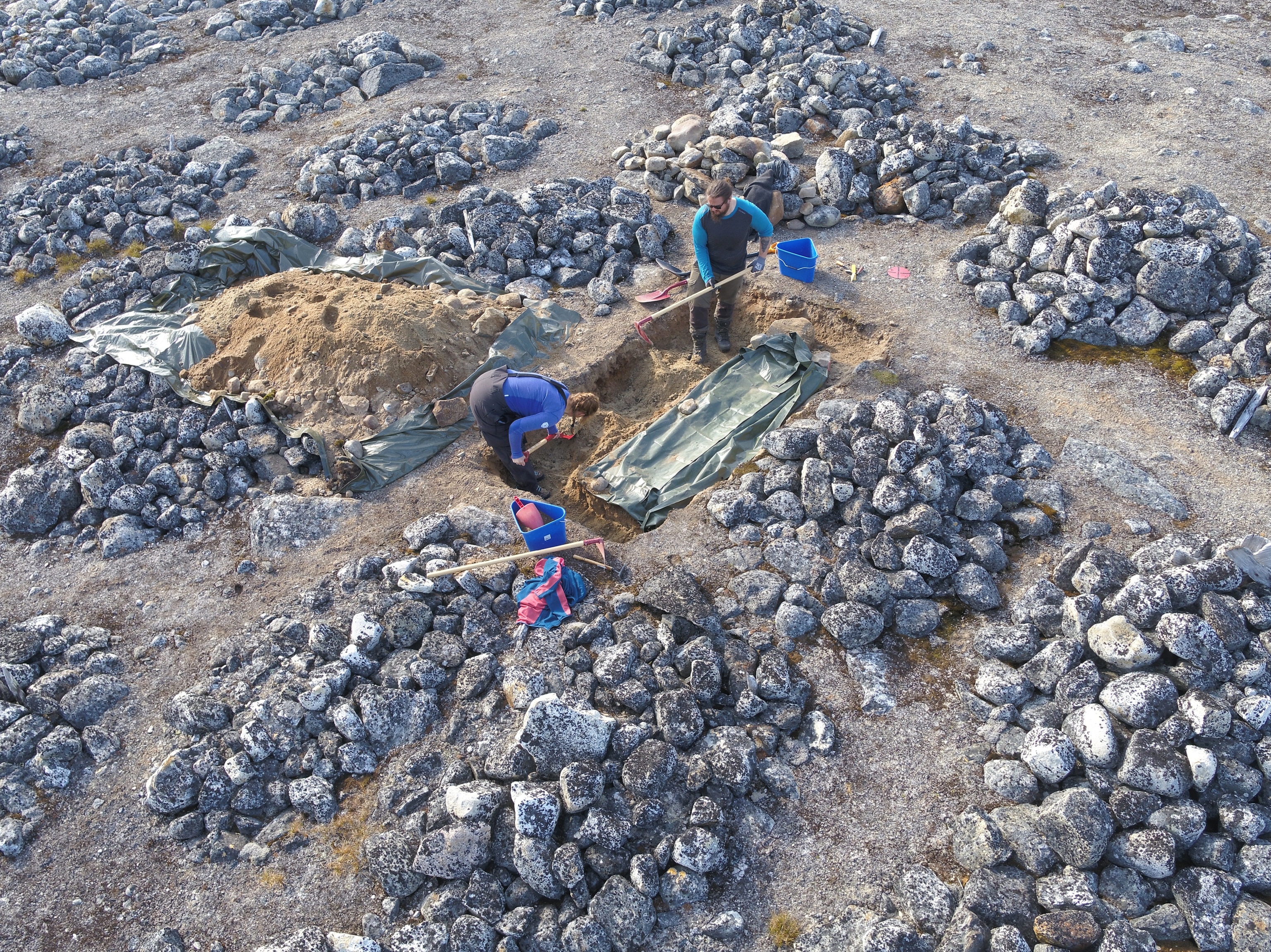
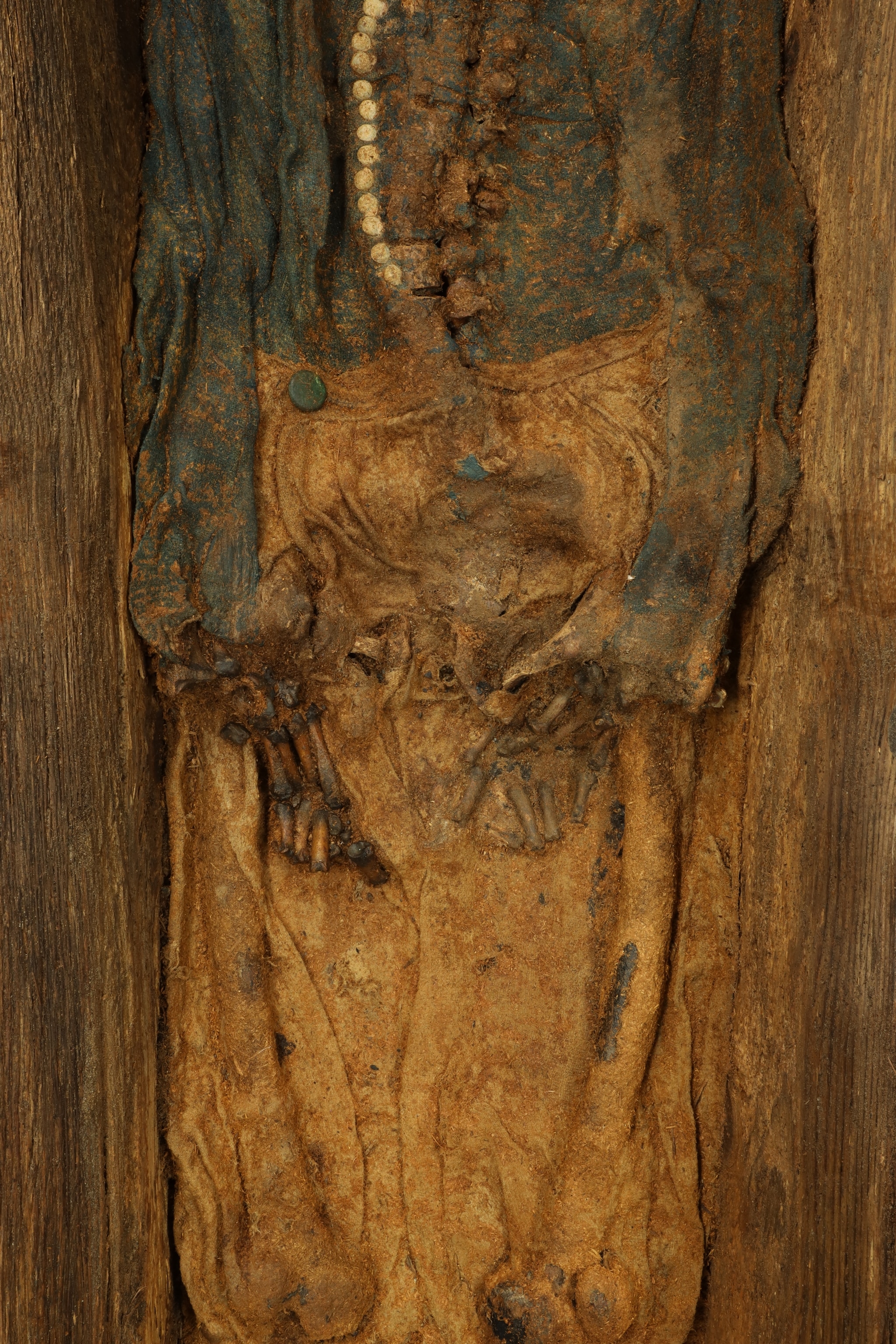
Many never made it home. They were buried in whalers’ graveyards, fully dressed in their woolen jackets and knitted hats. Their shallow graves were marked with mounds of stones.
Now, the permafrost that once kept the burials safely frozen is thawing.
“The unique thing about these whalers is that they aren’t preserved anywhere else,” says Lise Loktu, a researcher at the Norwegian Institute for Cultural Heritage Research (NIKU) in Tromsø, Norway.
In a paper published this past spring in PLOS One, she reported that climate change has helped damage the irreplaceable artifacts over the past four decades. She also detailed her efforts to study the whalers’ remains before they’re lost.
“For us, it’s a way of telling their story and getting their experiences known,” she says, “even if it’s 300 years later.”
Dangers in the ice
The first English whaling ships sailed for Svalbard in 1611, followed by the first Dutch voyages in 1612.
They arrived in the Arctic during particularly fierce conditions. The 17th century marked the coldest period of the Little Ice Age in the North Atlantic. At that time, Svalbard experienced waves of unusually low temperatures, according to Dagomar Degroot, an environmental historian at Georgetown University, who was not involved in the study.
“The environment is a major factor profoundly altering where and when whalers can hunt whales, the population of whales they hunt, and how they interact with each other,” he says.
(Inside the race to rescue Arctic relics before it’s too late)
The summer whaling season in Svalbard was brief but grueling. In addition to the dangers of hunting 100-ton whales from small rowboats in rough, ice-choked seas, the sailors faced disease, poor diets, and backbreaking labor.
With their cold fingers, men wielded flensing knives to cut whale blubber. The ground beneath their feet was slick with oil and ice. Rival whaling crews picked fights with each other. Their provisions didn’t have enough nutrients, and people developed scurvy. The beer froze, and there was nothing to drink.
“Death is constant,” Degroot says. “It’s not just a background condition.”
Clues from Corpse Point
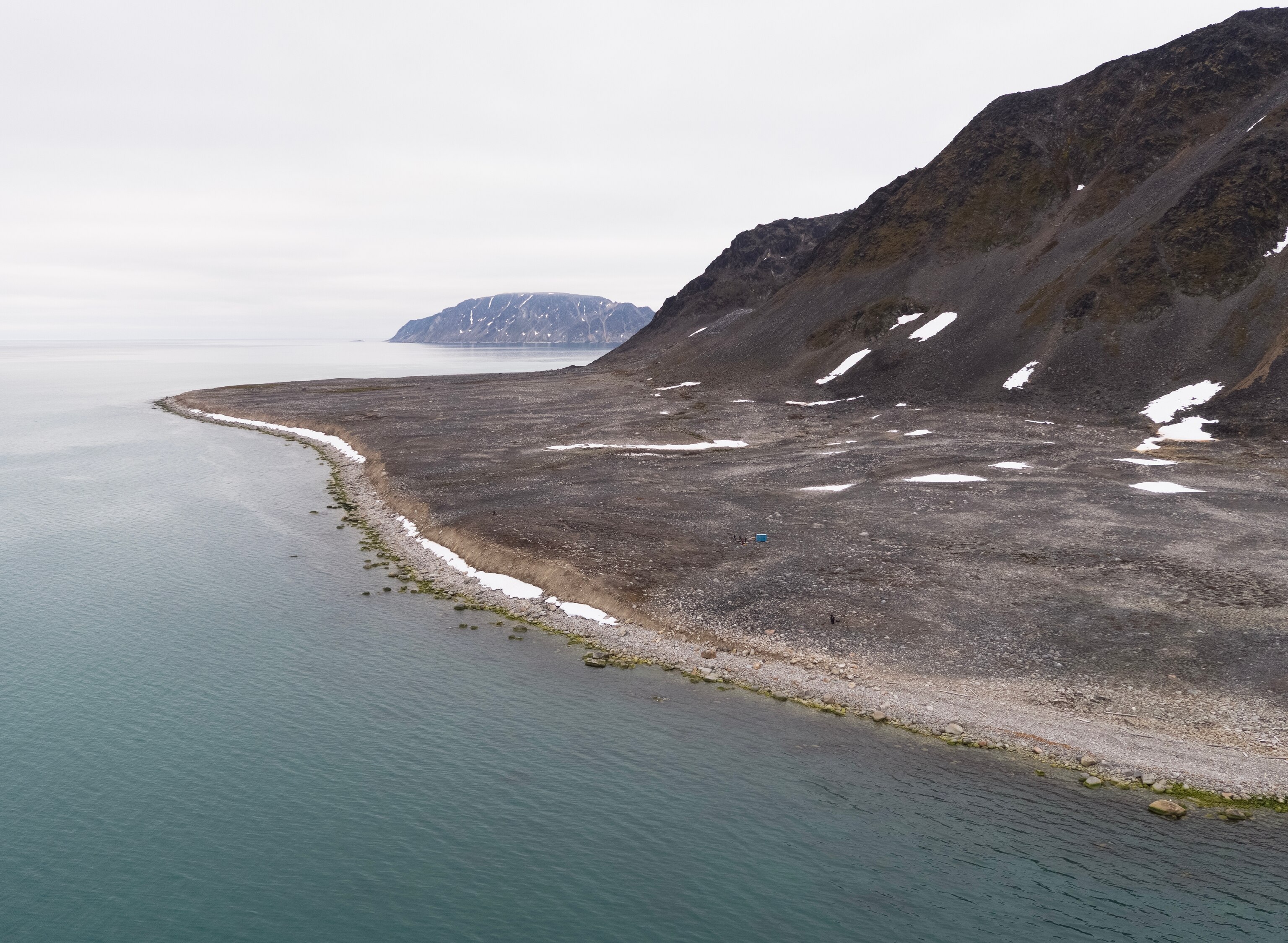
Likneset, or “Corpse Point” as it’s called in Norwegian, encompasses more than 200 known burials from this period on a coastal plain between Smeerenburg Fjord and the foot of Kennedy Glacier.
In 2019, Loktu excavated three burials from central Likneset and shipped them to the Svalbard Museum in Longyearbyen. There, she used a vacuum to clean sawdust from the coffins. She and her colleague Elin Therese Brødholt, a forensic anthropologist at Oslo University Hospital and author on the paper, analyzed the contents.
They re-examined 16 sets of bones and other materials held in the museum that were recovered from the coastal edge of the cemetery in the 1980s and 2016. Loktu then compared the states of preservation among the different samples. That let them determine how the whalers lived and worked, as well as how climate change has impacted the artifacts and the scientific data within them.
All 19 skeletons were biologically male, and most were estimated to be 20 to 34 years old when they died. Many smoked, indicated by gaps between their upper and lower teeth in the shape of pipe stems. Bones from 18 skeletons bore the telltale darkening and pitting from scurvy, and nearly all showed signs of degenerative joint diseases and activity-related stress, suggesting the young, malnourished whalers often handled heavy objects that strained their entire bodies.
(Scientists find oldest direct evidence of whaling in a place they never suspected)
Stable isotope analysis, which measures elements in tissues to reveal where a person may have lived, on three skeletons from 2016 revealed that one whaler likely came from the present-day Netherlands. The other two showed isotopic signatures consistent with colder environments and a fish-heavy diet, pointing to western Norway.
Catalog of change
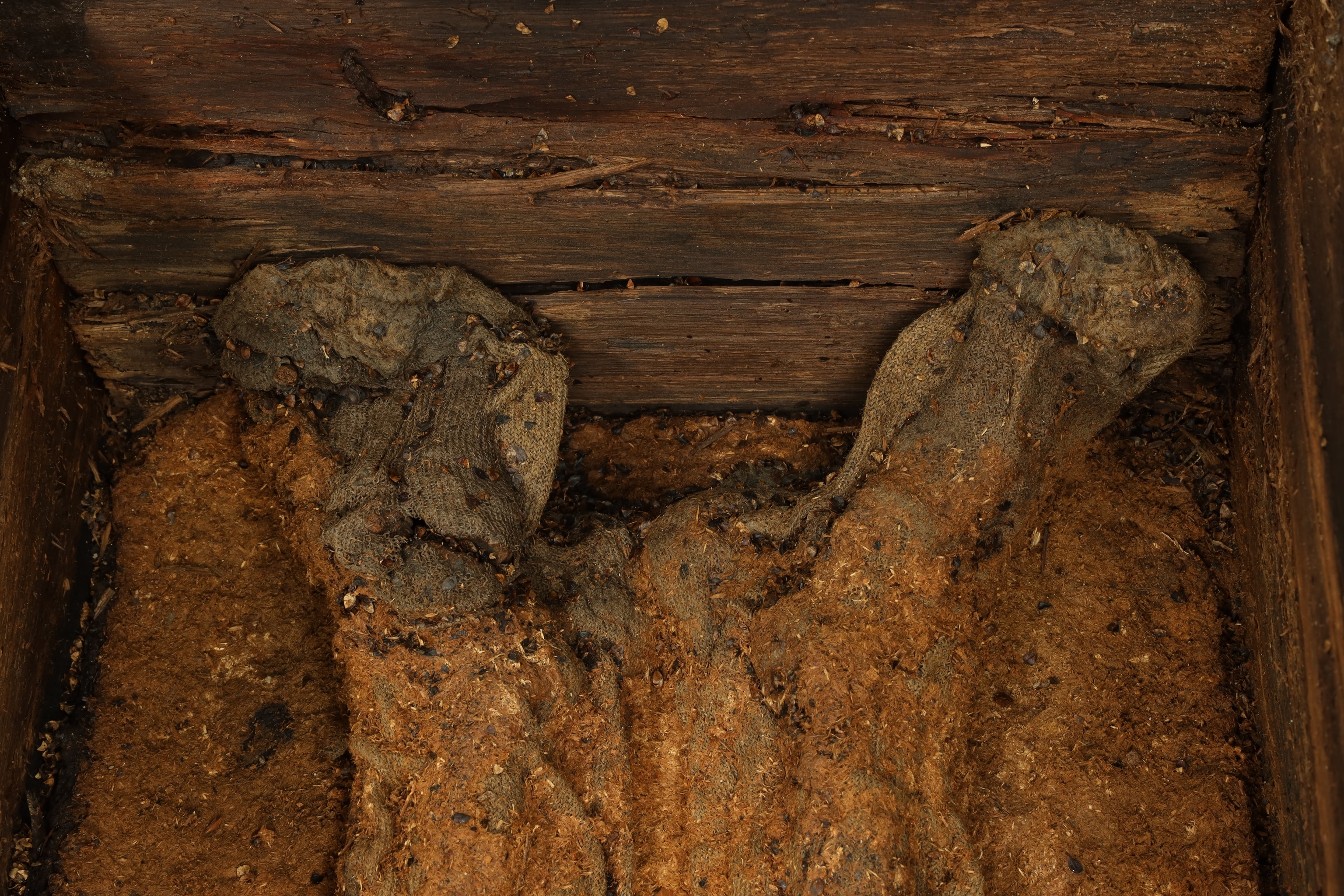
Archaeologists excavating Likneset’s burials close to the shoreline in the late 1980s found graves damaged by erosion to varying degrees. However, permafrost had preserved many recognizable garments, including wool caps, jackets, trousers, knitted stockings, linen shirts, scarves, and one pair of shoes.
Global warming has since destabilized permafrost and loosened sediments in the shoreline erosion zone, Loktu says, allowing more water and oxygen to reach the graves. Repeated freezing and thawing accelerate decay, while shrinking amounts of sea ice increase the destructive power of waves. The 2016 excavations, taken from the same erosion-prone area as the 1980s graves, showed moderate damage to the coffins but near-total degradation of the textiles inside. Collections of metal buttons remained where clothing once was.
(The ice that once saved bowhead whales is vanishing beneath them)
In contrast, the 2019 excavations came from an area of Likneset farther up the beach, where the graves’ structure is better preserved. The skeletons still bore “soft tissues, including hair,” according to the study. Loktu also documented finding wool trousers, caps, knitted stockings, and a finely woven linen shirt.
In this area, “the permafrost itself actually keeps the material stable, and [there is less] degradation,” she says.
The findings capture a decades-long pattern of climate-driven permafrost thaw and the resulting degradation of cultural heritage, according to the authors—a pattern also found in Greenland and other Arctic locations.
“Climate change is dramatically increasing the rate of destruction” at Arctic archaeological sites, says George Hambrecht, an anthropologist at the University of Maryland-College Park, who was not involved with the Svalbard research. “What’s most important to save? That’s at the core of the problem.”
Historical sites that were once thought to be frozen in time “are now undergoing rapid and irreversible transformation,” Loktu and Brødholt wrote in their paper, highlighting the value of such sites for tracking climate change in the Arctic. Though Svalbard’s remoteness, harsh weather, and polar bears make on-site preservation expensive and unrealistic, Lotku says that documentation techniques can save these historical archives.
“You can do more excavations, keep the material in the museum for researchers in the future,” she says, “and make sure that the knowledge within is shared.”
Comments
Post a Comment