How did Jane Austen die? Even after two centuries, nobody knows.
- HISTORY & CULTURE
Fevers, fatigue, and a changing complexion? Why modern doctors are still trying to make sense of the symptoms the celebrated novelist experienced before her death at age 41.
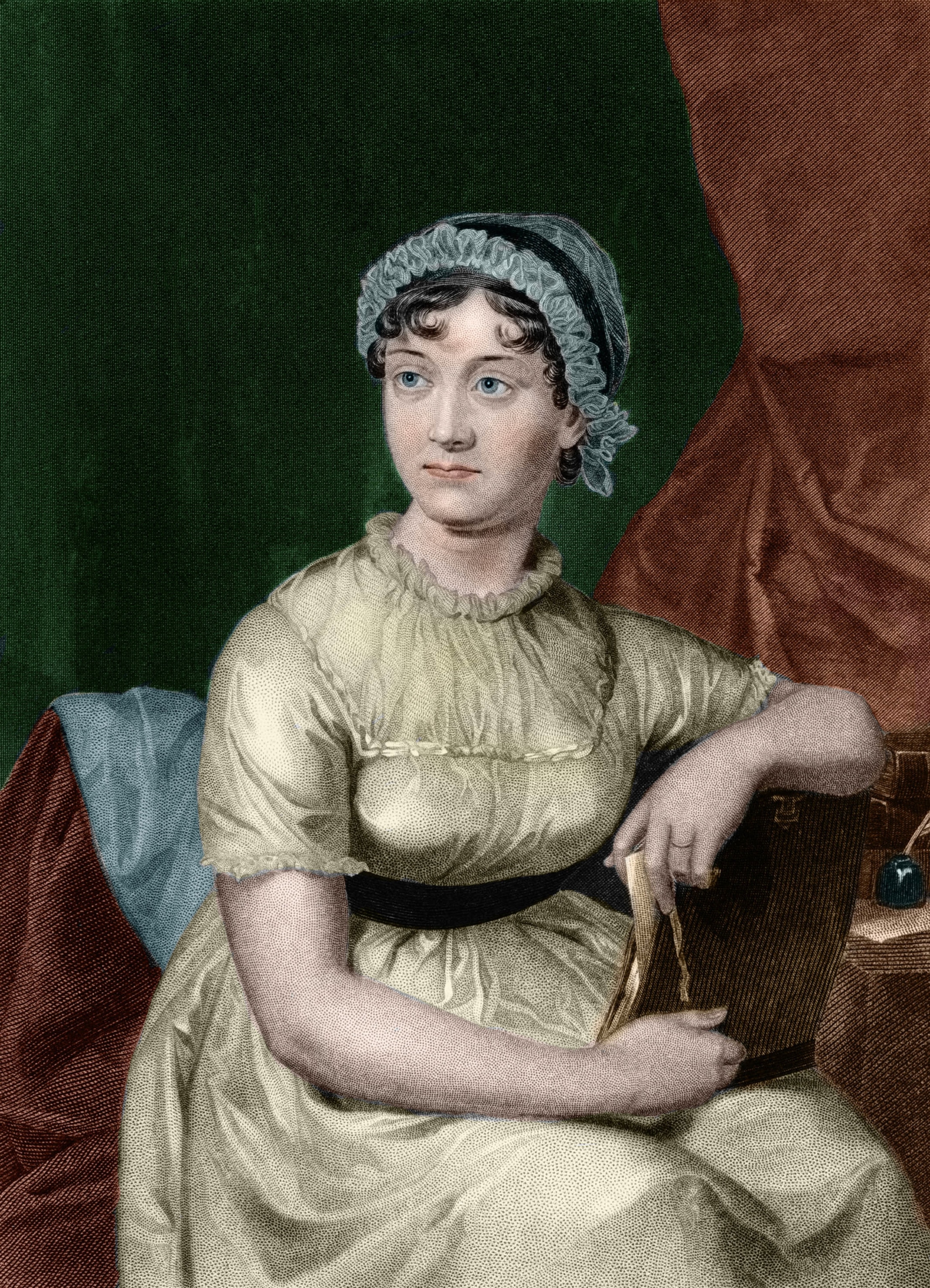
When Jane Austen died on July 18, 1817, at the age of 41, she left behind only six complete novels—and one of the most vexing medical mysteries of all time.
No one knows what exactly caused her death. But Austen experienced a curious assortment of symptoms late in life, ranging from recurring fevers and fatigue to stomach issues and concerns over her changing complexion.
The enduring mystery has piqued the interest of scholars and armchair sleuths alike, who have proposed a variety of medical conditions to explain her death, including cancer and accidental poisoning.
(Murder or madness: What really killed Edgar Allan Poe?)
The act of posthumously diagnosing Austen is part of a larger cottage industry of retrospective diagnosis, the practice of applying modern medical knowledge to diagnose someone from the past. But can it shed any insight into Jane Austen’s life—and solve the mystery of her death?
What we know about Jane Austen’s illness
Born on December 16, 1775, Jane Austen appears to have had a relatively healthy childhood and young adulthood.
“Jane Austen was vigorous and active until her attacks of ill health in the last year or so of her life,” says Juliette Wells, professor of literary studies at Goucher College and guest co-curator of A Lively Mind: Jane Austen at 250 at The Morgan Library & Museum. “Until then, her letters include many mentions of enjoying dancing, often for hours at a time, as well as long country walks.”
(Jane Austen never wed, but she knew how to play the marriage game.)
Austen’s health took a turn around the age of 40 in 1816 while she was finishing the novel Persuasion. Her symptoms, which included rheumatism and fatigue, came and went, and she reported them in a series of surviving letters.
On March 23, 1817, Austen described her complexion to her niece Fanny Knight as “black and white and every wrong colour,” and observed, “Sickness is a dangerous indulgence at my time of life.”
Two weeks later, she complained in a letter to her brother Charles of having been “too unwell the last fortnight to write anything that was not absolutely necessary.” She was “suffering from a bilious attack attended with a good deal of fever.”
Around that same time, her niece Caroline Austen visited and noticed the “alteration” in her aunt. “She was very pale, and her voice was weak and low, and there was about her a general appearance of debility and suffering; but I have been told that she never had much acute pain.”
“Jane made her will in late April, several months before she died––suggesting an understanding that her condition was serious,” notes Devoney Looser, Regents’ Professor of English at Arizona State University and author of Wild for Austen: A Rebellious, Subversive, and Untamed Jane.
The next month, Austen and her sister Cassandra moved to Winchester, England, where the novelist sought medical care for an unknown illness. “The treatment was not effective, and Jane died […] in Cassandra’s arms,” Wells says.
(A guide to Regency Bath on the anniversary of Jane Austen's birth.)
“I have lost a treasure, such a sister, such a friend as never can have been surpassed,” Cassandra wrote two days after her sister’s death. “She was the sun of my life, the gilder of every pleasure, the soother of every sorrow.”
Jane Austen’s surviving letters, and those of friends and family, serve as the main sources for information about her death. But those letters don’t give a full picture. In the wake of Jane’s death, Cassandra destroyed many of her sister’s letters, likely to protect her privacy and reputation—and unwittingly opening the door to rampant speculation.
Did Jane Austen have Addison’s disease or lupus?
What caused Jane Austen’s death? One of the most prevalent theories, first proposed in 1964 by surgeon Zachary Cope, is that Austen lived with Addison’s disease, a condition in which the adrenal glands can’t produce hormones such as cortisol.
Addison’s disease causes symptoms like the fatigue and skin darkening that Austen’s letters describe. But there is one problem with that theory. In 2021, emeritus consultants at London’s St. Thomas’ Hospital with an interest in Jane Austen lore Michael Sanders and Elizabeth Graham pointed out that Addison’s disease in Austen’s era was typically caused by tuberculosis.
“Jane had no chest or orthopaedic problems to suggest TB, and both her doctors, Curtis and Lyford, would have been familiar with the diagnosis,” they wrote.
Instead, they proposed a different autoimmune disease, lupus, which would account for Austen’s “rheumatism, facial skin lesions, fever and marked fluctuation of these symptoms.”
Did Jane Austen die of cancer?
Others, including biographer Carol Shields, believe cancer was a “very likely cause” of the novelist’s death, speculating that breast cancer may have run in Austen’s family.
Looser agrees that cancer appears to be “a more plausible diagnosis,” since it “was not uncommon” in Austen’s era.
If Austen had cancer, the risk of it metastasizing would have been high. “The only available cancer treatment, surgery, was very risky in Austen’s day,” Looser observes. “It relied on being able to identify and excise the tumor, at a time when surgery itself could kill, due to the risk of infection.”
Other theories include Hodgkin’s lymphoma. Jane Austen scholar Annette Upfal considered Austen’s full medical history and concluded that the author may have suffered earlier in life than most believe, noting “she was particularly susceptible to infection, and suffered unusually severe infective illnesses, as well as a chronic conjunctivitis that impeded her ability to write.”
Was Jane Austen accidentally poisoned?
In 2017, the British Library raised new questions about Austen’s health when it tested three pairs of glasses that may have belonged to her and found that the glasses all had different lens strengths. According to the library, a consulting optometrist examined the results and said it was possible that Austen may have developed cataracts. He also floated a theory that those cataracts were caused by “accidental poisoning from a heavy metal such as arsenic,” which was prevalent in the 19th century.
Looser considers this “the least credible theory.” The glasses were “found in her writing desk” but “may or may not have been hers.” And though Austen was “described [as] having weak eyes,” poor vision can have many causes—not just arsenic-induced cataracts. “So you can see how this is a leap and a stretch––from desk to glasses to vision problems to arsenic poisoning,” she says.
Why it's so hard to diagnose historical figures
In addition to examining old letters and belongings, scholars may also leverage surviving medical casebooks and physician’s notes to diagnose historical figures. But even these shouldn’t be taken at face value, notes Mindy Schwartz, professor of medicine at The University of Chicago. “What they prioritize, what they leave out––these texts show the biases of the time and the priorities that the physicians had when creating them.”
It also shows the limited resources of the time. For example, physicians in Austen’s era would have made a clinical diagnosis, which took into account the patient’s history and a physical examination. But this probably wouldn’t have yielded a definitive diagnosis because many conditions have overlapping symptoms.
“We didn’t have microbiology, CAT scans, or blood work [at the time of her illness], so it would have been hard to make an accurate diagnosis,” says Schwartz.
Osamu Muramoto, senior scholar at Oregon Health & Science University’s Center for Ethics in Health Care, also points out, “Human beings are evolving, microorganisms are evolving, genes are evolving. So how can we say that disease X from 200 years ago is the same disease X as today?”
Even if you could posthumously diagnose historical figures, there is some debate over whether you should.
“Some people might be concerned that this is an invasion of privacy,” explains Steven Joffe, Art and Ilene Penn Professor of Medical Ethics & Health Policy and chair of the department of Medical Ethics & Health Policy at the University of Pennsylvania. “In my opinion, those privacy considerations diminish with time.”
However, he adds, ethical considerations nonetheless should factor into any retrospective diagnosis. For example, any genetic conditions have implications for the person’s surviving descendants. Muramoto also points out that there’s a risk in making diagnoses that carry reputational harm because they are considered taboo, such as sexually transmitted infections.
At the same time, making retrospective diagnoses about historical figures can help normalize conditions that have long been stigmatized. “Let’s say you can convincingly show that Abraham Lincoln had major depression,” Joffe theorizes. “To me, that is actually quite de-stigmatizing because it shows how somebody can have major depression and yet be one of the most influential people in American history.”
Making these diagnoses can also help recontextualize the historical figure’s life and work. Take 19th-century philosopher Friedrich Nietzsche, Muramoto says. “He spent almost a decade with very, very poor health, mental illness, dementia.” Muramoto thinks tertiary syphilis is the likely diagnosis, saying it “would explain, in my view, the paranoid tone of his later writings.”
This is likely not the case for Jane Austen. “I wouldn’t say her novels reflect the state of her health,” cautions Looser. Nonetheless, she adds, when Austen’s symptoms were intensifying, she was starting to write Sanditon, an unfinished novel that “features a send up of hypochondriacs and quack medicine.”
We might never know why Jane Austen died. But we do know that she could poke fun at illness, Looser says, “even in the face of her own growing physical problems.”
Comments
Post a Comment