700-year-old ‘Etch A Sketch’ found preserved in a medieval toilet
- HISTORY & CULTURE
Protected by a sealed leather pouch, this 10-page notebook still contains legible Latin inscriptions and intact wax.
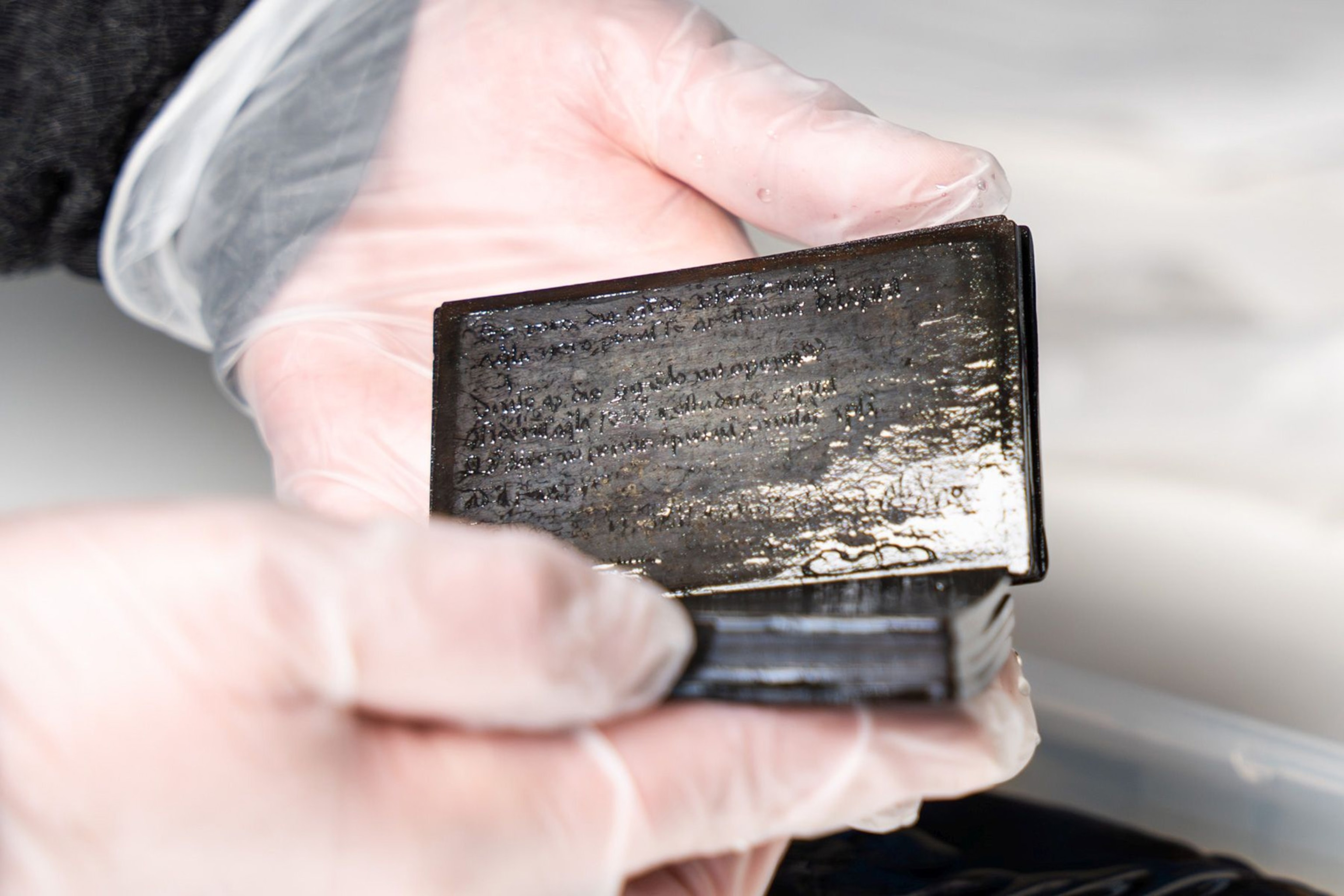
Sometime between the13th and 14th centuries, a busy young person entered a medieval toilet stall, possibly with something on their mind. They may have sat down hastily, perhaps withdrawing a small journal from their pocket or belt to scribble some notes before putting it back in a pouch. Then, it appears the items somehow escaped their clutches and plunged into the hole below, seemingly lost forever.
That is, until earlier this year—more than 700 years later—when researchers excavating a long-buried latrine in Paderborn, Germany, announced they had discovered the journal.
“The condition of the tablet surprised us all,” says Sveva Gai, a city archaeologist at the Westphalia-Lippe Regional Association (LWL) in Münster, Germany, which oversaw the excavation. “Such finds are extremely rare and have rarely been preserved in the ground in such pristine condition.”
The booklet, which measures around 4 inches tall and 3 inches across, was uncovered in a sealed, embroidered leather pouch that protected it from the surrounding sludge and centuries of degradation. The journal contains 10 pages; each lined with wooden frames infilled with wax.
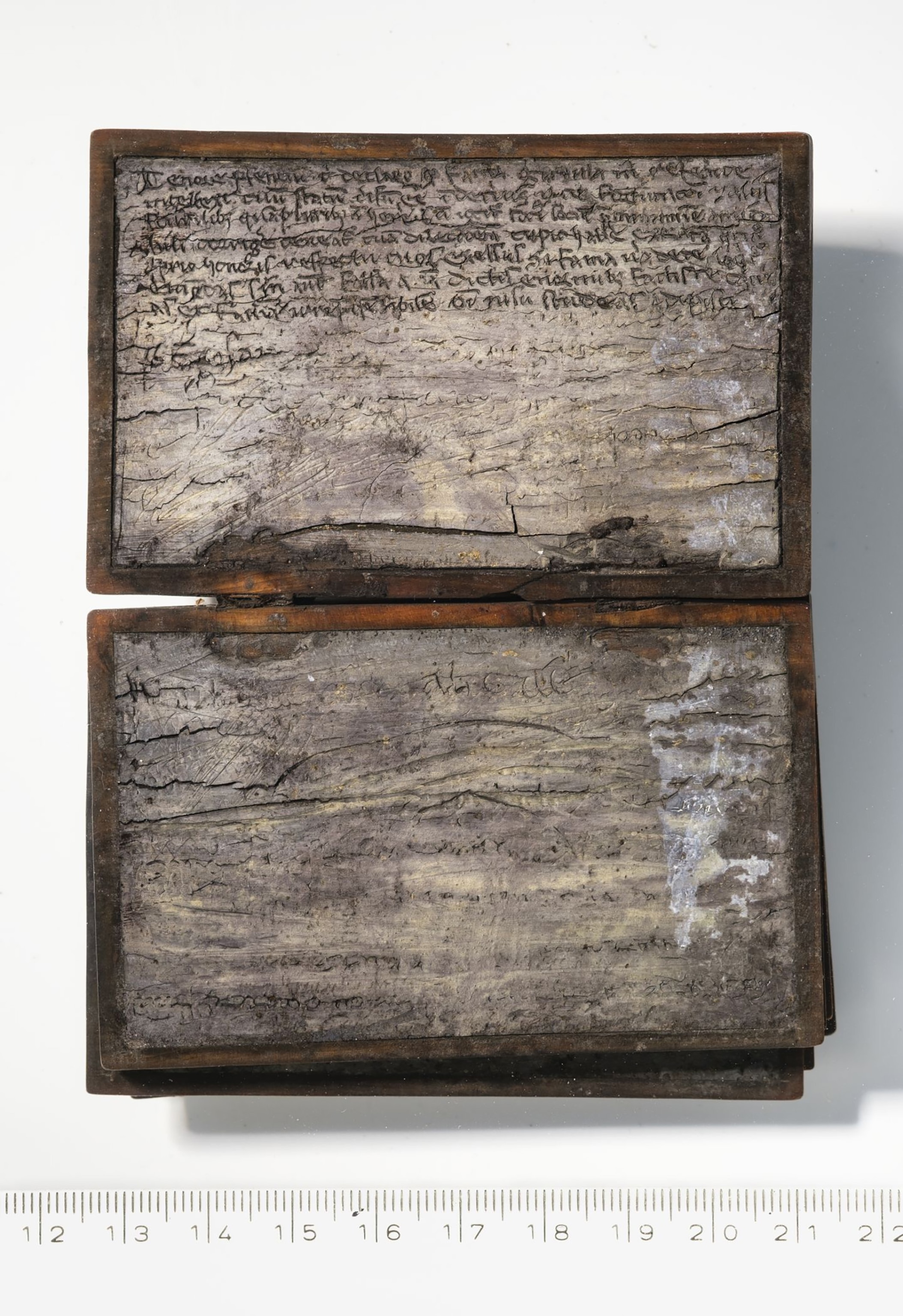
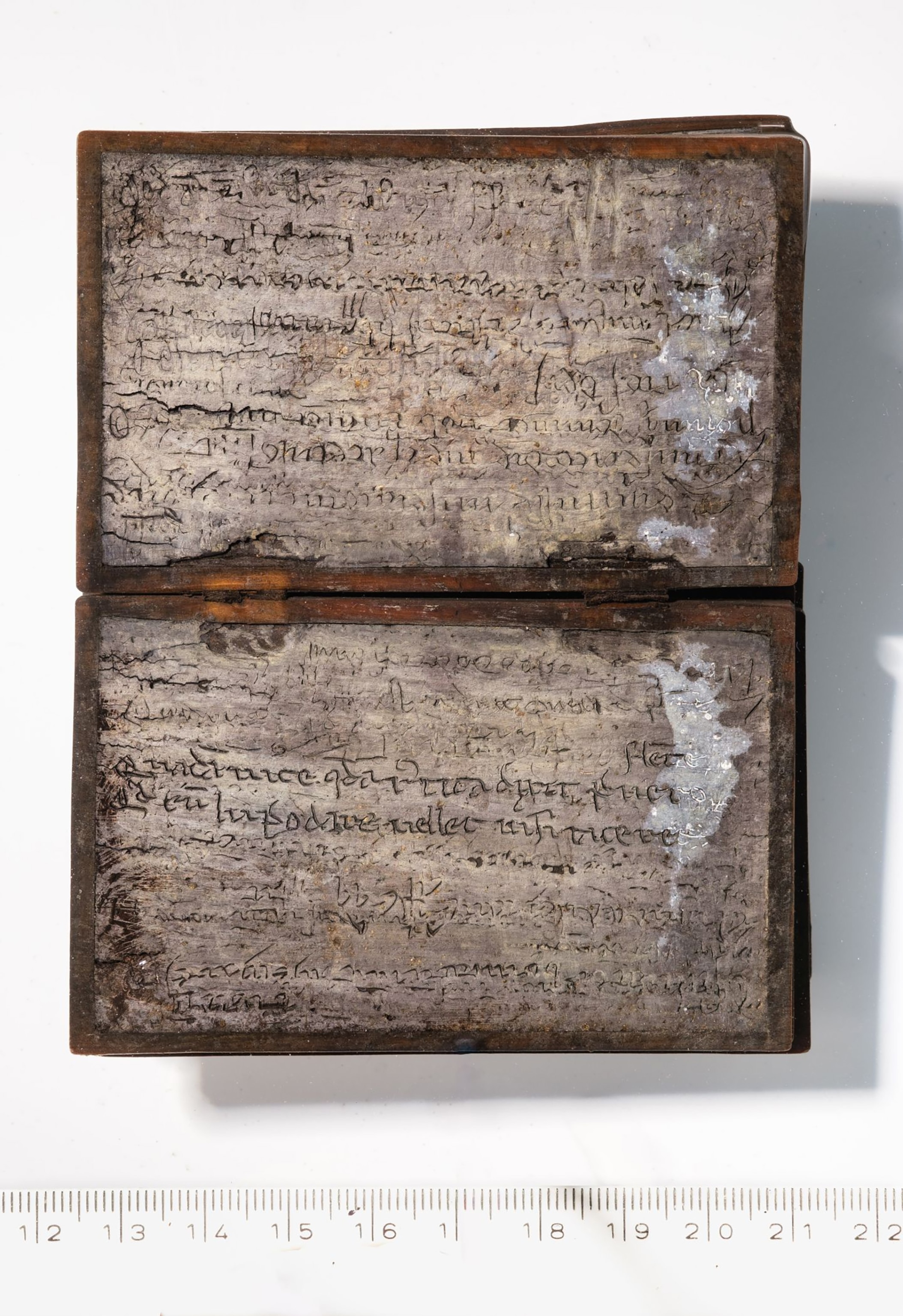
“The wood was not warped, the wax was still intact, and the writing is still clearly legible,” says Gai. The wax still retains the inscriptions, she adds, “allowing the erased lines to be deciphered.”
The researchers say they think the journal could provide a new window into the lives of medieval Germans. They announced their discovery in May.
“It is a spectacular find,” says Anna Willi, an ancient historian and archaeologist at the British Museum who was not involved with the work. “I am convinced that it will only become more fascinating as it is thoroughly studied and reveals its secrets.”
Written in wax
Wax journals have a storied past. They were among the primary methods for notetaking until paper slowly spread across Europe after the first millennium A.D.
Researchers can trace their origins to the Near East, particularly ancient Mesopotamia, as far back as the third millennium B.C. Wax-based booklets and tablets were also common throughout ancient Egypt, Greece, and Rome. Roman mosaics depict people carrying large tablets for administrative tasks, while archaeological evidence has revealed countless journal frames of various sizes and materials, such as wood, metal, and terracotta. The smallest of these Roman tablets, called vitellianai, measured around 4 inches tall and were often given away as gifts at parties.
But most of these recovered journals are partial, without wax, and severely degraded, says Willi. That makes the newly found notebook unique: “Nothing comparable has been recovered from a Roman context,” she says.
Journals with wax pages enabled their authors to inscribe precise notes and erase them for reuse. The authors wielded styluses made of bone, wood, metal, or ivory with a pointed end for writing and a spatula-shaped end to flatten the wax and start over. One mural from Pompeii depicts a quizzical woman holding an iPad-sized wax notebook and stylus, pressing the stylus's pointy end to her lips in quiet contemplation. To erase the entire text, authors like this woman could heat the wax near the fire, resetting the page as if shaking an Etch A Sketch.
“While precious parchment [made from animal skins] was usually reserved for the final version of a piece of writing, wax tablets, on which errors could easily be corrected, served for notes and drafts,” says Svea Janzen, an art historian at the Friedrich Schiller University Jena who was not involved with the work. “As such, writing tablets were often used by city administrations or for the royal account keeping.”
Similar finds suggest that small journals like these were also used for short jottings, business notes, lists, calculations, or for scribbling a verse from a poem or a prayer, Janzen adds.
In medieval Germany, wax journals were common among the upper classes who could read and write. According to Gai, that suggests the author “could have been a cleric or a citizen of a higher social class, or perhaps a student who wrote exercises in the book.”
Excavating long-lost latrines
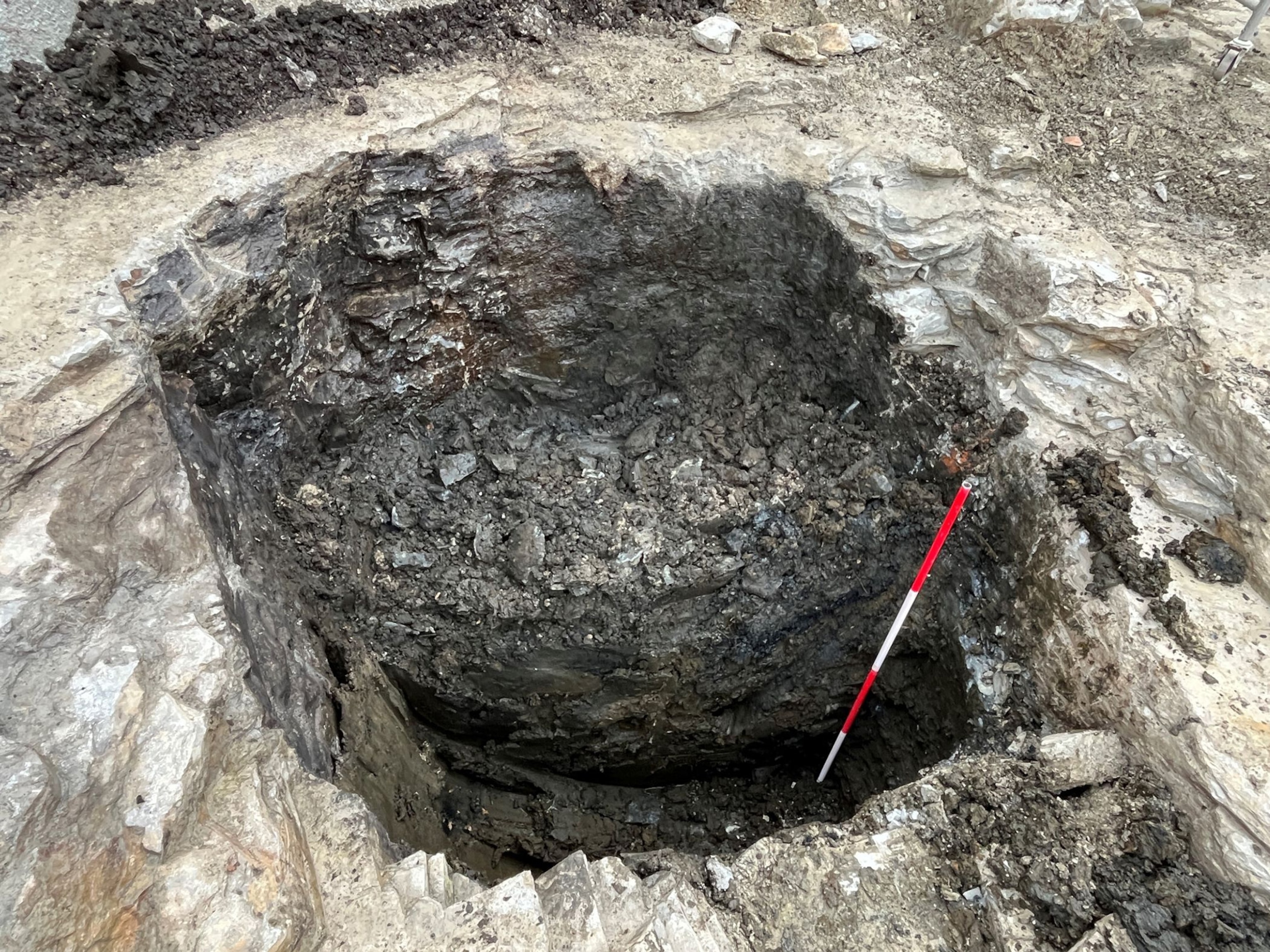
Gai and her colleagues discovered the journal while inspecting the ground ahead of construction for a new city administrative building. Prior work showed the site belonged to an early 11th-century monastery, parts of which were later leased to the public.
In the recent excavations, the researchers uncovered five latrines and a large assemblage of long-forgotten items, including shoes, barrel fragments, a knife sheath, and parts of a bow. They also uncovered several small, embroidered silk squares, likely used as fancy toilet paper.
One latrine was sealed and airtight, says Gai, so “it still had a strong, foul odor.”
Excavators wearing gloves dug about 16 feet deep into the “very damp” mess before stopping when someone spotted the journal’s inconspicuous black pouch. Once the journal was removed from its leather case, the researchers uncovered its well-preserved pages.
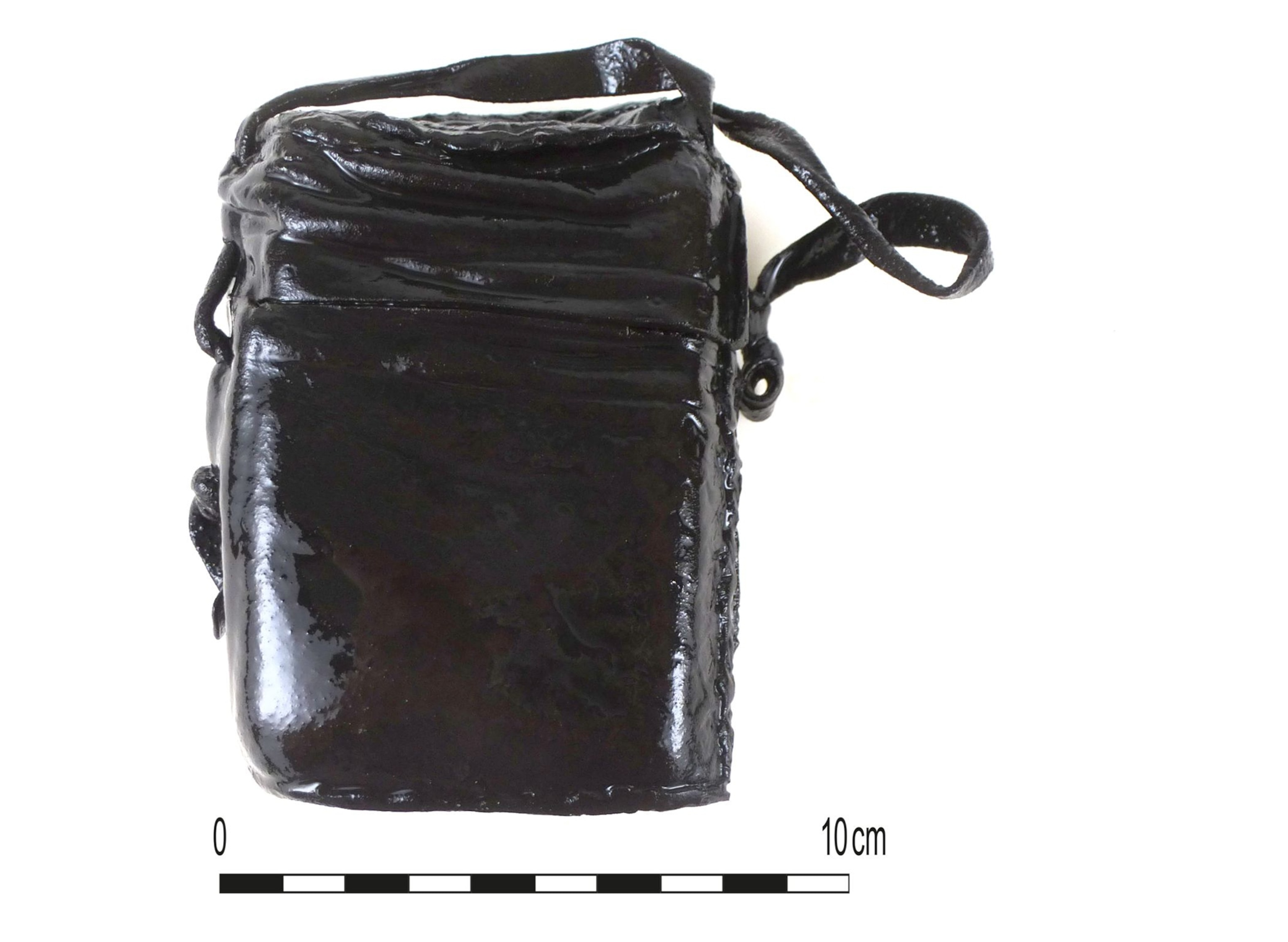
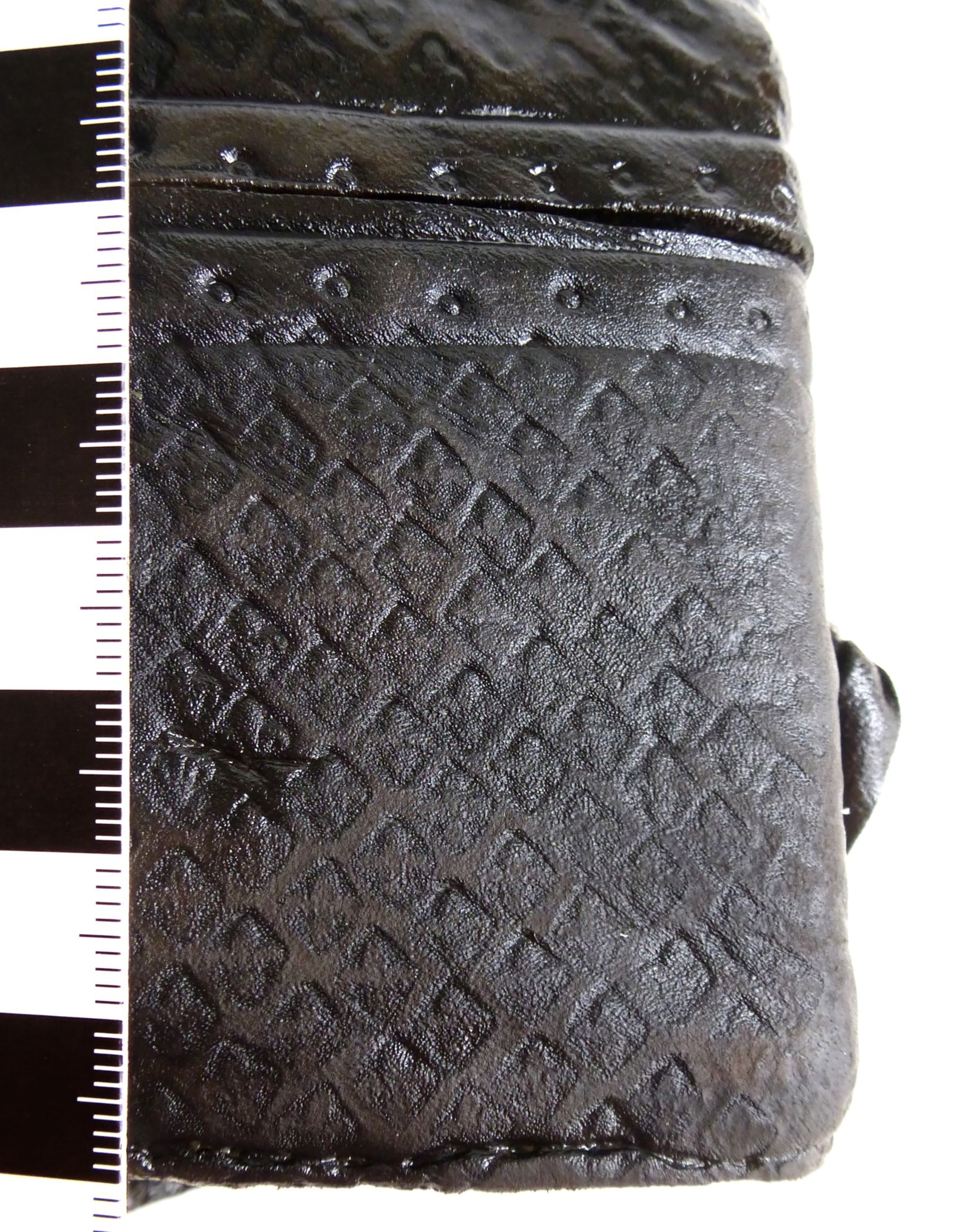
The text is clearly written in Latin and illustrates a few handwriting styles, suggesting more than one person might have used the book, adds Gai. And the writing matches written documents from that time found elsewhere in Germany.
Many comparable medieval items from archaeological contexts have also been found in latrines, adds Gai, because the damp environment is conducive to preservation, suggesting their owners may have regularly suffered slippery fingers.
“In none of these cases, however, has a complete booklet been found in such excellent condition,” she adds.
The leather was embossed with lily motifs, a sign of purity often used by the nobility, notes Willi. This, she adds, leaves one to wonder how the perfectly preserved pages ended up in the latrine. “If they fell in by accident, the owner must have been very annoyed, but I can't blame them for not trying to retrieve them!”
Comments
Post a Comment