Inside the thrilling chariot races of ancient Rome’s Circus Maximus
Cheering crowds, fast horses, dramatic accidents, and even a little sorcery made up a typical day of chariot racing in Rome as thousands flocked to watch their favorite spectator sport.
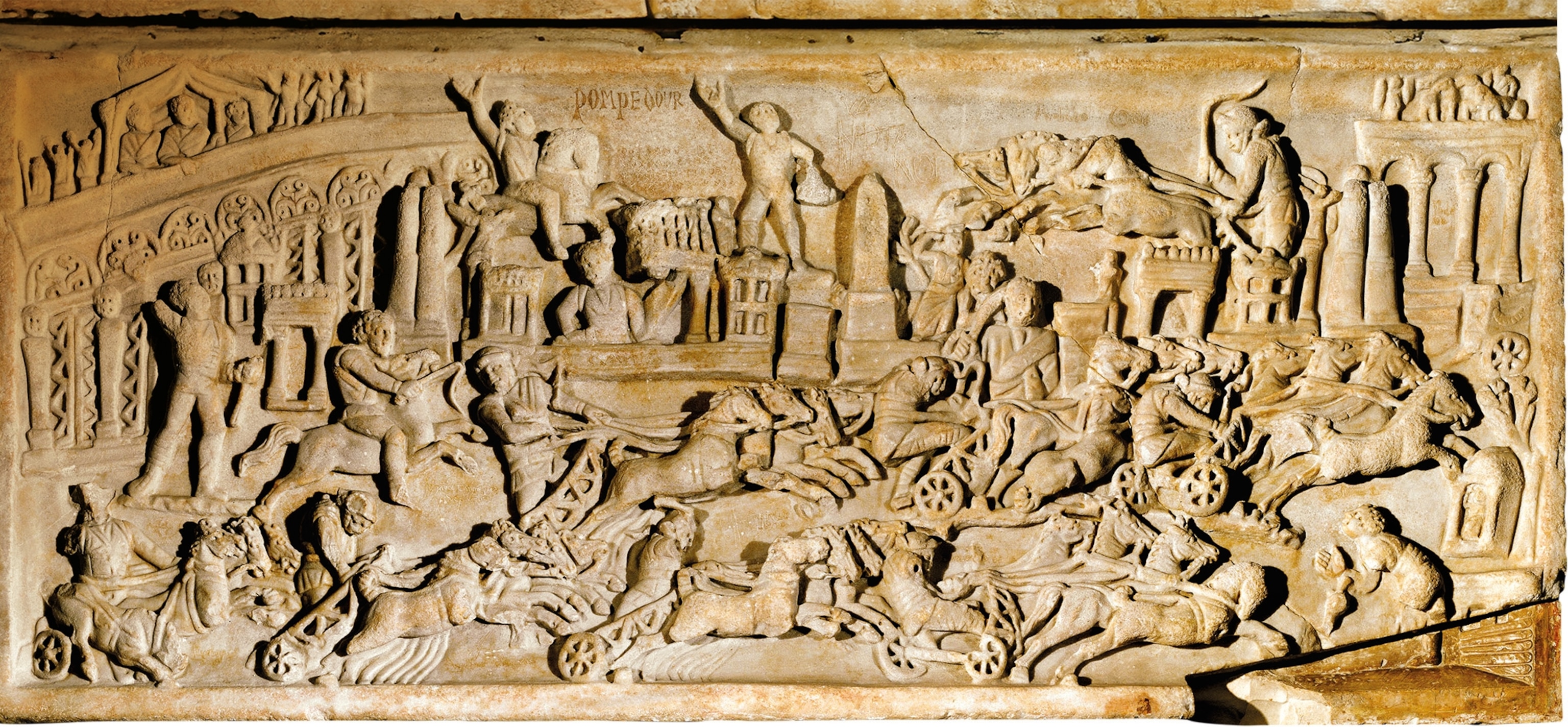
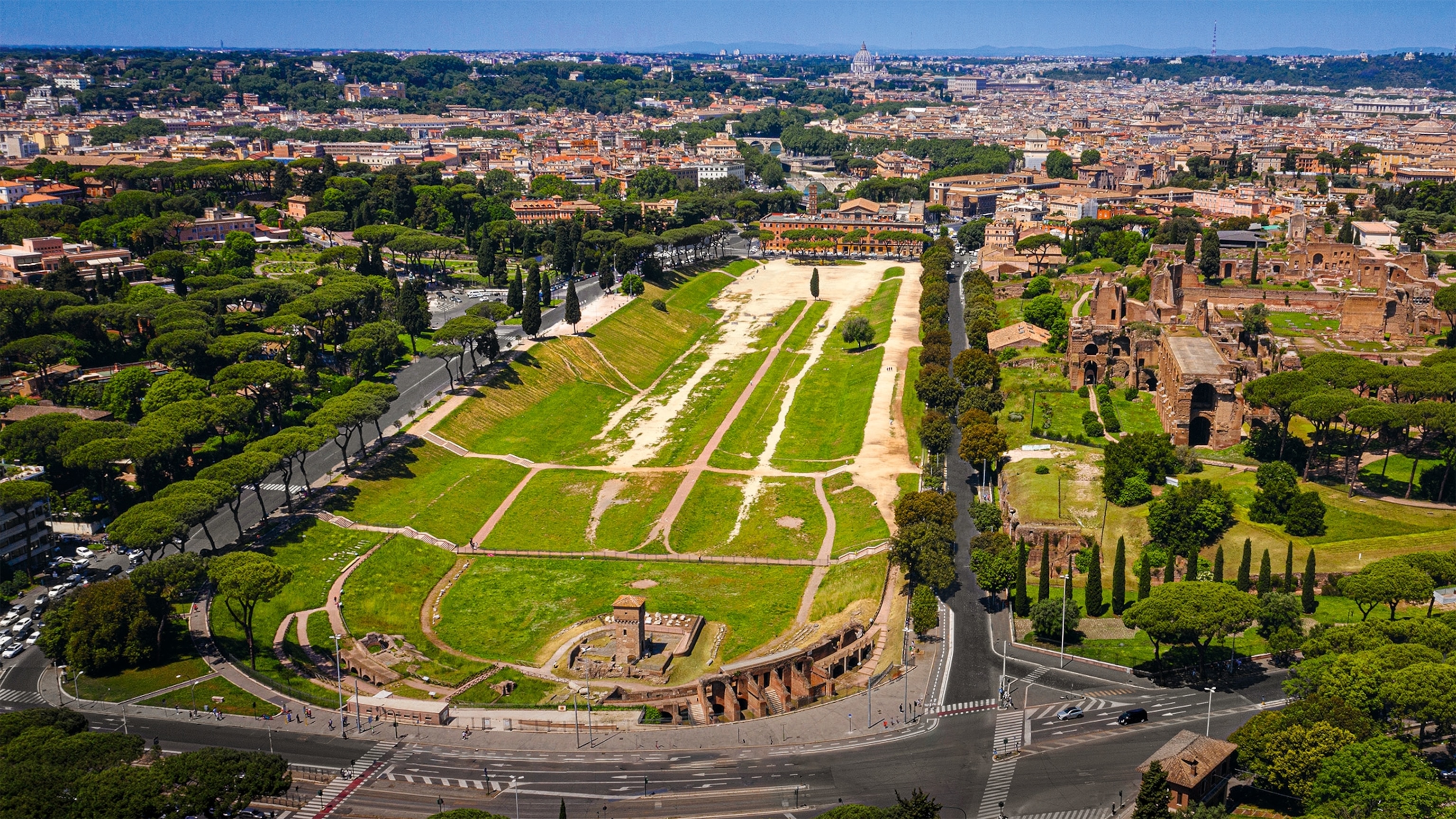
According to Livy, Rome’s Circus Maximus—the hippodrome nestled between the Palatine and Aventine Hills—was the site of the mythical rape of the Sabine women, a tragic event in Rome’s founding legend. The newly established, predominantly male state was facing a demographic crisis. After having his requests of intermarriage rejected, Romulus, Rome’s mythical founder, invited the Sabine people to the Consualia, a festival for the harvest god. Romulus distracted his audience with a dramatic chariot race that would allow the Romans to abduct the young Sabine women.
Although there is no evidence to support Livy’s account, we know the valley had been used for races and other spectacles for many years when King Tarquin the Elder first began to develop the stands of the Circus Maximus in the sixth century B.C. This hairpin racetrack would, after successive expansions, become the largest structure in the entire Roman Empire. According to ancient sources, at its peak, its stands could accommodate an audience of 250,000 spectators, a quarter of the city’s population. The vast arena provided a venue for all kinds of spectacles, from athletic races and pugilatus (boxing) to staged military combat and battle reenactments, gladiator fights, and even wild beast hunts. But what really drew the crowds was chariot racing.
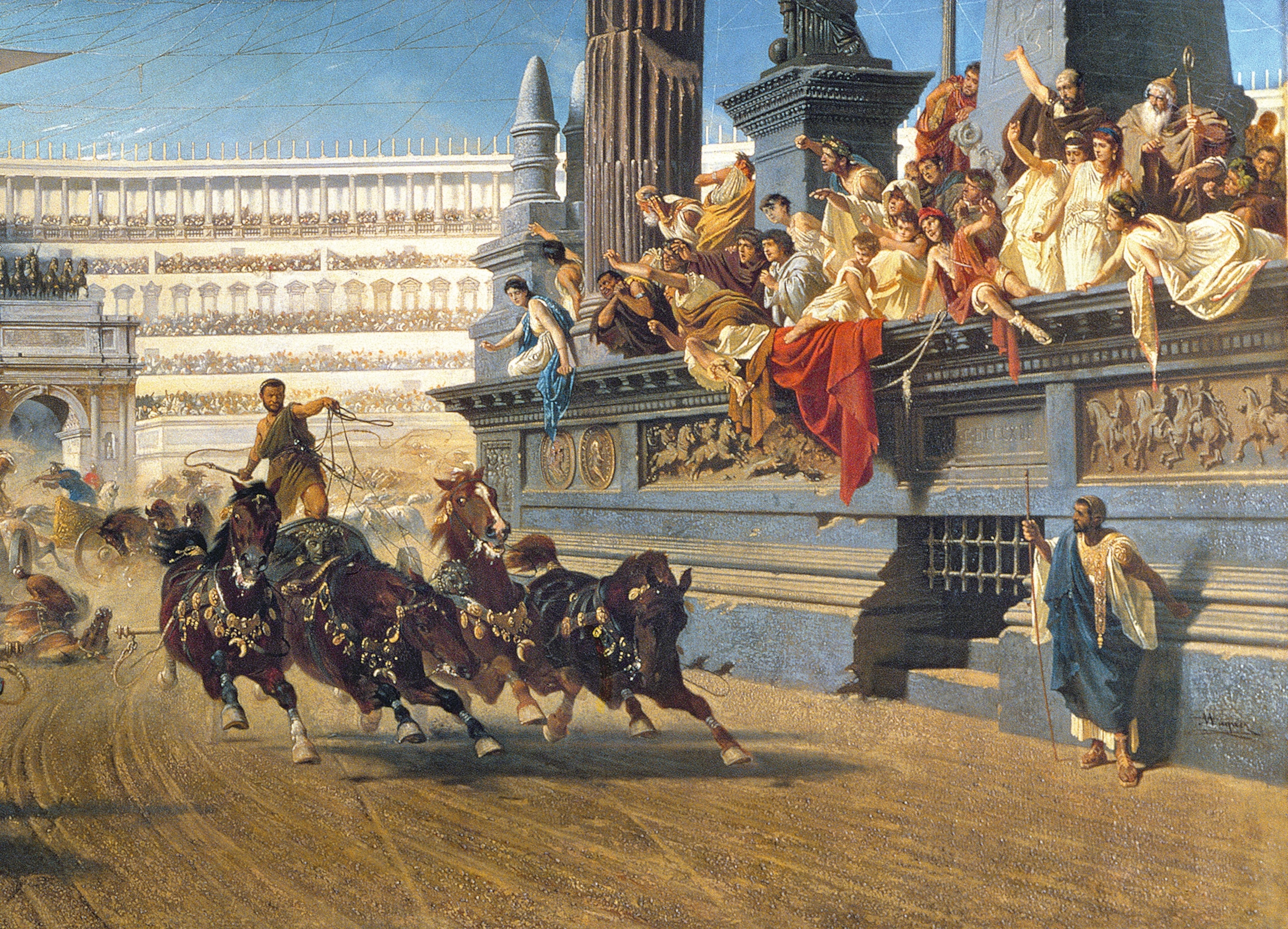
Games were put on in the circus to coincide with particular religious festivals or under the sponsorship of a patrician—a member of Rome’s elite ruling class—eager to boost his popularity. In the first century B.C., there were 17 circus days in Rome each year, a figure that by the fourth century A.D. had risen to 66. The norm, at least from the middle of the first century A.D., was for 24 chariot races to be held on each circus day.
(How the ancient Romans became the world's greatest builders)
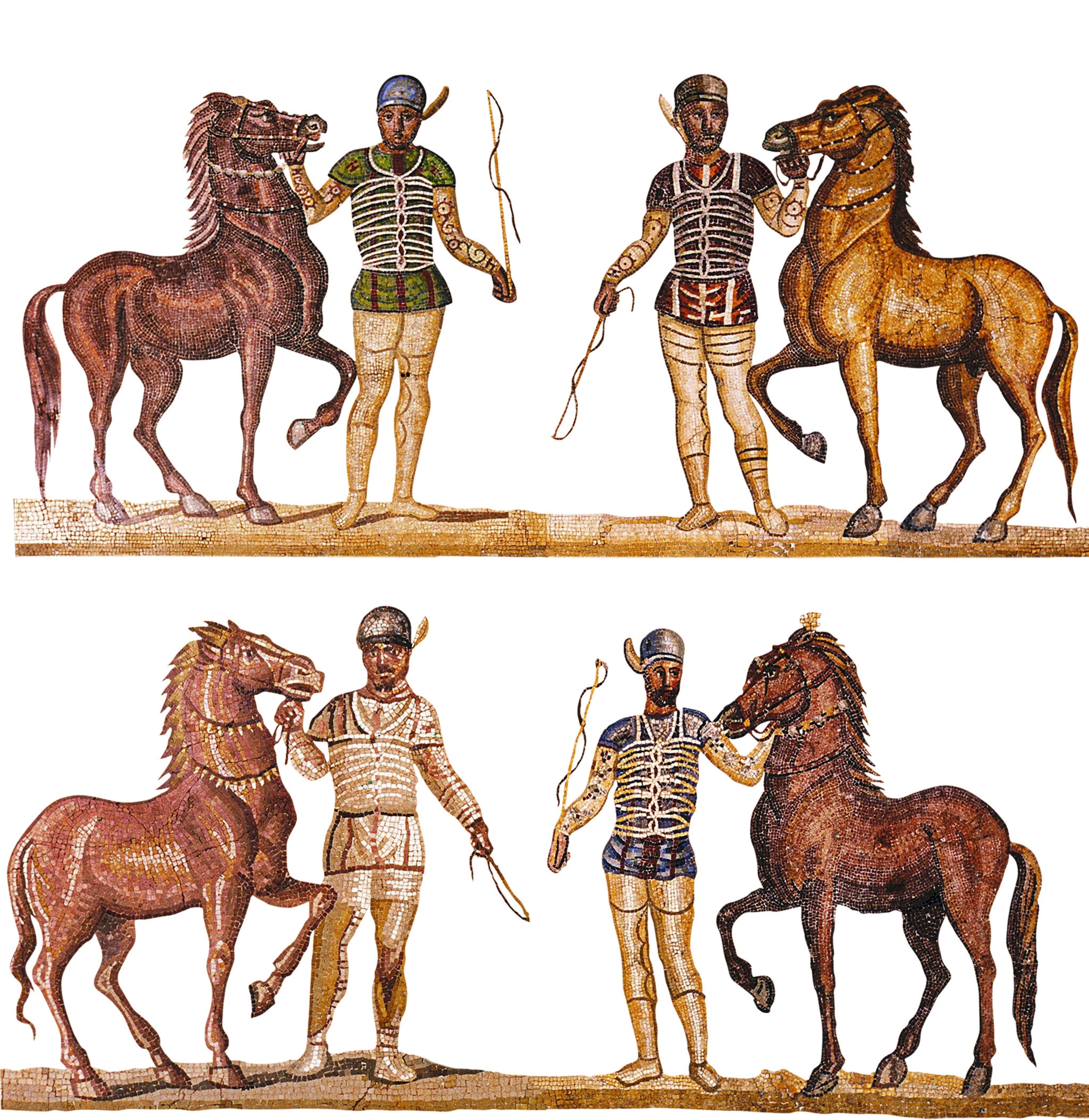
The charioteers (aurigae), usually enslaved people or freedmen, and the chariots themselves belonged to the so-called factiones, professional teams hired by the event organizers. Each faction was managed by a senior charioteer, called a dominus factionis, and employed a specialized staff in charge of selecting and caring for the horses, building the chariots, and assisting the competitors during the races. The teams were distinguished by their colors. At first there were only two: red and white. Then, under Augustus, a blue team was added, and later, a green one too.
The inaugural parade
The spectacle began with an opening procession, called a pompa circensis, at Capitoline Hill, which then crossed the Forum along Via Sacra and turned toward the Forum Boarium (cattle market) by the Circus Maximus. It was an impressive, noisy, colorful march, with members of the nobility and the state authorities participating alongside the charioteers, accompanied by musicians, perfume carriers, and statues of various divinities. Each of the factions would display their colorful emblems.
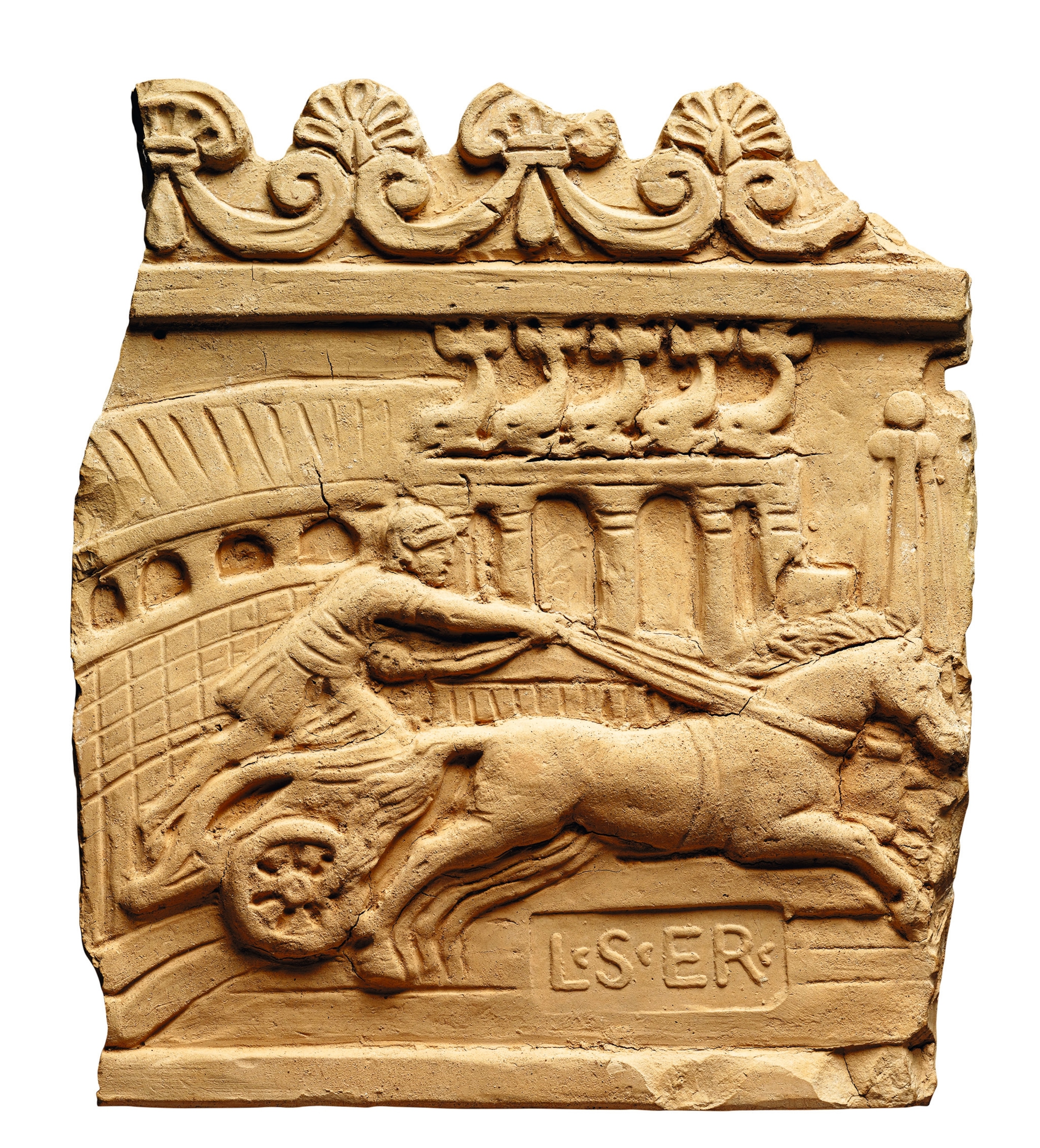
The Circus Maximus’s track measured between 1,800 and 1,900 feet long and around 250 feet wide; in other circuses in the provinces, the tracks tended to be much smaller. Sand was placed over compacted earth to form the surface of the arena. Running down the central section, a low dividing wall some 1,100 feet long was known as the spina (backbone). It was flanked by small ponds, shrines, and statues of gods as well as an obelisk brought from Egypt after its conquest by Emperor Augustus. In the fourth century, a larger obelisk was erected. At either end of the spina were the metae, each composed of three cones, sometimes gilded in bronze and used to mark the turning points and the finish line. Victory belonged to the charioteer who took the final turn.
The track record of a star charioteer
The four-horse favorite
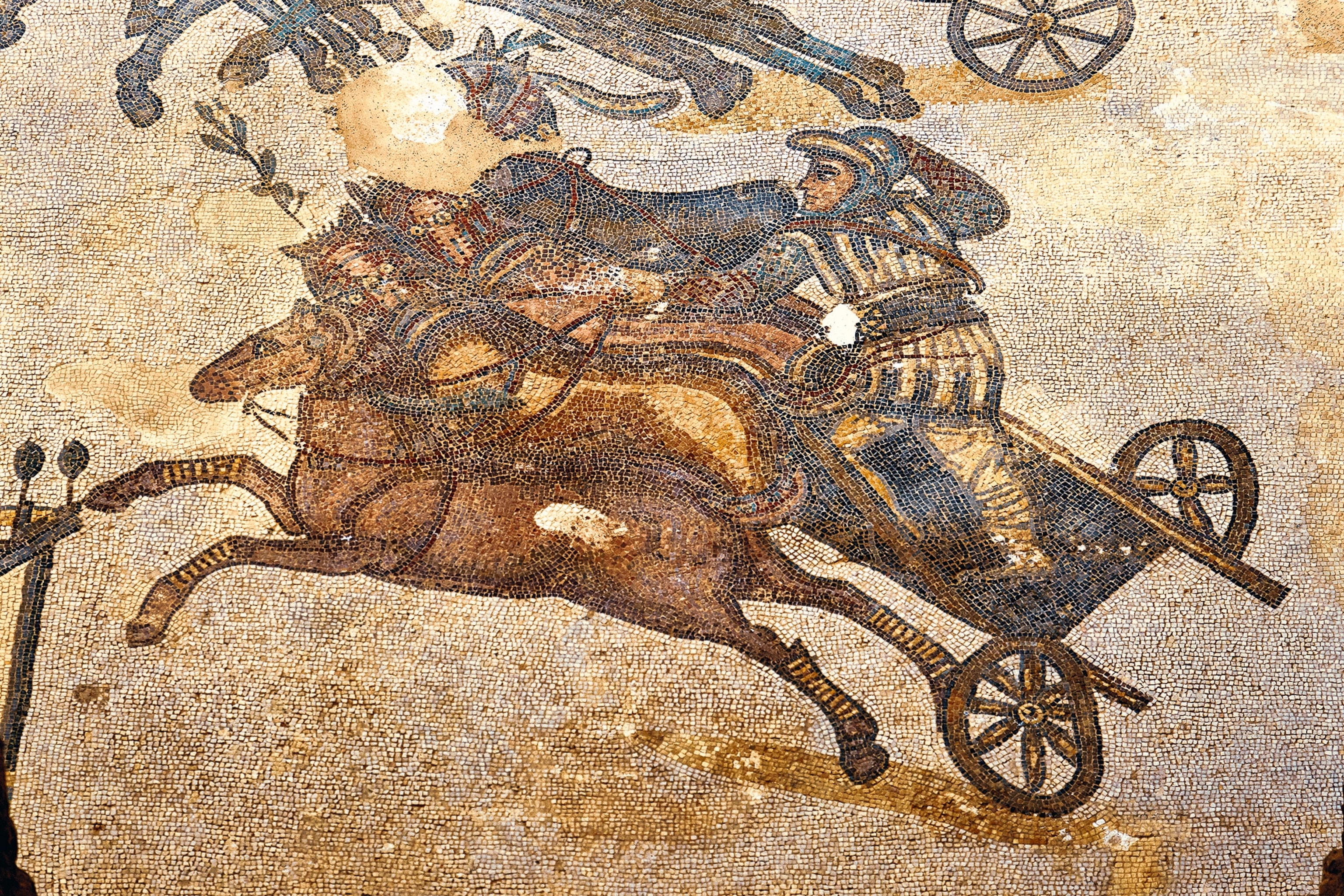
Several types of chariots were used for racing: bigas were pulled by two horses and trigas by three. Occasionally chariots might be pulled by up to ten horses. But, without doubt, the crowd’s favorite competition was that of the quadrigae, pulled by four horses. These horses were selected for their appearance and strength, and it was important to harness them in the correct order for maximum speed. The two middle horses were attached to the shaft of the chariot, and the two on the outside were attached simply by a strap. The horse running on the side facing the spina had to be the strongest and fastest to both lead and steer. The single-axle carriages were small, weighing only 55 to 65 pounds. The front portion of the wooden frame was covered in leather, and small wheels minimized the risk of flipping over.
Some races had two or three chariots in each of the factions, which meant there could be up to 12 chariots on the track at a time. But the races that most stirred the crowds were those with only one chariot per team. The races were generally run over seven laps and lasted only eight to nine minutes, with 10 or 12 races held per day. Caligula doubled that number, putting on 24 races a day during the games at the end of his reign.
(Who really built Rome?)
The Circus Maximus
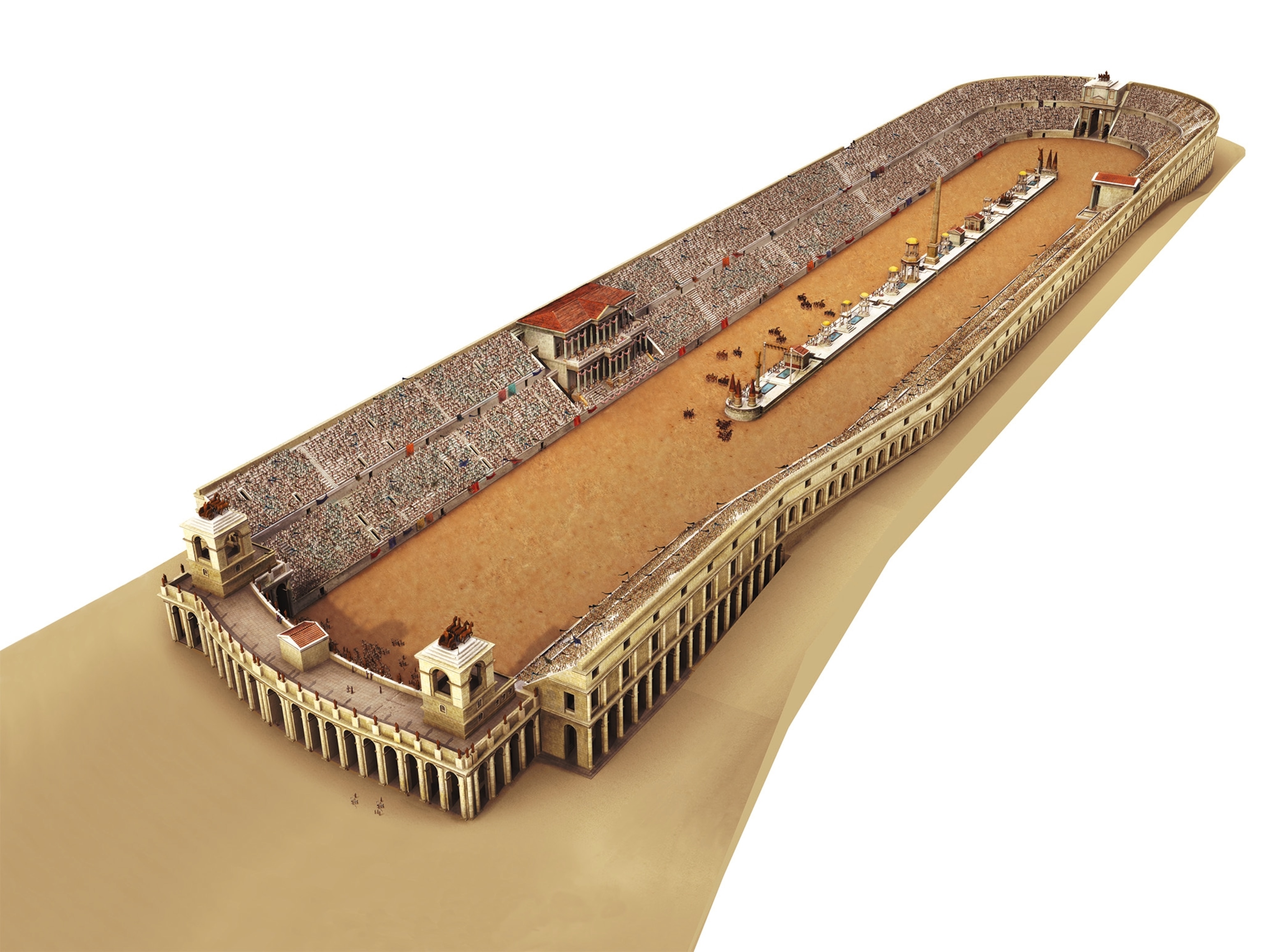
moat of the spina represented the sea. The obelisks decorating the spina represented the great stars. The twelve carceres (starting gates) he thought were linked to the signs of the zodiac or months of the year. The chariots made seven laps around the track in a counter-clockwise direction, echoing the seven days of the week. And the four teams (red, white, blue, and green) represented the seasons of the year.
A rousing start
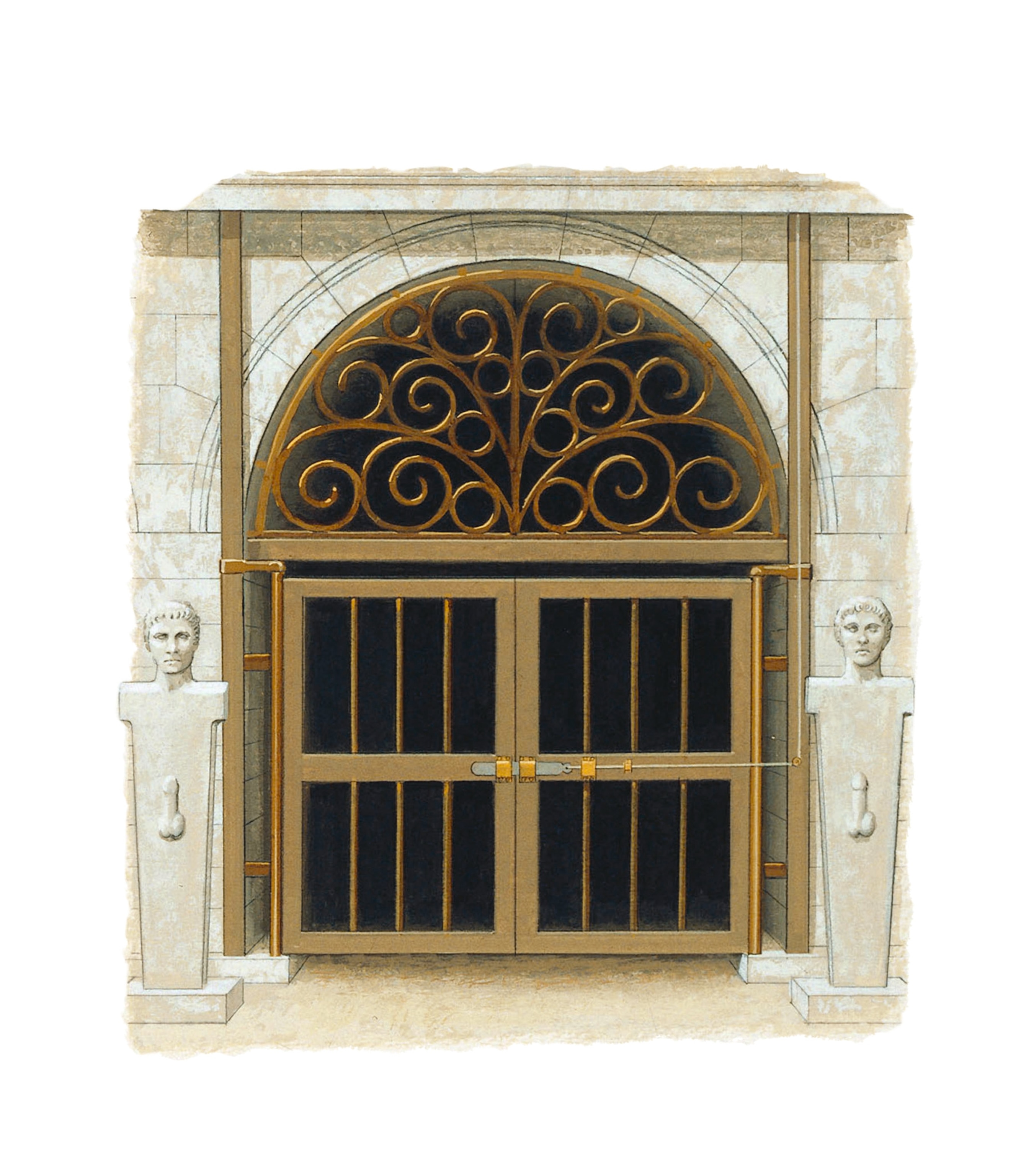
Before the race, the chariots and horses were enclosed in the carceres: starting boxes with gates opening onto the track. A team’s station was decided by lot: Balls in the team colors were drawn out of a kind of drum and the faction whose color came out first could choose its starting position, lending it an advantage.
The highest authorities in Rome, including the emperor, would watch the spectacle comfortably seated in a tribune called the pulvinar, which afforded a magnificent view of the action. The editor, the spectacle’s sponsor, used a box above the carceres. He was the one who started each race by dropping the mappa, a white cloth, to the ground. As the mappa fell, a four-foot-long, trumpetlike instrument called a tuba was sounded simultaneously, a signal to the public and the competitors that the race was starting. A mechanism immediately released the doors of the carceres and the chariots burst forth into the race.
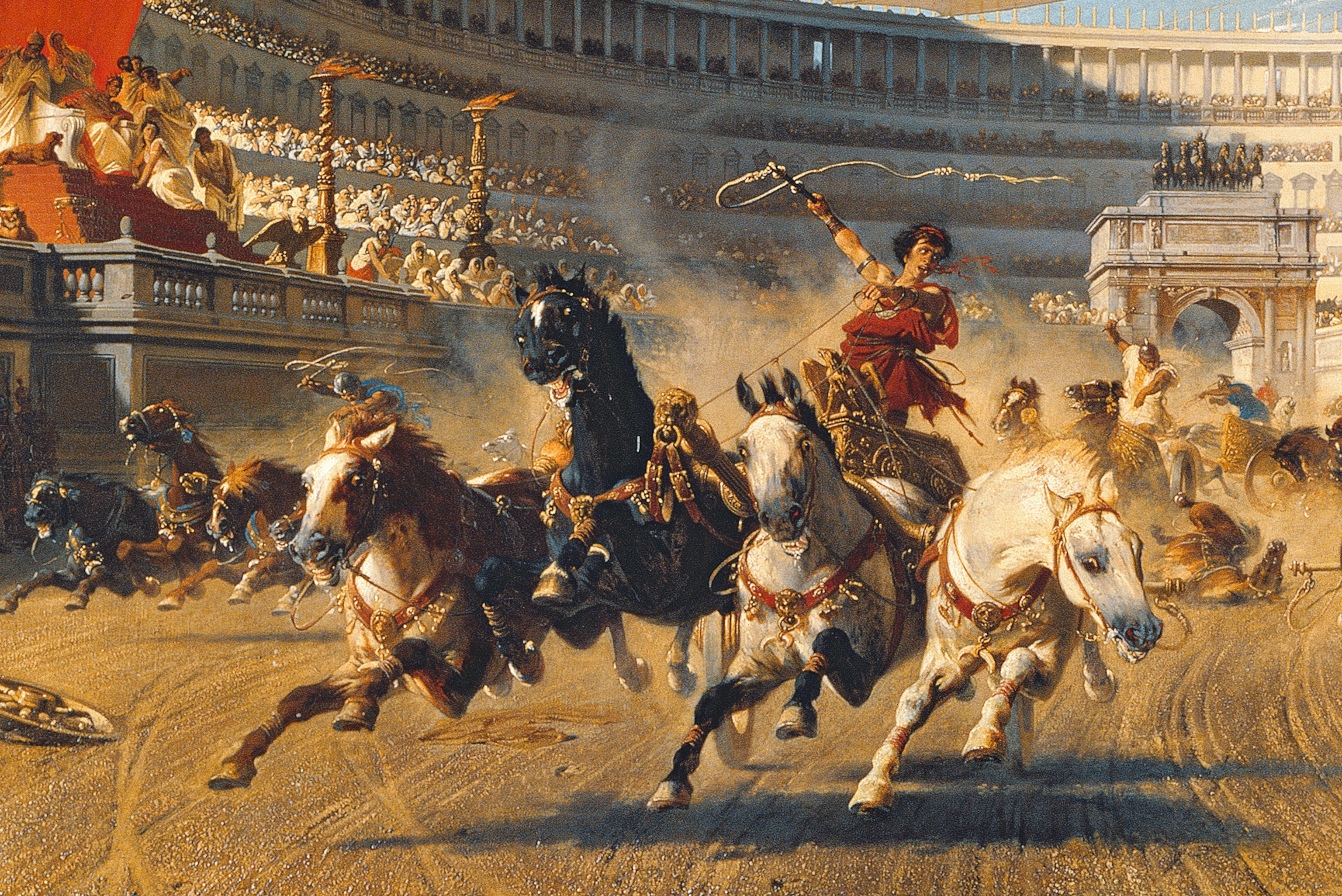
In his epic poem Punica, Silius Italicus describes a chariot race that took place in Hispania. “Even before the starting gate was unbarred, the excited crowd surged to and fro with a noise like the sound of the sea, and, with a fury of partisanship, fixed their eyes on the doors behind which the racers were standing. And now the signal was given, and the bolts flew back with a noise. Scarcely had the first hoof flashed into full view, when a wild storm of shouting rose up to heaven. Bending forward like the drivers, each man gazed at the chariot he favored, and at the same time shouted to the flying horses.”
The charioteers tried to keep close to the spina in order to minimize the distance covered, although this made maneuvering the turn at each end of the track more difficult. Many tried to stay in first position throughout the race, but others preferred to wait until the later laps, or even the final straight, before making a sprint to victory.
Sorcery and skulduggery
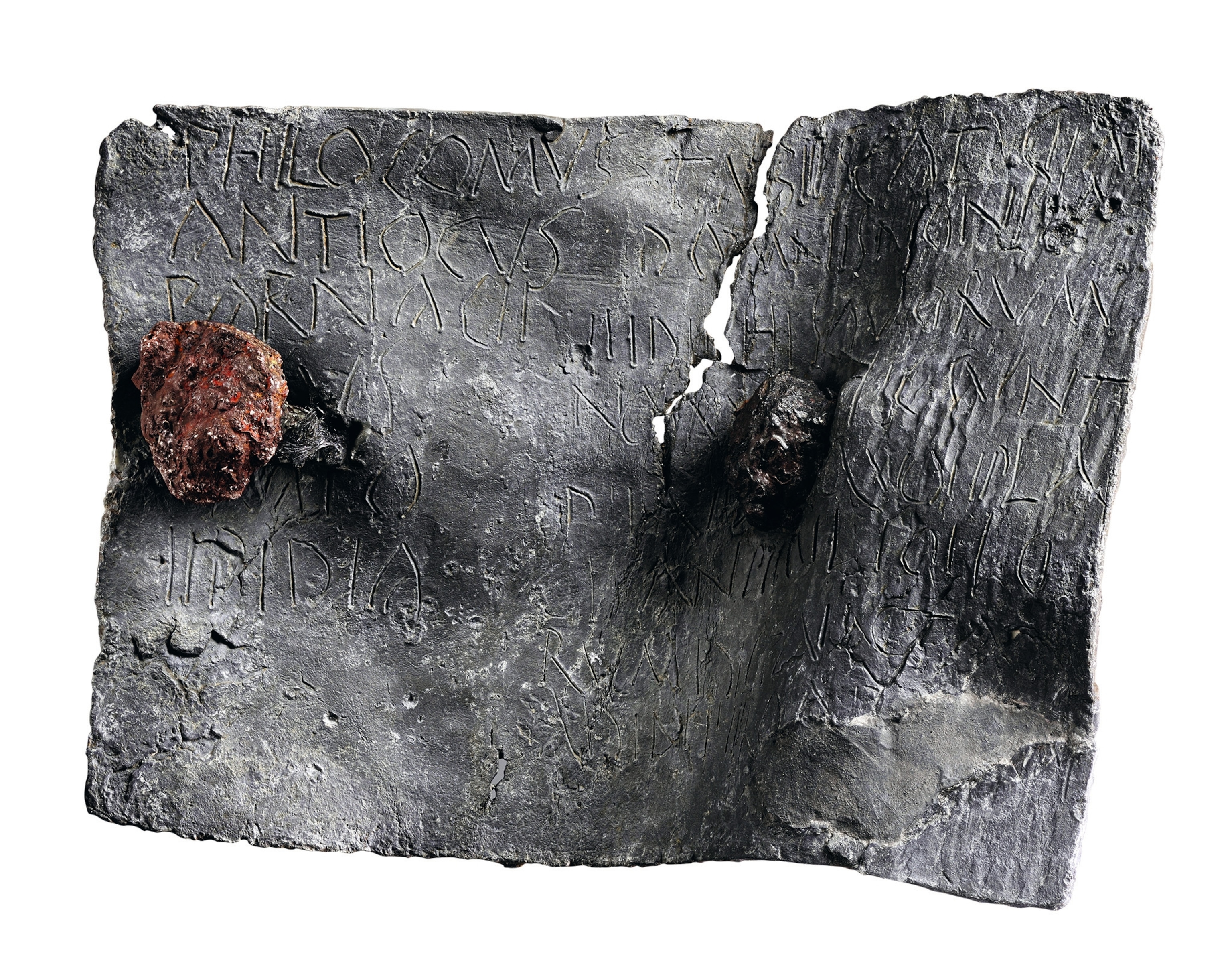
As dust kicked up during the race, it could cause the charioteer to become disoriented. A member of his team on horseback, the hortator, would serve as a guide and shout out the position of his opponents. Other team members, the sparsores, ran onto the track to throw refreshing water over the horses.
(These mosaics survived a millennia. Here's what they revealed about ancient Rome.)
Wrecks
Horrendous and sometimes fatal accidents, or naufragia (shipwrecks), as the Romans called them, happened regularly during chariot races. The most dangerous moment for a charioteer was either overtaking another chariot or making the tight turn at the ends of the spina. Given the speed of the vehicles (over 45 miles per hour on the straights and at least 15 to 20 miles per hour on the turns), the charioteers ran a serious physical risk. For protection, each charioteer wore a metal helmet and kept a dagger tucked into his girdle that he could use if he needed to cut the reins tied around his waist. That move would allow him to avoid being dragged along the ground by his horses and potentially trampled by the other competitors’ horses.
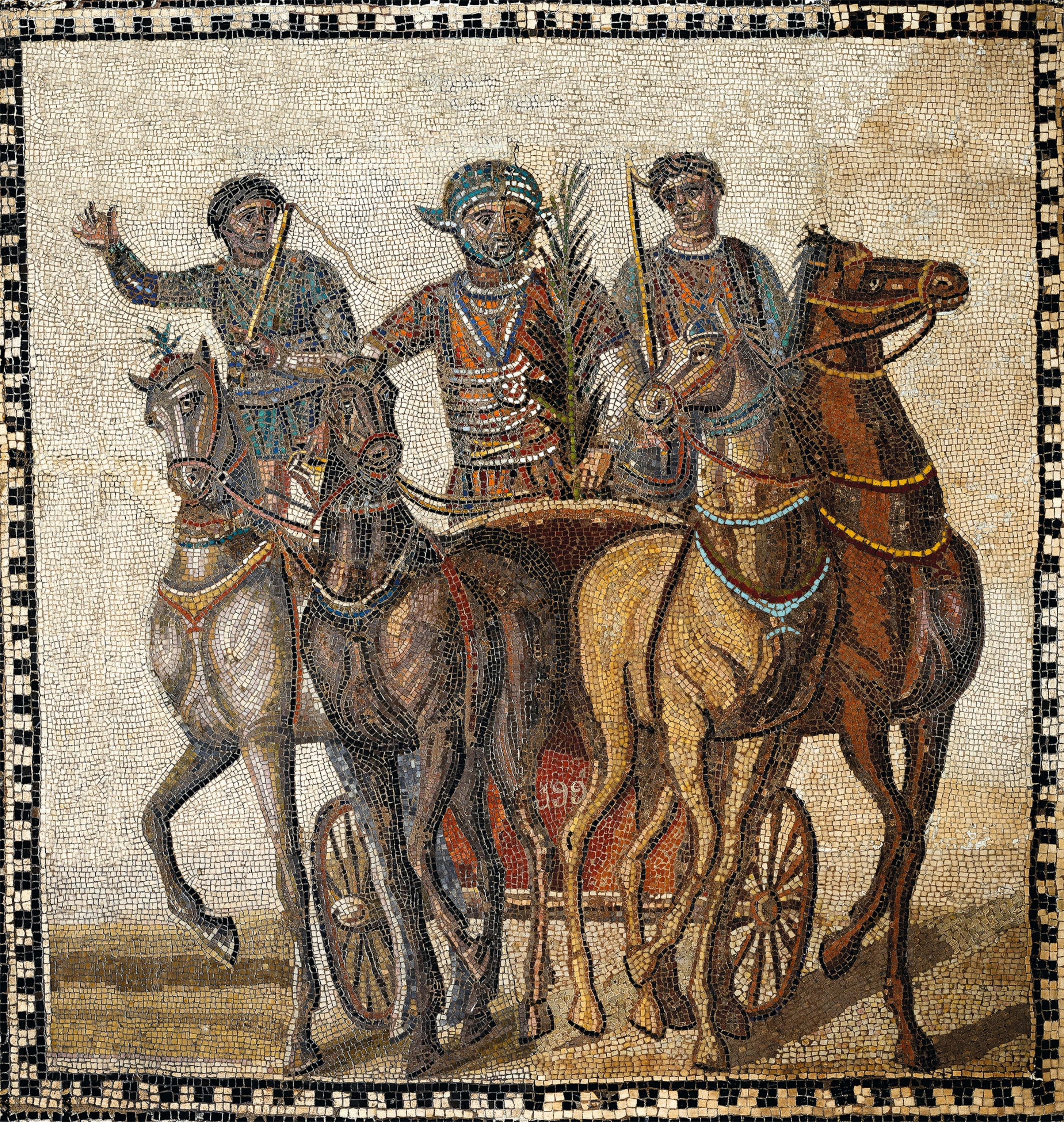
The excitement reached a fever pitch when the winner crossed the finish line in front of the judges’ stand. The tuba sounded again to announce the victory. The charioteer was then presented with a palm and a laurel wreath as a symbol of his triumph as well as a cash prize. Finally, he made a victory lap of honor around the spina to receive the adulation of the crowd. The public would take advantage of this interval to relax, eat, or chat with companions, waiting for the next show to begin, whether athletics, a wild beast hunt, or another exhilarating chariot race.
The thrill of the race
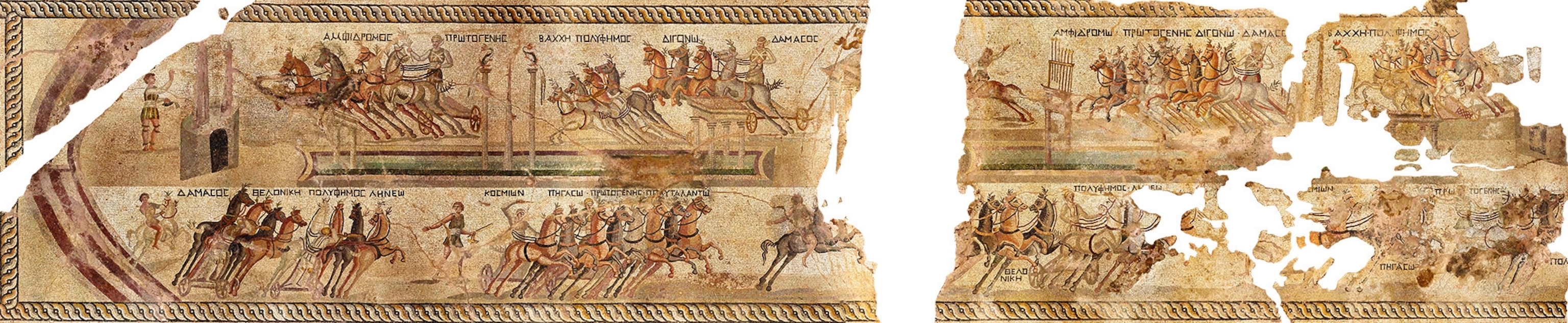
At one end is the finish line, with three cones placed atop a platform. The chariots, or quadrigae, are depicted in a highly realistic style; even the emblems of each team can be seen on the charioteers’ clothing. Next to the chariots, we see the hortatores, riders who shouted instructions to the charioteers, and the sparsor, who refreshed the horses with water. The complete panel of the mosaic, of which a little more than two-thirds is visible here (the rest is quite deteriorated), depicts a race with four chariots, one from each faction. The ancient Greek inscriptions include two names for each quadriga, one for the charioteers (Damasos, Polyphemus, Kosmion, and Protogenes) and one for the leading mares (Telonike, Leneo, Pegasus, and Thalanto). The winning charioteer in this competition was Protogenes, who, like his competitors, is depicted in several moments: from race to victory, when he receives the coveted palm.
Comments
Post a Comment